
NEW
Font size
 Worksheets
Islamic Art and Design Quiz
Total questions: 22
Worksheet time: 11mins
Which of the following is NOT a common element of Islamic Art and Design?
Geometric Forms
Tessellations
Portraits of Living Beings
Calligraphy
What is the purpose of geometric patterns in Islamic art?
To represent living beings
To decorate architecture without using representational imagery
To create realistic portraits
To depict historical events
What tool is commonly used to create geometric forms in Islamic art?
Paintbrush
Compass and ruler
Chisel
Needle and thread
What are tessellations in Islamic art?
Shapes that lock together without gaps or spaces
Images of living beings
Calligraphic designs
Abstract paintings
Which of the following is a decorative element used in Islamic architecture?
Portraits
Geometric patterns
Sculptures of animals
Landscape paintings
What is the belief regarding the use of images of living things in Islamic architecture?
It is encouraged to depict historical figures
It is believed to be idolatry
It is used to tell stories
It is used to honor ancestors
What is tessellation?
A. A type of calligraphy
B. A pattern made of repeating shapes
C. A type of plant
D. A type of architecture
What are arabesques?
A. Geometric shapes used in math
B. Vine-like or plant-like shapes used as decorative elements
C. Types of buildings
D. Types of food
In which areas are arabesques commonly used?
A. Architecture, textiles, and ceramics
B. Cooking, gardening, and painting
C. Music, dance, and theater
D. Science, technology, and engineering
Why did calligraphy become important in Arab cultures?
A. It was used for cooking recipes
B. It was used for scientific research
C. It elevated the importance of God's words
D. It was used for building houses
What is a tughra?
A. A type of building
B. A calligraphic monogram used during the Ottoman empire
C. A type of plant
D. A type of food
What was the purpose of a tughra?
A. To decorate buildings
B. To be placed on coins during the rulers' reign
C. To write books
D. To create paintings
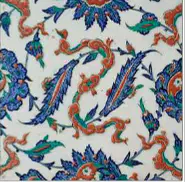
What is the name of the design found in Islamic art, particularly in Turkey, that is characterized by beautiful blue and red organic designs?
Tughra
Iznik Tile
Prayer Rug
Dolmabahce Tile
What is the purpose of a prayer rug in Islamic practice?
To decorate the home
To protect the person praying from the dirt on the ground
To cover the floor
To use as a blanket
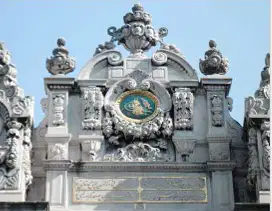
Where is the Tughra from Dolmabahce Palace located?
Ankara, Turkey
Istanbul, Turkey
Izmir, Turkey
Bursa, Turkey
What is the Blue Mosque decorated with?
Tughra
Prayer Rugs
Iznik Tiles
Dolmabahce Tiles

What is the name of the Tughra from 1520?
Tughra of Suleymane the Magnificent
Tughra of Dolmabahce
Tughra of Istanbul
Tughra of Turkey

What is the design called that has a cloud band border with open space in the center?
Central medallion design
Cloud band border design
Geometric pattern design
Arabic Calligraphy design
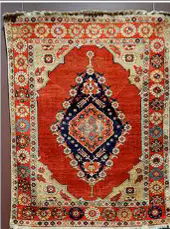
What is the central focus point in a central medallion design?
Cloud band border
Geometric pattern
Central motif
Arabic Calligraphy
Which of the following is NOT one of the three aspects of design in Islamic art?
Geometric pattern
Arabesques
Central medallion
Arabic Calligraphy
What does Islamic art focus on in terms of design?
Repetition, variation, and symmetry
Bright colors and abstract shapes
Realistic portraits and landscapes
Modern and contemporary styles
What are Arabesques in Islamic art?
Geometric patterns
Vine-like shapes and designs
Central motifs
Calligraphy styles

