
 Worksheets
Year 11 Unit 2 Topic 1 Review
Total questions: 208
Worksheet time: 5hrs 53mins
What is another example of a "negative feedback mechanism" in your body?
is the maintenance of a relatively stable internal environment
is the maintenance of a relatively stable external environment
stable
equal
complete
correct
When your glucose levels are too high, what is the appropriate response?
urinate
release glucagon
eat sugar
release insulin
the brain only
the muscles

This graph shows an example of...
Blood sugar regulation
Homeostasis
Negative feedback
Positive feedback
What is the point of a feedback loop?
To provide the body with more energy
To provide the body with more food
To make sure the conditions in the body are always changing
To make sure the conditions in the body remain stable
Match the following
Control Center
The "processor" (Makes decisions)
Receptor
Something capable of detecting changes
Effector
Something capable of causing change
Set Point
A "standard" condition
Stimuli
Any thing that evokes a reaction
An enzyme produced by the pancreas that helps raise blood sugar by breaking down glycogen into glucose.
Cholesterol
Lipase
Insulin
Glucagon

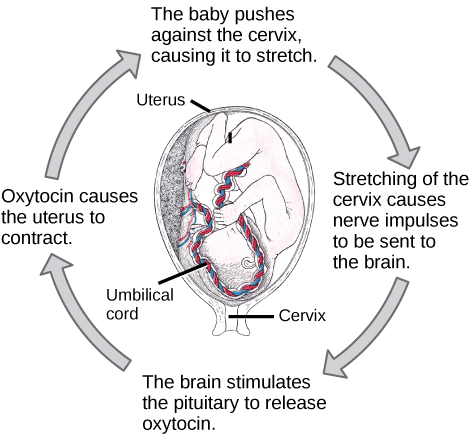
Labor during pregnancy is an example of a ____________ feedback loop
positive
negative
Blood clotting is an example of a ____________ feedback loop
positive
negative
Blood sugar regulation is an example of a ______________ loop
positive
negative
The heater kicks on and the house warms up, so it kicks off. Then the house cools a bit and the heater kicks back on. This continues all day. It's a _____________ loop.
positive
negative

The kinds of chemicals that control feedback loops
hormones
homeostasis
disease
What 2 organ systems control homeostasis?
Endocrine system and nervous system
Endocrine system and cardiovascular system
Nervous system and respiratory system
Nervous system and cardiovascular system
Why is it important to maintain a constant body temperature?
to stop the multiplication of bacteria in the body
so that we don't get cold
to maintain the optimum temperature for enzymes
so that we have enough energy to move
What receives and analyzes information received from the sensors?
Response
Effector
Sensor
Control center
What is a noticeable change in an organism's environment?
Control center
Stimulus
Response
Set point
Which is not a stimuli?
Change in temperature
Chemicals in the air
Pressure on skin
Glands releasing hormones
The reaction of the effector is called
Response
Stimulus
Sensor
Set point
What do effectors do?
Detects the changes in the environment
processes information from receptors
Gives the response
Is the change in the environment
What is a stimuli?
Detects a change in the environment
A change in the environment
Process information from the receptor
Gives the response


What number(s) on the graph represents the THRESHOLD level of stimulus?
1 and 5
2
3
6
Which one of the following is involved in maintaining a resting membrane potential?
Na+/K+ ATPase pump moves 3Na+ in for every 2K+ out
Na+/K+ ATPase pump moves 3K+ in for every 2Na+ out
Na+/K+ ATPase pump moves 3Na+ out for every 2K+ in
Na+/K+ ATPase pump moves 3K+ out for every 2Na+ in

Depolarization is occuring at number
1
2
4
5
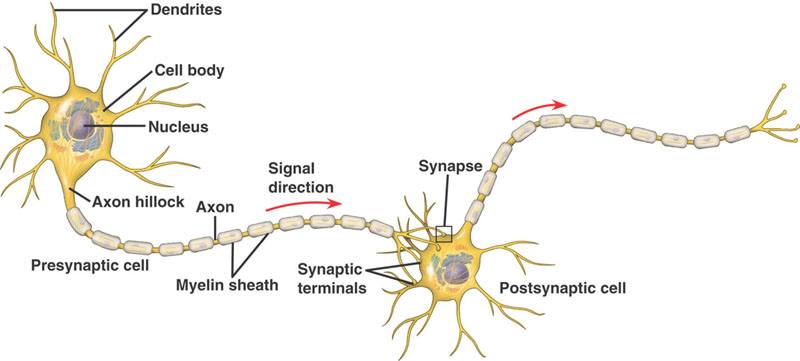
Action potentials run along the ______ from ______ to ________.
axon, dendrites, axon terminals
axon, axon terminals, dendrites
dendrites, axon, axon terminals
axon terminals, axon, dendrites
At resting membrane potential, neurons have more (a) on the inside of the cell membrane.
ATP is required to run
Na/K pumps
leak channels
gated channels
myelin sheaths
Reorder the following (starting at the action potential)
Action potential reached (+30mV)
Na+ inactivation gates close, K+ gates open
K+ exits the cell, repolarization
K+ still open, goes below -70 mV, hyperpolarization
Na/K pump restores to resting potential
Reorder the following (starting at beginning)
Resting potential (-70mV), stimulus received
Na+ gates open, threshold reached (-55 mV)
Na+ gates open
Na+ moves into the axon
Action potential reached (+30mV)
When the membrane potential reaches +30mV, ________ channels open, ________ occurs, and ________ channels close.
sodium, depolarization, potassium
potassium, depoloarization, sodium
sodium, repolarization, potassium
postassium, repolarization, sodium


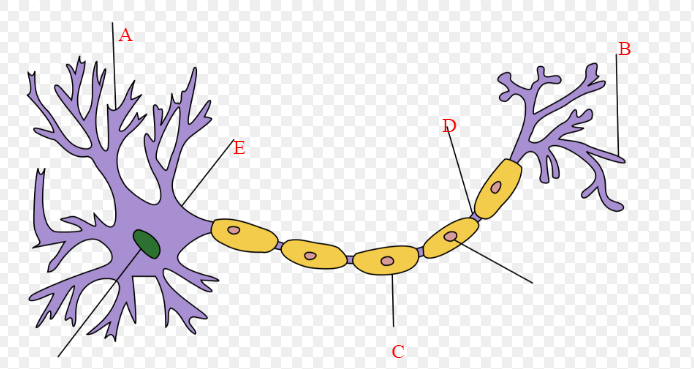
B
Dendrite
Axon
Axon Terminal
Cell Body


What contains the nucleus of the neuron?
Terminal Bouton
Cell Body
Myelin Sheath

In the figure above, what is occurring at step #4?
Neuron receives enough stimulation, threshold is reached
Na+ channels open allowing Na+ to diffuse inward, depolarizing the membrane
K+ channels open and Na+ channels open, action potential begins
K+ channels open allowing K+ to diffuse out, repolarizing the membrane
Na+ are being pumped out and K+ are being pumped into the cell
If you picked up a hot coal, the signal from the sensory neurons in your fingertips would travel to ____________ in your spinal cord.
Sensory Neurons
Motor Neurons
Interneurons
If you picked up a hot coal, _____________ innervating the muscles in your fingers would cause your hand to let go.
Sensory Neurons
Motor Neurons
Interneurons
Combinations of ______________ in your brain that would allow you to draw the conclusion that things that looked like hot coals weren't good to pick up, and, hopefully, retain that information for future reference.
Sensory Neurons
Motor Neurons
Interneurons
If you picked up a hot coal, ______________ would signal to the motor neurons controlling your finger muscles (causing you to let go), while others would transmit the signal up the spinal cord to neurons in the brain, where it would be perceived as pain.
Sensory Neurons
Motor Neurons
Interneurons
If you picked up a hot coal, ______________ with endings in your fingertips would convey the information to your CNS that it was really hot.
Sensory Neurons
Motor Neurons
Interneurons
What are the two divisions of the nervous system?
Central nervous system and peripheral nervous system
Peripheral nervous system and autonomic nervous system
Central nervous system and somatic nervous system
Sympathetic and parasympathetic nervous system
brain and spinal cord
cranial and spinal nerves
sensory and motor neurons
sympathetic and parasympathetic systems
Sympathetic nervous system
Parasympathetic nervous system
Autonomic nervous system
Peripheral nervous system
The part of the peripheral nervous system that controls conscious activities
Autonomic nervous system
Somatic nervous system
Sympathetic nervous system
Parasympathetic nervous system
The PNS (peripheral nervous system)
contains the brain and spinal cord
contains all the nerves of the body
is divided into the somatic and autonomic systems
is divided into the sympathetic and parasympathetic divisions
What are the two divisions of the autonomic nervous system?
central and peripheral
parasympathetic and sympathetic
brain and spinal cord
neurons and glial cells
The (a) part of the autonomic nervous system is active during resting and digesting
The (a) part of the autonomic nervous system is responsible for the fight or flight response
What are the two types of cells found in the nervous system?
Neurons and glial cells
Sensory neurons and motor neurons
Nerve cells and brain cells
Afferent neurons and efferent neurons
Which of the following are true?
glial cells protect and support neurons
neurons protect and support glial cells
neurons transmit electochemical messages
glial cells make myelin in the PNS
Motor/efferent
Motor/afferent
Sensory/afferent
Sensory/efferent
What do motor/efferent neurons do?
carry messages from the brain and spinal cord to muscles and glands
carry impulses from the skin and sends to the spinal cord and brain
carry impulses from sensory neurons to motor neurons
store messages
Type of neuron located only in the brain and spinal cord that pass impulses from one neuron to another.
Motor Neuron
Interneuron
Sensory Neuron
Which structure is D on the diagram?
Axon terminal
Axon
Dendrites
Soma
Myelin
Which structure is A on the diagram?
Axon terminal
Axon
Dendrites
Soma
Myelin
Which of these is the correct pathway for the reflex arc?
Stimulus-receptor-effector-coordinator-response
Stimulus-effector-coordinator-receptor-response
Stimulus-receptor-coordinator-effector-response
Stimulus-receptor-coordinator-response-effector
Why are reflexes important?
They are rapid
They don't involve the conscious part of the brain
They are voluntary
They are involuntary
They cause harm

Look at the reflex arc shown in the diagram. Which neurone is marked by the letter X?
Sensory neurone
Motor neurone
Relay neurone
Look at the reflex arc shown in the diagram. Which neurone is marked by the letter Y?
Sensory neurone
Motor neurone
Relay neurone

what might be a job of a motor neuron?
connecting to a muscle and helping you move
connecting within the brain to help you make a decision
sending a message toward your brain from a pain receptor in your skin
all of these
The name of the specialised gap between 2 neurons
Dendrites
Terminal buttons
Synaptic Vesicles
Synapse
The part of the neuron which houses the neurotransmitters
Dendrites
Terminal buttons
Synaptic Vesicles
Synapse
When the action potential travels down the axon it reaches which part of the neuron?
Dendrite
Cell body
Axon terminal
Nucleus
What 3 things happen to the neurotransmitters when they get released into the synaptic gap?
They diffuse across the synaptic gap
They attach to receptor sites on the post synaptic dendrite via lock and key mechanism
Any left over neurotransmitters gets taken back into pre-synaptic terminal button via re-uptake channels
The axon takes it back in

What is housed in the synaptic vesicles?
Hormones
Neurotransmitters
Proteins
Dendrites
Signals along the neurons are transmitted...
electrically
chemically
Signals between neurons are transmitted
electrically
chemically
When an action potential reaches the axon terminal, it causes...
vesicles to migrate towards and fuse with the cell membrane
neurotransmitter molecules to bind to the receptor sites on the postsynaptic cell
enzymes to breakdown leftover molecules of neurotransmitter in the synaptic cleft
chloride ions to flood into the postsynaptic cell
Vesicles are tiny sacs or pouches in the presynaptic cell that contain
sodium ions
neurotransmitter molecules
Schwann cells
Nodes of Ranvier
Where is insulin produced?
alpha cells in pancreas
beta cells in pancreas
adipose tissue
hypothalamus
pineal gland
Where is glucagon produced?
alpha cells in pancreas
beta cells in pancreas
adipose tissue
hypothalamus
pineal gland
When blood glucose levels increase, (a) is released from (b) cells in the (c) .
When blood glucose levels decrease, (a) is released from (b) cells in the (c) .
A hormone is a (a) , secreted by a(n) (b) , which is transported by the (c) and has an effect on the (d) before being destroyed by the (e) .
Endocrine glands secrete _
Hormones
Neurotransmitters
A wide range of chemical substances
What is the main function of the endocrine system?
It creates chemicals, or hormones, that are sent around the body to maintain homeostasis.
It creates electrical messages that are sent around the body to maintain homeostasis.
It maintains the correct level of oxygen in the body to maintain homeostasis.
It releases waste from the body to maintain homeostasis.
What part of the body co-ordinates the response to heating up or cooling down?
Medulla Oblongata
Hypothalamus
Cerebrum
Brain stem
Which of the following occurs when the body is too hot?
Shivering
Sweating
Vasodilation
Vasoconstriction
What is the effector that is responsible for someone to start sweating?
Smooth muscle
Sweat glands
Skeletal muscle
Liver cells
What is an endotherm?
An organism that is unable to maintain a constant temperature using physiological responses alone.
An organism that can maintain a constant internal temperature using physiological responses.

Homeostatic cooling mechanisms include
piloerection and panting
panting and vasoconstriction
sweating and piloerection
sweating and vasodilation
What happens to the rate of an enzyme reaction when heated up?
Increases
Decreases
Increase and then decreases
decreases and then increases
Why is the bodies core temperature 37oC?
Optimum temperature for enzymes
No specific reason
To limit the enzymes rate of reaction
Its not 37oC
In which of the following, do blood vessels near the surface of the body loosen up to release heat?
Vasoconstriction
Vasodilation
What happens in your body temperature drops below 35 oC?
Hyperthermia
Hypothermia
Hypertonic
Hypotonic
What happens if your core body rises above 40oC?
Hyperthermia
Hypothermia
Hypertonic
Hypotonic
Upregulation can best be described as:
the cell is stimulated to produce more of a specific component over time.
the cell is stimulated to produce less of a specific component over time
the process that cells use to make protein.
positive feedback.
What is a difference between Nervous & Endocrine System regulation?
rely on release of chemicals that bind receptors on target cells
length of time of action
negative feedback mechanisms
homeostasis
Reduced fluid loss in urine due to the retention of Na+ and water is a result of the action of
Antidiuretic hormone
Calcitonin
Aldosterone
Cortisone
The adrenal medulla produces the hormones
Cortisol and cortisone
Epinephrine and norepinephrine
Corticosterone and testosterone
Androgens and progesterone
Most plants are:
Halophytes
Hydrophytes
Mesophytes
Xerophytes
Osmoregulation in plants is:
The same for all plants because plants are not complex organisms
The same for all plants because plants face simple conditions
Different for different plant categories because plants face varying conditions
Different for different plant categories because plants face simple conditions
Mesophytes face the following conditions:
Moderate to warm, humid environments
Aquatic or semi-aquatic environments
Destert and semi-arid environments
Saline environments
Because mesophytes face moderate conditions, they have:
A cuticle on the upper surface of the leaf only
Stomata that are open during the day
Low surface area to volume ratio
Vacuoles that store salt
Xerophytes face desert conditions and thus have the following adaptations
Waxy cuticles designed to repel water
Pneumatophores or 'breathing roots' that protrude form the surface of the ground
Stomata that are present in high numbers
An outer surface covered in fine hairs
Plants that live in saline environments are called:
Halophytes
Hydrophytes
Xerophytes
All of the above
Abscisic Acid (ABA) is a plant hormone that assists in osmoregulation by:
Regulating stomatal closure
Causing plants to secrete a waxy layer
Regulating vacuole storage
All of the above
When water levels in a plant are low, ABA levels increase. This results in:
The guard cells filling in water, causing the stomata to open
The guard cells emptying of water, causing the stomata to open
The guard cells filling in water, causing the stomata to close
The guard cells emptying of water, causing the stomata to close
Which of the following are examples of negative feedback loops. (a) (b) (c)
Which of the following are examples of positive feedback loops. (a) (b) (c)
what is osmoregulation?
Control of water and salt in the body
Control of blood pressure in the body
Control of blood glucose in the body
During osmosis
water moves from high to low concentration
large or oddly shaped molecules move across a cell membrane
water moves when energy is used
proteins are built
Which area of the brain contains the receptors responsible for detecting changes in water potential
Hypothalamus
Medulla Oblongata
Amygdala
Hippocampus


Which hormone promotes retention of water by kidneys?
epinephrine/norepinephrine
antidiuretic hormone
glucagon
prolactin
Which hormone affects the permeability of the collecting duct?
(a)
Which regions of the nephron are affected by ADH?
proximal convoluted tubule
distal convoluted tubule
collecting duct
loop of Henle
What is the name of the protein channel that allows water into cells
(a)
Since alcohol consumption blocks the production of antidiuretic hormone, what is most likely to happen?
The pain caused by internal and external factor will decrease in intensity
You will feel the urge to sleep.
There will be an increase in urine production.
There will be a decrease in urine production.
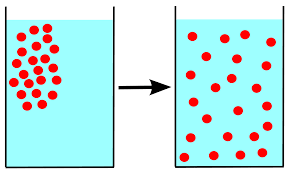
The picture below is an example of _________________.
osmosis
isotonic
diffusion
active transport


_______ regulates what enters and leaves a cell.
Cell Membrane
Nucleus
Mitochondria
Cytoplasm


Considering the four choices below, which two represent active transport?
- From high to low concentration
- From low to high concentration
- Using cellular energy
- Without using cellular energy
High to low; using cell energy
High to low; without using cell energy
Low to high; using cell energy
Low to high: without using cell energy
What is the movement of a substance across a plasma membrane without the need of energy called?
passive transport
active transport
exocytosis
isotonic

What is the movement of water through a semipermeable membrane called?
exocytosis
osmosis
active transport
facilitated diffusion

Which type of cell transport occurs when a cell's membrane folds inward to bring materials into the cell?
endocytosis
pinocytosis
exocytosis
phagocytosis

What molecule is used as energy for active transport?
ATP
ADP
lipid
glucose
To minimize water loss, some organisms have an outer surface that:
Moist
Waterproof
Thin
All of the above
Abscisic Acid (ABA) is a plant hormone that assists in osmoregulation by:
Regulating stomatal closure
Causing plants to secrete a waxy layer
Regulating vacuole storage
All of the above
True or False: Plants have hormones that assist in osmoregulation
True
False
To reduce water loss in some organisms where water is unavailable, like in the desert, the loop of henle will be:
Tall
Short
Long
Wide

______________ control the opening and closing of stoma
Palisade mesophyll cells
Guard cells
Epidermal cells
Xylem

______________, pores on leaves through which plants lose water and exchange carbon dioxide and oxygen.
stomata
seed
stem
When water levels in a plant are low, ABA levels increase. This results in:
The guard cells filling in water, causing the stomata to open
The guard cells emptying of water, causing the stomata to open
The guard cells filling in water, causing the stomata to close
The guard cells emptying of water, causing the stomata to close
Which of the following would cause the water potential of your blood to decrease?
Drinking lots of water
Eating salty food
Cold weather
Eating watermelon

Which of the following is NOT filtered out of the blood in the kidneys?
Blood cells
Amino acids
Urea
Glucose
State the term for the removal of potentially toxic waste products of metabolic pathways
(a)
In what form do mammals excrete nitrogenous waste?
Ammonia
Uric acid
Amino acids
Urea
In what form do freshwater fish excrete nitrogenous waste (because it can be diluted by a large volume of water)?
Uric acid
Ammonia
Nucleotides
Amino acids
Identify the term for animals that have an internal solute concentration that is the same as the external solute concentration
Osmoregulators
Homeothermic
Osmoconformers
poikilotherm
State the term used when two solutions are equal in solute concentration
(a)
Identify the least toxic of these nitrogen containing compounds
Uric acid
Urea
Ammonia
Cyanide

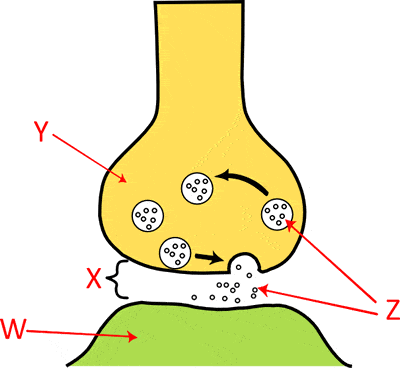
What's in the picture?
synaptic vesicles
neurotransmitters
presynaptic neuron
postsynaptic neuron
synaptic cleft

What's in the picture?
synaptic vesicles
neurotransmitters
presynaptic neuron
postsynaptic neuron
synaptic cleft

What's in the picture?
synaptic vesicles
neurotransmitters
presynaptic neuron
postsynaptic neuron
synaptic cleft
What is the role of calcium ions during synaptic transmission?
Generate action potentials
Speed up the impulse transmission
Depolarisation of the synaptic knob
Trigger vesicles containing neurotransmitters to fuse with the presynaptic membrane
Neurotransmitters are released from the presynaptic membrane into the synaptic cleft by the process of:
Osmosis
Diffusion
Active transport
Exocytosis
In order for a neuron to generate an action potential, the neuron must receive more
excitatory neurotransmitters
inhibitory neurotransmitters
agnostic neurotransmitters
antagonistic neurotransmitters
What is the function of the thymus?
Help the immune system by training and developing cells
Danger the inmune system
Links nervous system to endocrine system
Regulates blood sugar
A hormone is _____________________.
a chemical substance produced by a gland and carried by the lymph.
an enzyme produced by a gland and carried by the blood.
a chemical substance produced by an organ and carried by the blood.
a chemical substance produced by a gland and carried by the blood.
What is the main function of the endocrine system?
It creates chemicals, or hormones, that are sent around the body to maintain homeostasis.
It creates electrical messages that are sent around the body to maintain homeostasis.
It maintains the correct level of oxygen in the body to maintain homeostasis.
It releases waste from the body to maintain homeostasis.
Positive Feedback loops are...
Counteract changes that move above or below set values.
more common
regulate body temp
Purposeful pushes above normal set values.
Signal transduction is best defined as
carrying a signal from outside a cell to the inside of that cell
a detectable change in a cell's environment
transmission of an electrical signal across a synapse
gene expression in response to active transcription factors in the nucleus
Which of these hormones would bind to a subsurface receptor? Select all that apply.
peptide hormone
steroid hormone
amino acid derivative
protein hormone

a
b
c
d
which excretory organ eliminates water and some chemical wastes in perspiration?
Lungs
Liver
Kidneys
Skin
Excretion is the removal of (a) waste from the body.

Which of the following is not a waste product of excretion
Carbon Dioxide
Oxygen
Sweating
Urea

Which of the following is not an organ involved in the excretory process
The Skin
The Kidney
The Pancreas
The Lungs
How does sweat cool you?
evaporation
condensation
invagination
oder

this stomata will cause...
reduce of water
increase of water
plant wilting
plant watered
Adaptations in plant to reduce transpiration are -
No of stomata
Thickness of cuticle
Loss of leaves
All of the above
The body fluids of an osmoconformer would be ________ with its ________ environment
hyperosmotic; freshwater
hyperosmotic; seawater
isoosmotic; seawater
hypoosmotic; seawater
To maintain homeostasis, freshwater fish must ________.
excrete large quantities of electrolytes
consume large quantities of water
excrete large quantities of water
take in electrolytes through simple diffusion
Which hormone affects the permeability of the collecting duct?
(a)
If any substance can pass through a membrane it is said to be
(a)
If a substance cannot pass through a membrane the membrane is said to be
(a)
If a membrane will allow some but not all substances to pass through it then the membrane is said to be
(a)
This organelle stores water, and is very big in plant cells
nuclolus
ribosomes
golgi bodies
vacuoles
Explain how stomatal size may vary from plants in differing environments

A plant adaptation commonly found in dry, hot climates is
a thin waxy cuticle
small numerous stomata
plants with stomata that open during the night
ability to lose leaves during the wettest part of the year
In the animal kingdom, animals perform a process called kleptothermy. What is it?
It is when animals will share or steal body heat from another animal. How animals share or borrow body heat can be seen in a few ways. For example, an animal that steals body heat is the sea krai
Sweating on others to cool them down
When they share body heat by huddling together
By avoiding the sharing of body heat by maintaining distance
Sleeping in packs
Thick fleshy stems with thick waxy covering would most likely be useful adaptations for which of the following types of plants?
desert plants that need to conserve water
prairie plants that need to survive fires
tundra plants that need to conserve heat
rainforest plants that need to repel insects

The main function of stomata is to
capture sunlight
protect leaves from insects
allow gases to move rapidly in/out of leaves
release sugars into the atmosphere
Why might plants in a rainforest have stomata on the underside of their leaves? Give one reason.
Which of the following best describes the function of nociceptors in the human body?
They detect painful stimuli and send signals to the brain.
They sense mechanical pressure and help maintain balance.
They detect changes in temperature and help regulate body heat
They are responsible for detecting light and aiding in vision

