
 Worksheets
Module 8.2 Analysis of Organic Substances
Total questions: 17
Worksheet time: 34mins
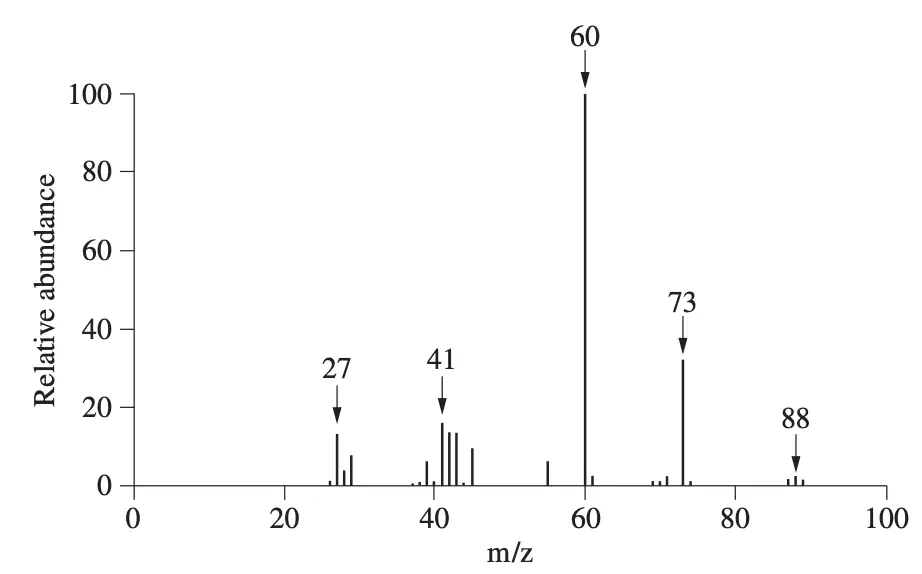
The diagram shows the mass spectrum of an organic compound.
Which compound was analysed?
Butan-1-amine
Butanoic acid
Ethanoic acid
Iron(II) sulfide
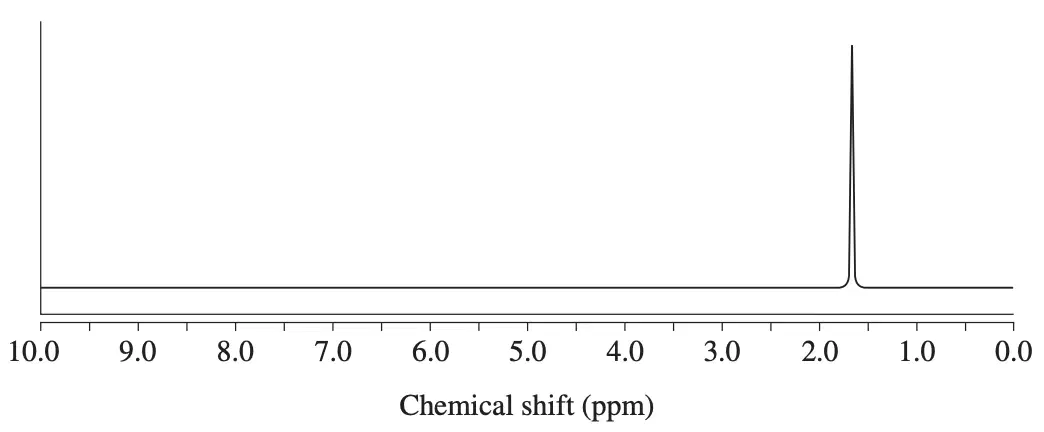
A molecule, C4H9Cl, is analysed. The 1H NMR spectrum of this molecule is shown.
What is the structural formula of this molecule?


Compound X shows three signals in its 13C NMR spectrum.
Treatment of X with hot acidified potassium permanganate produces a compound Y. Compound Y turns blue litmus red.
Compound X produces compound Z upon reaction with hot concentrated sulfuric acid.
Which of the following correctly identifies compounds X, Y and Z?
Compound X: butan-1-ol
Compound Y: butanoic acid
Compound Z: but-1-ene
Compound X: butan-2-ol
Compound Y: butanone
Compound Z: but-2-ene
Compound X: methyl ethanoate
Compound Y: methanoic acid
Compound Z: ethene
Compound X: 2-methylpropan-1-ol
Compound Y: 2-methylpropanoic acid
Compound Z: 2-methylprop-1-ene
What is the function of the magnetic field in a mass spectrometer?
It detects the mass of the particles.
It deflects the stream of charged particles.
It excites electrons to higher energy levels.
It produces a stream of electrons that bombards the sample.
Which pair of compounds would be difficult to distinguish using infrared spectroscopy?
Butane and propane
Ethane and propan-1-ol
Propanol and propanoic acid
Methanamine and propanone
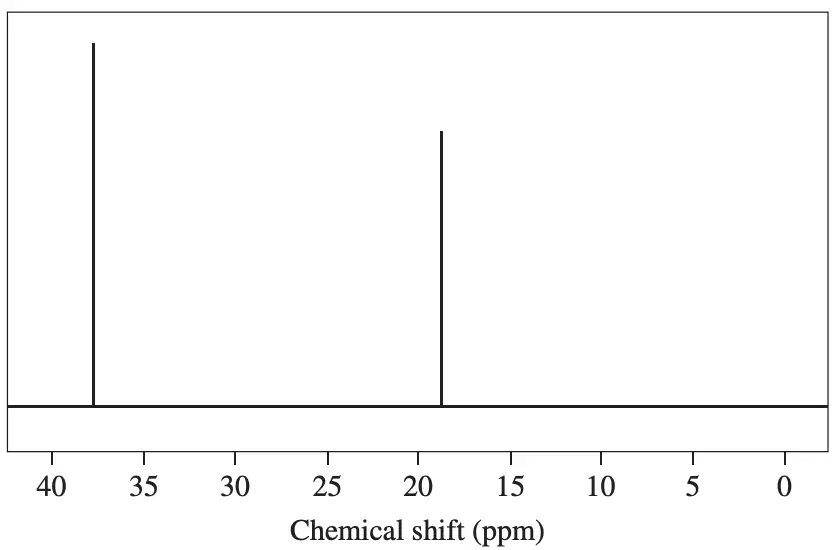
A 13C NMR spectrum is shown.
Which compound gives rise to this spectrum?
chloroethane
1-chloropropane
1,2-dichloroethane
1,2-dichloropropane
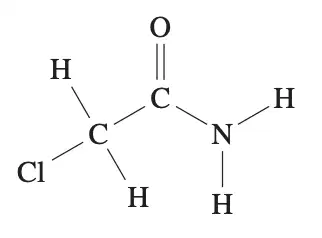
The structure of chloroacetamide is shown.
The common isotopes of chlorine are 35Cl and 37Cl.
The mass spectrum of chloroacetamide contains a peak at m /z = 51.
What is the most likely source of this peak?
[OCl]
[NH2]+
[C4H3]+
[CH2Cl]+
Which isomer of C6H14 would have the fewest signals in 13C NMR?


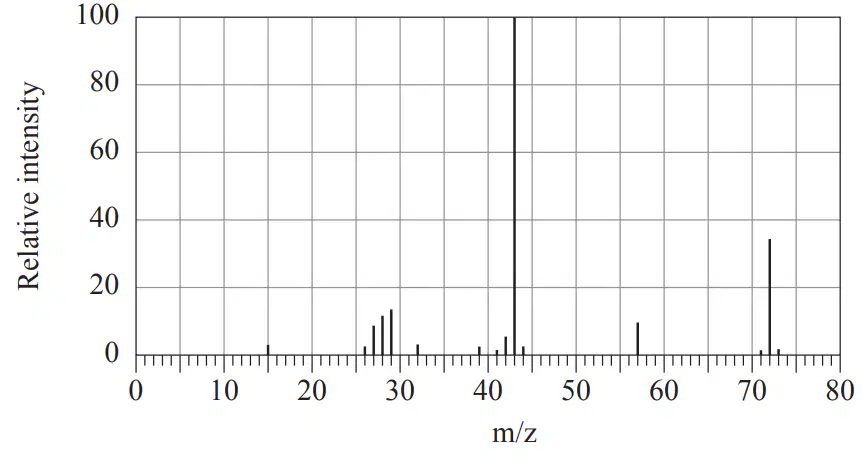
The diagram shows a simplified mass spectrum for butan-2-one.
Which equation best represents the process that produces the particle responsible for the peak at m/z 43?
CH3COCH2CH3+ → CH3CO + +CH2CH3
CH3COCH2CH3+ → CH3CO+ + CH2CH3
CH3COCH2CH3+ → CH3CH2CH2 + +CHO
CH3COCH2CH3+ → CH3CH2CH2+ + CHO

The structure of an organic compound is shown.
Which of the following correctly shows how this compound reacts with bromine water and with blue litmus?
No reaction with bromine water, no reaction with blue litmus.
No reaction with bromine water, blue litmus turns red.
Decolourises with bromine water, no reaction with blue litmus.
Decolourises with bromine water, blue litmus turns red.
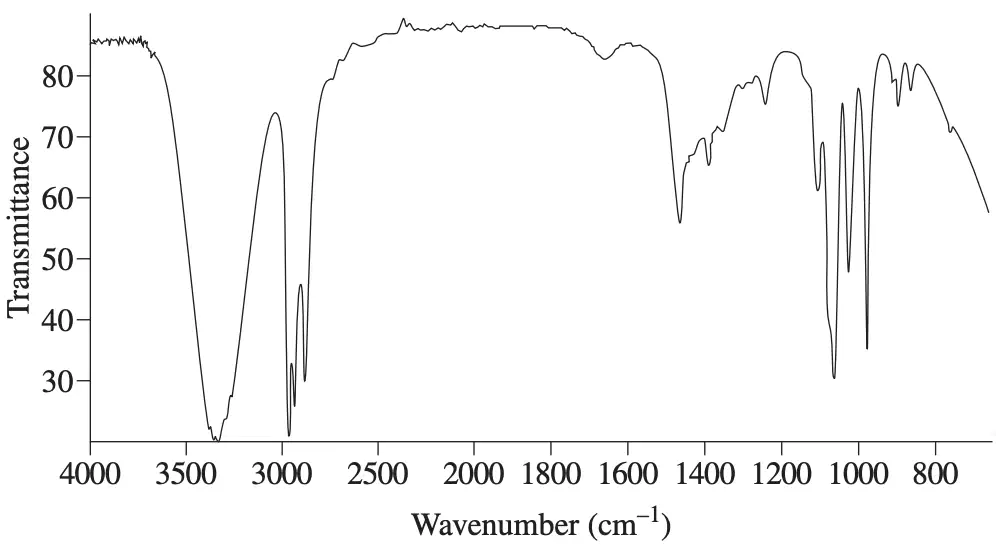
The diagram shows the infrared spectrum of a compound
Which compound was analysed?
Butane
Propanol
Propanal
Butanoic acid
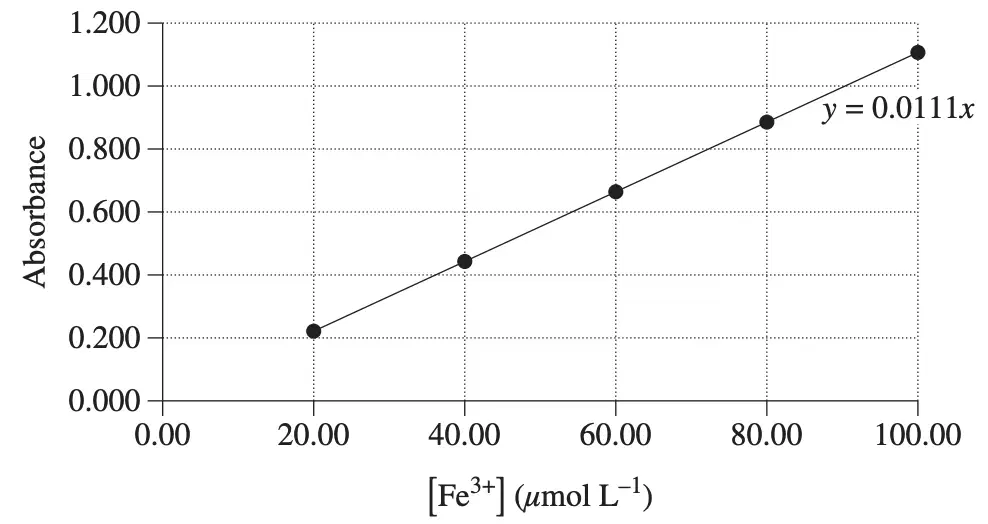
A colorimeter was used to calculate the percentage of iron in a 0.200 gram tablet. The tablet was dissolved and oxidised, then reacted with thiosulfate according to the equation
Fe3+(aq) + SCN–(aq) → [FeSCN]2+(aq).
The resulting solution was made up to 200 mL with distilled water. The absorbance of the final solution was measured to be 0.6105.
The calibration curve shows the absorbance of various concentrations of Fe3+.
How much iron was in the tablet?
1.10 × 10⁻⁵ g
5.50 × 10⁻⁵ g
6.14 × 10⁻⁴ g
3.07 × 10⁻³ g
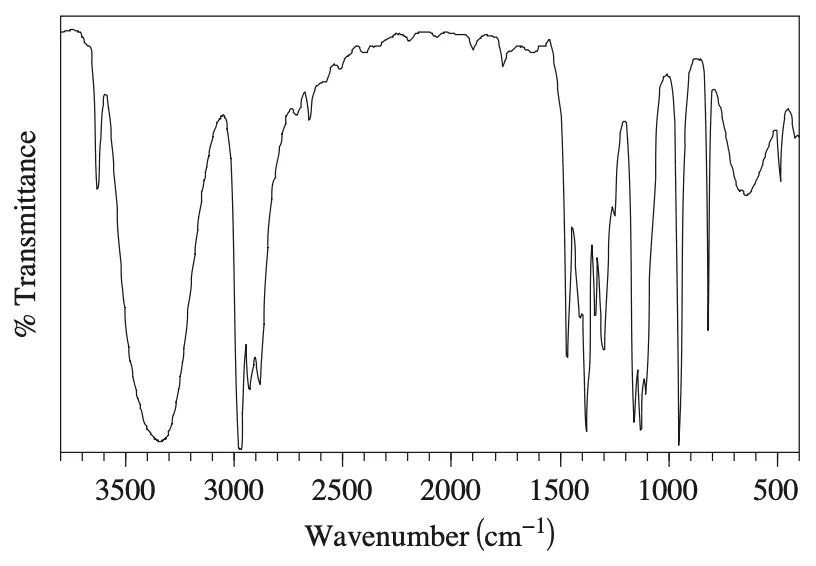
An infrared spectrum of an organic compound is shown.
Which of the following compounds would produce the spectrum shown?


Which of the following is the mass spectrum of ethanamine?


Which of the following compounds produces TWO doublets in the 1H NMR spectrum?


An alkene X with only one C=C bond undergoes an addition reaction with an unknown substance to produce Y.
X + unknown substance → Y
The following table shows the molecular ion peaks for X and Y.
Which of the following can be the unknown substance?
Water
Fluorine
Hydrogen
Hydrogen fluoride
The chemical environment of an atom depends on the species surrounding that atom within a molecule.
In which of the following compounds does the number of carbon chemical environments equal the number of proton chemical environments?



