wayground logo

Free Printable Worksheets

NEW

Font size

S
M
L
XL
Worksheets

Foundations to Declaration Quiz

Total questions: 55

Worksheet time: 33mins

Name
Class
Date
1.

A king or queen rules the country.

a)

democracy

b)

oligarcy

c)

monarchy

d)

state of nature

2.

A government in which people are personally involved in the decision making of the country. Most countries are too large for this to work.

a)

representative democracy

b)

theocracy

c)

consent of the governed

d)

direct democracy

3.

A small group of people have all the power in a country.

a)

dictatorship

b)

oligarchy

c)

rights of the minority

d)

theocracy

4.
What is the type of government where there is no ruler in charge, and has no structure of authority?
a)
Anarchy
b)
Oligarchy
c)
Theocracy
d)
Dictatorship
5.
A government where a God or divine ones are given the status of supreme ruler?
(Examples: The Vatican, Egyptians, etc..)
a)
Democracy
b)
Dictatorship
c)
Monarchy
d)
Theocracy
6.

When a small group of military leaders who rule a country after taking it by force the oligarchy is called a __________.

a)

Autocracy

b)

Anarchy

c)

Junta

d)

Democracy

7.

A government that chooses leaders through free and fair elections is considered to be a -

a)

Monarchy

b)

Theocracy

c)

Democracy

d)

Republic

8.

What does rule of law mean?

a)

No rules or laws

b)

No one is above the law

c)

Rules take the place of laws

d)

Laws take the place of rules

9.
Enlightenment philosopher who believed people had natural rights of life, liberty, and property.
a)
John Locke
b)
Montesquieu
c)
Rousseau
d)
Voltaire
10.
Enlightenment philosopher who believed to limit government, that it should be divided into separate branches that shared power.
a)
John Locke
b)
Montesquieu
c)
Rousseau
d)
Voltaire
11.

Natural Rights according to John Locke

a)
Life, Liberty, and the Pursuit of Happiness.
b)
Life, Liberty, and Property
c)
Freedom
d)
Rights to say what we want, when we want to.
12.
What are our natural rights according to Jefferson?  (He got the idea from John Locke, but he changed the last right.)
a)
Freedom of speech, religion, and press
b)
Life, liberty, and property
c)
Life, liberty, and the pursuit of happiness
d)
Voting, rebelling, and health
13.
 Who wrote the Declaration of Independence?
a)
Benjamin Franklin
b)
James Madison
c)
Thomas Edison
d)
Thomas Jefferson
14.

Who was the Declaration of Independence directed towards?

a)
King George III
b)
George Washington
c)
King Phillip of France
d)

Benjamin Franklin

15.

There are ______ types of democracy.

a)

3

b)

1

c)

2

d)

13

16.
A pamphlet published by Thomas Paine in 1776 to convince the American colonists to support becoming independent from England.
a)
Common Law
b)
Common Sense
c)
Compact
d)
Magna Carta
17.
A government document that limited the power of the king of England and protected the rights of the nobility; written by the English Nobles in 1215.
a)
Magna Carta
b)
Opus Dei
c)
The Federalist Papers
d)
Common Sense
18.
An agreement between indviduals that created a government that would provide order and protect the rights of the colonists; written by a group of English Puritans in Massachusetts in 1620.
a)
Compact
b)
Mayflower Compact
c)
Mercedes Compact
d)
Habeas Corpus
19.

The image below concerns government.


Which Enlightenment idea is represented by the image?

a)

separation of powers

b)

checks and balances

c)

social contract

d)

natural law

20.
The United States of America has which form and system of government? 
a)
communism and unitary 
b)
socialism and parlimentary 
c)
representative democracy and federal 
d)
direct democracy and confederal 
21.

The systems of government are ________.

a)

unitary, confederacy, federal

b)

unitary, confederacy, democracy

c)

dictatorship, monarchy, federal

d)

unitary, autocracy, dictatorship

22.
Why is July 4, 1776 an important date in U.S. history?
a)
Common Sense was published.
b)
The Olive Branch Petition sent to King George III.
c)
The American Revolution ends.
d)
The Declaration of Independence is signed.
23.
What country did The United States declare independence from?
a)
Britain
b)
France
c)
Spain
d)
Belgium
24.
Even though the Declaration says, "all men are created equal," which of the following groups still fought for rights after it was written?
a)
Women
b)
Native Americans
c)
Slaves 
d)
All of the above
25.

Who did the colonies have issues with when writing the Declaration of Independence?

a)

King George III

b)

George Washington

c)

King Phillip of France

d)

King Joffrey

26.

Which the meaning of Grievances?

a)

Virtues

b)

Complaints

c)

Petitions

d)

Answers

27.
What was the date that the Declaration of Independence was signed?
a)
July 4, 1776
b)
July 2, 1776
c)
July 4, 1787
d)
July 2, 1775
28.

In 1776, which document did the colonists write to tell England that they wanted to be free from British rule?

a)

Articles of Confederation

b)

Bill of Rights

c)

Declaration of Independence

d)

United States Constitution

29.

The primary purpose of the Declaration of Independence was to...

a)

create a new framework of government.

b)

list colonial complaints against King George III.

c)

declare colonial independence from Great Britain.

d)

celebrate the Fourth of July.

30.

Why did the British tax the colonies so heavily after the French and Indian War?

a)

To get extra tea and sugar

b)

To force the Patriots to surrender

c)

To create anger in the colonies

d)

To pay off war debt

31.

Who was the monarch in charge of Great Britain during this time?

a)

King George III

b)

King Charles X

c)

King Henry IV

d)

King James I

32.
According to the Declaration of Independence, where does government get its power?
a)
From the King
b)
From the Supreme Court
c)
From God
d)
From the people
33.
What is the purpose of a government?
a)
To make laws
b)
To protect the rights of the people
c)
To impose taxes
d)
To write long documents
34.

The boycotting of paper, playing cards, printed material, etc., led to the repeal of what act?

a)

The Declaratory Acts

b)

The Coercive Acts

c)

The Intolerable Acts

d)

The Stamp Act

35.
An agreement between indviduals that created a government that would provide order and protect the rights of the colonists; written by a group of English Puritans in Massachusetts in 1620.
a)
Compact
b)
Mayflower Compact
c)
Mercedes Compact
d)
Habeas Corpus
36.

The political cartoon was created by Benjamin Franklin in 1754.


Which action did colonists use this cartoon to support?

a)

Declaring independence from the British monarchy.

b)

Declaring loyalty to the British monarchy.

c)

Dissolving colonial legislatures.

d)

Dissolving colonial charters.

37.
What did the Americans call their new country when they became independent?
a)
The United Nations
b)
The United States of America
38.

Since its 1917 constitution, Mexico has had a central government based in its capital, Mexico City, and thirty-one states that also have their own state governments and share power with the central government. Citizens vote for their representatives.


What type of government does Mexico have?

a)

Theocracy

b)

Absolute Monarchy

c)

Democracy

d)

Oligarchy

39.

In the United States, people have unalienable rights, which refer to the right to life, liberty and the pursuit of happiness as stated in the United States Declaration of Independence. The United States government can't take away these rights.


What type of government does U.S.A. have?

a)

Democracy

b)

Monarchy

c)

Oligarchy

d)

Theocracy

40.

In North Korea the government is ruled by a member of the country’s military and he has complete control. The ruler oversees all aspects of the country’s government and does not allow the citizens, even his advisers, to participate.


What type of government does North Korea have?

a)

Dictatorship

b)

Theocracy

c)

Democracy

d)

Monarchy

41.

LT. Col. Edward Townsend gained power of his country after leading his countrymen in war, and is now the supreme ruler of his country. The citizens of his country are not allowed to vote or make any decisions regarding their everyday lives.


What type of government does he have?

a)

Dictatorship

b)

Absolute Monarchy

c)

Democracy

d)

Theocracy

42.

What is the primary purpose of the Declaration of Independence?

a)

To establish a new government

b)

To declare war on Britain

c)

To outline the rights of citizens

d)

To announce the colonies' independence from Britain
43.

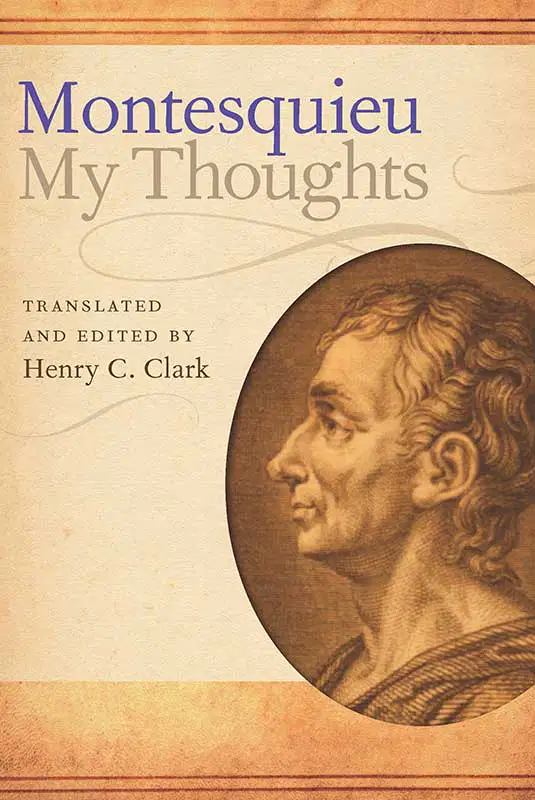
Who is credited with the idea of separation of powers?

a)

Thomas Jefferson

b)

John Locke

c)

James Madison

d)

Baron de Montesquieu

44.

The rule of law ensures that:

a)

Laws are applied equally to all citizens

b)

Only the wealthy can influence laws

c)

The government can change laws at will

d)

Citizens have no rights

45.

What are our natural rights according to Jefferson? (He got the idea from John Locke, but he changed the last right.)

a)

Freedom of speech, religion, and press

b)

Life, liberty, and property

c)

Life, liberty, and the pursuit of happiness

d)

Voting, rebelling, and health

46.

Which philosopher is known for the idea of the social contract?

a)

John Locke

b)

Thomas Hobbes

c)

Jean-Jacques Rousseau

d)

Montesquieu

47.
Forced colonists to house British troops.
a)
Stamp Act
b)
Parliament 
c)
Finished Products
d)
Quartering Act
48.
Protest by not buying goods
a)
Comact
b)
Stamp Act
c)
boycott
d)
Parliament 
49.
A real or imagined wrong or other cause for complaint or protest, especially unfair treatment.
a)
Parliament 
b)
Grievance
c)
Townshend Act
d)
The answer isn't here.
50.
Which colonial grievance is represented by the picture? 
a)
Illegal search and seizure
b)
No freedom of speech
c)
Taxation without representation
d)
No trial by jury of peers
51.
Which colonial grievance is represented by the picture? 
a)
No trial by jury of peers
b)
Illegal Search & Seizure
c)
No Freedom of Speech
d)
Quatering of Troops
52.
Which colonial grievance is represented by the picture? 
a)
No trial by Jury of peers
b)
No freedom of speech
c)
King has absolute power
d)
Taxation without representation
53.
The enormous size of its colonial empire and several costly wars buried Great Britain in debt. What solution did the government come up with to pay for these debts?
a)
print more money
b)
raise taxes for all of the empire's citizens
c)
raise taxes for the American colonists
d)
boycott
54.
What is the significance of Virgina Colony's House of Burgesses?
a)
It was the first written constitution in the colonies.
b)
It was the first example of representative government in the colonies.
c)
Virginia had the best burgers in the New World.
d)
It created the first direct democracy in the New World.
55.

The Boston Tea Party was when

a)

The British and colonists traded tea with each other

b)

The colonists would have tea

c)

Colonists dumped tea into Boston Harbor to protest

d)

King George invited people to the palace to party