
NEW
Font size
 Worksheets
Season 1: Pre-history Test
Total questions: 57
Worksheet time: 2hrs 44mins
Which of the following was not an issue encountered by people during the Stone Age?
Securing enough food
Developing better hunting and gathering techniques
Locating suitable places to live
Advancements in medicine
What is the reasoning behind the establishment of early gender roles?
Men were generally stronger, so they took on hunting tasks
Women were never physically capable of hunting
Pregnant women could still participate in gathering activities
Women believed hunting was too difficult for them
How did water levels change during the ice age?
Water levels decreased
Water levels increased
Water levels remained constant
Water levels fluctuated
What allowed early humans to move into colder areas?
Fire
Affordable homes
Improved employment
Massive ice sheets
According to scholars, where did humans first originate?
Europe
Asia
North America
Africa
Which ancient human ancestor was the earliest to walk on two legs?
Neanderthal
Homo habilis
Homo erectus
Australopithecus (Lucy)
Which early human ancestor was the first to migrate out of Africa, make and use tools, control fire, and may have developed primitive language?
Neanderthal
Homo habilis
Homo erectus
Australopithecus
Which of the following statements about Neanderthals is incorrect?
Their skulls were significantly smaller than those of other early humans
They are thought to be among the first to practice ritual burials
They became extinct, though the exact cause remains uncertain
They generally had a robust and muscular physique
Homo 'Habilis' means 'handy man.' They were the first to...
Walk upright on two legs
Develop a written script
Perform ceremonial burials
Make and use stone tools
The preserved traces of once-living organisms are known as…
Fossils
Grid
Artifacts
Site
What do we call objects that have been crafted by humans?
Fossils
Grid
Artifacts
Site
Which of the following was NOT a reason cavemen created cave paintings?
To share information with others
To maintain daily logs
For spiritual or religious purposes
To record things that mattered to them
Which advancement enabled humans to establish permanent communities during the Neolithic era?
Foraging and hunting
Automobiles
Farming
Healthcare
What is the process called that involves regularly providing and managing water for agricultural crops?
Ice age
Aquafina
Aquifer
Irrigation
What method did early humans use to get their food?
Agriculture
Hunting and gathering
Bartering
Catching fish
What route did the earliest people use to enter the Americas?
By sailing or swimming across the Pacific Ocean
By crossing the Bering Land Bridge on foot
By farming until they could afford to fly there
By walking from Africa when it was still part of Pangea
How did the development of agriculture affect early human societies?
It led to population increases and the formation of permanent settlements.
It contributed to the rise of social class distinctions.
It enabled societies to grow more complex and advance toward civilization.
All of the above
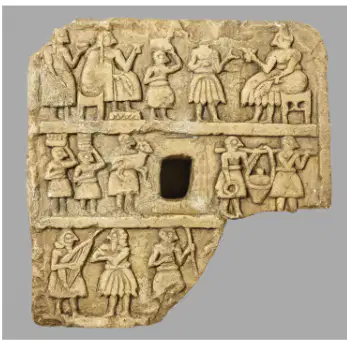
What does the following image represent?
An artifact
A fossil
A grid
A site
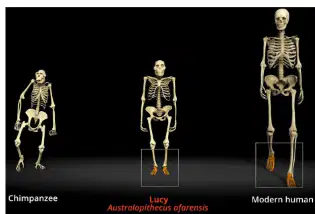
What is shown in the image below?
Artifact
Fossil
Grid
Site
Which of the following is NOT considered a characteristic of a civilization?
Developed cities
Workers with specialized skills
Innovative technology
Writing and record keeping
Medical progress

During which era were stone tools first created and utilized?
Stone Age
Iron Age
Bronze Age
Neolithic Age
What is the alternative name for the Old Stone Age?
Neolithic Age
Mesolithic Age
Paleolithic Age
Chalcolithic Age
Which era is referred to as the Stone Age?
Ancient Era
Age of Metals
Modern Era
Prehistoric time marked by the use of stone implements
What is a defining feature of the Neolithic Age?
Introduction of bronze implements
Beginning of farming
Living a nomadic existence
Adoption of iron tools
Which of the following years occurred earliest in history?
AD 220
AD 110
2019 CE
1500 CE
BCE refers to the same historical period as
BC
AD
CE
What does Anno Domini signify?
The year of the Lord
After death
Domino effect
After Dominic
What does B.C. represent?
Before Common Era
Before Christ
Before Columbus Era
Best Cousins
A.D. stands for
Anno Domini
Add Dictator
After Columbus
Animal Dominoa
C.E is an abbreviation for...
Before the common era
The common era
Christian Evolution
Coming Entry

Which animal appears most frequently in the cave paintings of Altamira?
Mammoths
Dinosaurs
Bison/Buffalo
Bulls/Cows
(True/False) Paleolithic cave art has been discovered in various locations across the globe.
True
False
In which region did the earliest hominins originate?
Europe
Africa
Asia
America
The discovery of numerous hominid bones at a single site suggests that hominids
created tools
lived together in groups
used language
perished in conflicts
The first hominin known as Handy man is credited with using
food
tools
shoes
hats
What does the term biped refer to?
two pedals
to crawl
to walk on two feet
a bicycle
How did Lucy obtain her food?
by gathering
by hunting
by farming
by shopping
1. What main jobs did people have in the Paleolithic Age?
a. Hunting & Gathering
a. Making Tools
a. Farming
1. What was the major change brought by the Neolithic Revolution?
a. Severe weather
a. Long periods of dryness
a. The development of farming
One effect of the development of farming was that people____________________.
stopped living as nomads
Life expectancy decreased
They needed to relocate to new farms
During the Neolithic Revolution, what significant change occurred?
People began cultivating crops
People traveled to search for food
People lived as wanderers
Record Keeping, Innovative Technology, Structured Institutions, Developed Cities, and Skilled Workers are all
Traits of Hunter-Gatherer Societies
Traits of Civilizations
Traits of Nomadic Groups

What are artifacts?
They are the remains of once-living organisms (such as plants, animals, or humans).
They are a kind of food.
They are objects that were created or shaped by humans (like tools).

What activities did people do inside the caves?
They discussed the weather.
They watched television.
They created artwork on the cave walls.

Paleolithic people created...
Tools made of metal.
Tools made of wood.
Tools made of stone.
Which of the following is an example of a tool used by early humans during the Paleolithic Age?
Smartphone
Stone axe
Metal plow
Printing press
What was a major reason early humans formed groups and communities?
To share resources and protect each other
To travel by airplane
To build skyscrapers
To invent the internet
Which of the following best describes the lifestyle of people during the Neolithic Revolution?
Nomadic hunters and gatherers
Professional athletes
Settled farmers living in permanent villages
Space explorers
Which material did early humans primarily use to make their first tools?
Glass
Stone
Iron
Plastic
What is the main difference between fossils and artifacts?
Artifacts are always found in water, fossils are found on land.
Fossils are made of metal, artifacts are made of stone.
Fossils are natural remains of living things, while artifacts are human-made objects.
There is no difference; they are the same.
Which of the following best describes the lifestyle of Paleolithic people?
They lived as nomadic hunter-gatherers.
They built large cities and temples.
They traveled by train and airplane.
They relied on advanced machinery for farming.
Which of the following best describes the main purpose of early human shelters?
To serve as places of worship
To display artwork
To protect from harsh weather and predators
To store surplus crops
What is the term for scientists who study artifacts and other physical remains to learn about past human life?
Biologists
Geologists
Archaeologists
Astronomers
Which of the following is NOT a characteristic of the Neolithic Age?
Development of agriculture
Use of stone tools
Nomadic lifestyle
Domestication of animals
What is the main purpose of studying fossils?
To discover new types of metals
To learn about ancient human-made objects
To find modern inventions
To understand the remains of living things from the past
Name that CENTURY: 300s
2nd Century
3rd Century
4th Century
5th Century
Name those YEARS: 15th Century
1300s
1400s
1500s
1600s

