
NEW
Font size
 Worksheets
U1(pt.1): Atomic Structure and the Periodic Table
Total questions: 20
Worksheet time: 10mins

Chlorine is the atomic number 17 in the periodic table of elements. What information does the atomic number give you about the element chlorine?
An atom of chlorine has 17 protons and neutrons combined.
An atom of chlorine has 17 protons.
An atom of chlorine has 17 protons and 17 neutrons.
Chlorine atoms have 17 of each of the three subatomic particles, protons, neutrons, and electrons.
An Aluminum atom has an atomic number of 13 and an atomic mass of 27. Based on that knowledge, which of these statements is NOT true concerning the atomic structure of aluminum?
Aluminum has 13 neutrons.
Aluminum has 14 neutrons.
Aluminum has 13 Protons.
The number of protons equals the number of electrons.
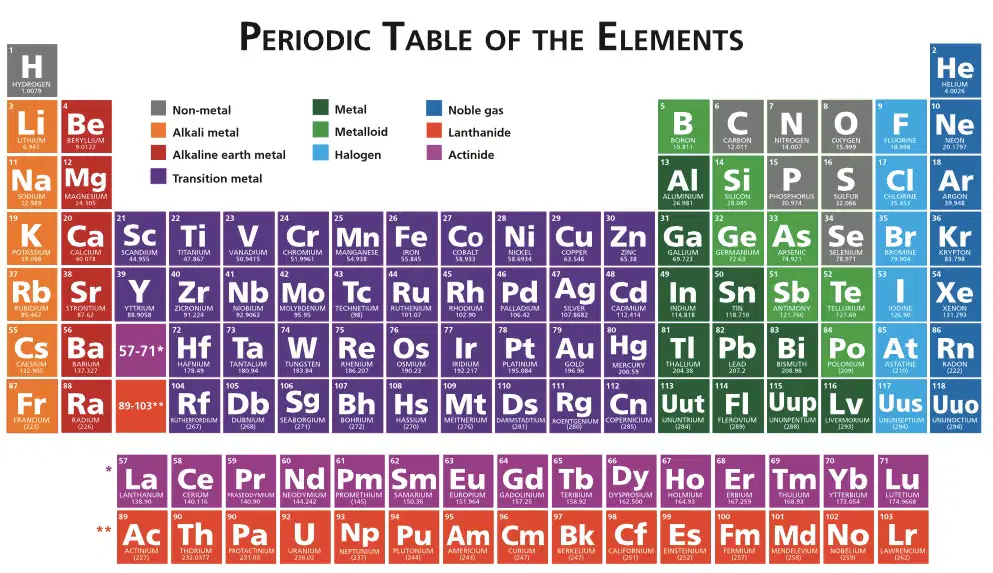
Based on your understanding of the periodic table, which element has the greatest number of electrons?
Uranium (U)
Sodium (Na)
Selenium (Se)
Polonium (Po)
Atom A has an atomic number of 19 and mass number of 40. Atom B has an atomic number of 20 and a mass number of 40. Which of these is an accurate statement?
Atom A has more protons than Atom B.
Atom A has one less proton and one more neutron than Atom B.
Atom A has an extra nucleon compared to Atom B.
Atom A has one more proton and one more electron than Atom B.
An atom with an atomic number of 12 and a mass number of 25 can best be described by which of these?
An atom that contains 12 protons and 13 neutrons.
An atom that contains 13 protons and 12 neutrons.
An atom that contains 12 protons and 25 neutrons.
An atom that contains 25 protons and 12 neutrons.

Using the periodic table and your knowledge of atomic structure. Cobalt (Co) and nickel (Ni) have almost identical atomic mass numbers. Comparing the typical nickel and cobalt atoms, which statement best describes the atoms?
Nickel has one more neutron.
Cobalt has one less proton.
Both atoms will have the same number of protons.
Both atoms will have the same number of neutrons.
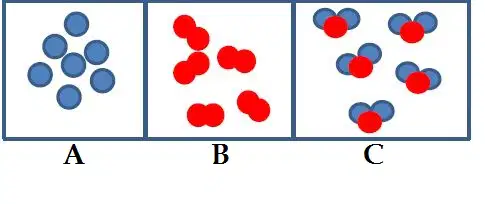
Which statement best describes the difference(s) between atoms and molecules?
Atoms are the most basic units of an element whereas molecules are atoms that are chemically bonded together.
Atoms are the most basic units of an element that have charges whereas molecules are neutral substances that consist of atoms chemically bonded together.
Atoms are made up of protons, neutrons, and electrons but molecules do not consist of these subatomic particles.
Atoms are made up of molecules whereas molecules are made up of ions.

Consider the elements in this family (group) of the periodic table. Because they are in the same family, what can you predict about these elements?
They are all about the same mass.
They are chemically reactive in a similar way.
The size of the atom decreases as you go down the column.
The elements change from metals to nonmetals as go down the column.

Consider this row in the periodic table of elements. As we move from left to right, across the row, the elements
change from nonmetals to metals.
change from metals to nonmetals.
start as gases but end as solids.
show a decrease in atomic mass number.
The majority of the mass of the atom is located in the _______.
nucleus
core electrons
pions and quarks
valence electrons
The element carbon exists in several different forms. Pure carbon can be found in the form of diamonds, coal, and the graphite in your pencil. Which statement concerning carbon is FALSE?
All carbon atoms have 6 protons.
All carbon atoms have 6 neutrons.
All carbon atoms have an atomic mass equal to the number of protons and neutrons.
All carbon atoms have an atomic number of 6.
Which statement about atomic structure is incorrect?
Protons are located in the nucleus.
Protons and electrons have the same mass.
Protons and electrons have opposite charges.
Neutral atoms contain the same number of protons and electrons.
The element sodium has an atomic number of 11 and a mass number of 23. How many protons, neutrons, and electrons does one atom contain?
11p, 11e, 12n
11p, 12e, 11n
11p, 11e, 23n
12p, 12e, 11n
Neutrons are found in the nucleus and separate the other particles so that the strong force can hold the nucleus together. Which particles are positively charged and need to be separated so that they don't repel?
electrons
neutrons
protons
quarks

What is the atomic number of this element?
15
17
35
52
Identify the negatively-charged sub-atomic particle outside the nucleus.
electron
neuron
neutron
proton
All the elements of a family in the periodic table have what feature in common?
They all have similar chemical properties.
They all have the same number of protons in the nucleus.
They are all located in the same horizontal row or period.
They all have the same number of electrons in the electron cloud.
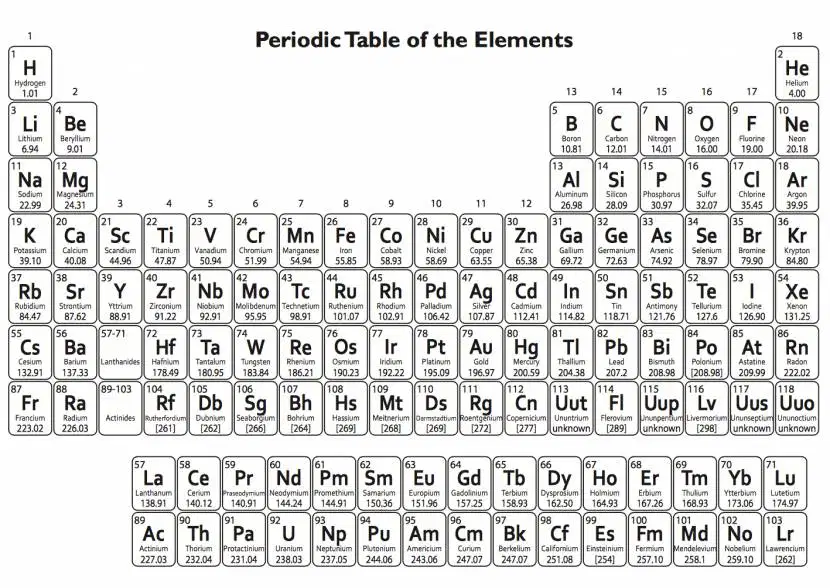
Helium, neon, and argon are examples of
metals.
metalloids.
noble gases.
transitional metals.

What is the overall charge of the nucleus of the lithium atom? Explain.
0. There are three positive protons and three negative electrons.
0. There are three positive protons and three negative neutrons.
+3. There are three positive protons and the four neutrons are neutral.
+7. There are three positive protons and four positive neutrons.
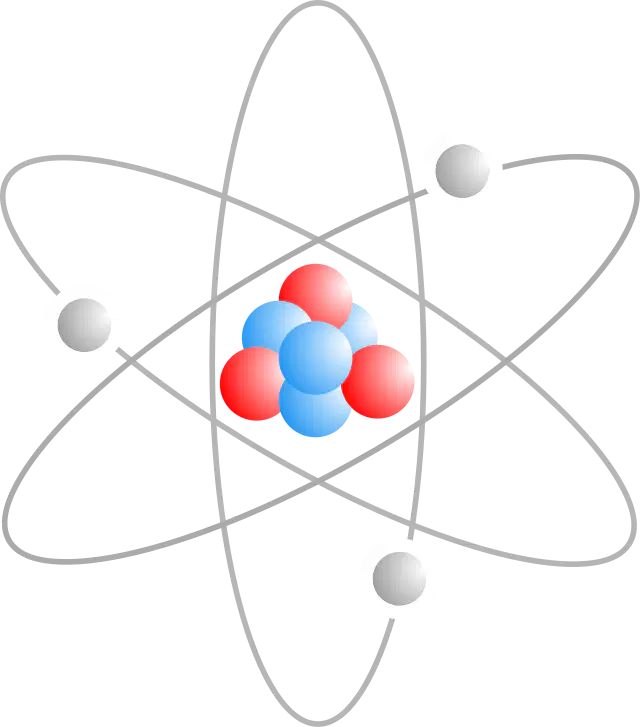
This is a model of a lithium atom. The red and blue subatomic particles found in the nucleus are the __________ and __________. The sum of these subatomic particles equals the atomic____________.
protons and neutrons; mass number
protons and electrons; mass number
protons and neutrons; atomic number
protons and neutrinos; identification number

