
 Worksheets
Chemical Reactions/Enzymes CFU 24-25
Total questions: 20
Worksheet time: 15mins
What is the process called that changes a set of chemicals into another set? (From a reactant to a product)
Chemical Reaction
Physical Change
Chemical Bonding
Chemical Mixing
Which of the following is a characteristic of a chemical reaction?
Production of light and heat
Only physical changes
No change in chemical properties
No energy change
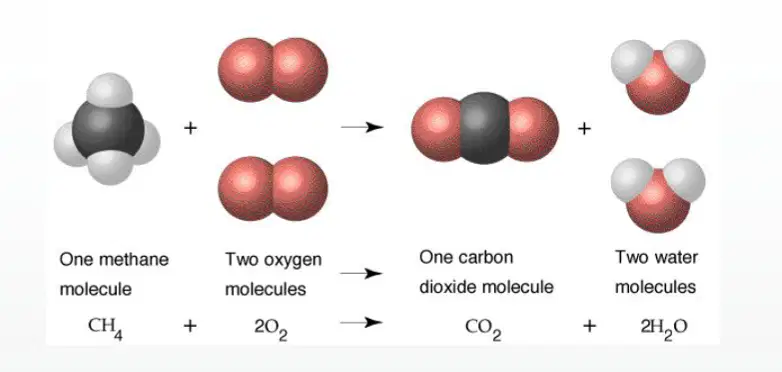
Which of the following is NOT a product in the given chemical reaction?
Water
Carbon dioxide
Methane
None of the above
Which type of reaction releases energy?
Endothermic
Exothermic
Isothermic
Thermodynamic
What is the main characteristic of an endothermic reaction?
Energy is released
Energy is absorbed
Energy remains constant
Energy is destroyed

The graph showing a reaction with an enzyme requires __________ to make the reaction happen than a reaction without an enzyme
more activation energy
less activation energy
no energy
the same amount
What is the effect of high activation energies on chemical reactions?
They make reactions occur faster.
They make reactions occur slower.
They have no effect on the speed of reactions.
They stop reactions from occurring.
Enzymes are an example of
Lipids
Carbohydrate
Protein
Nucleic Acid
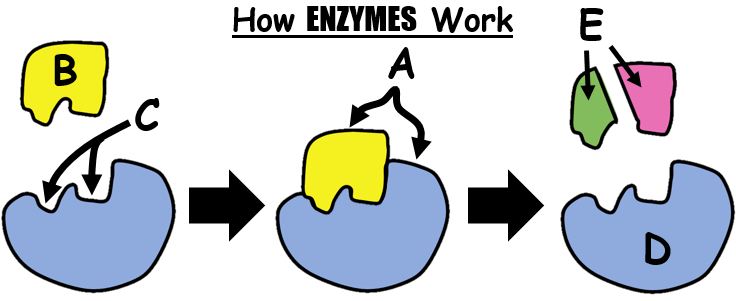
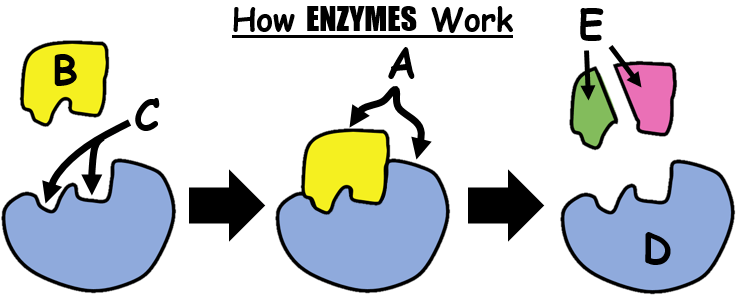
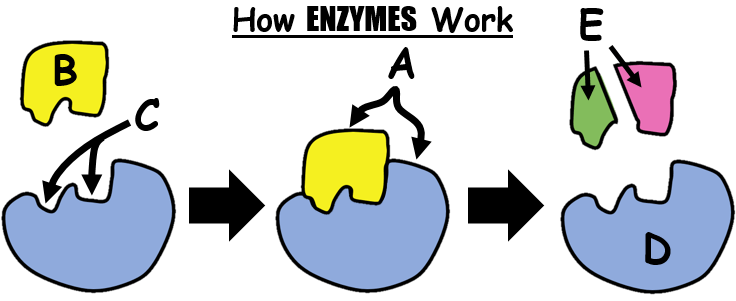
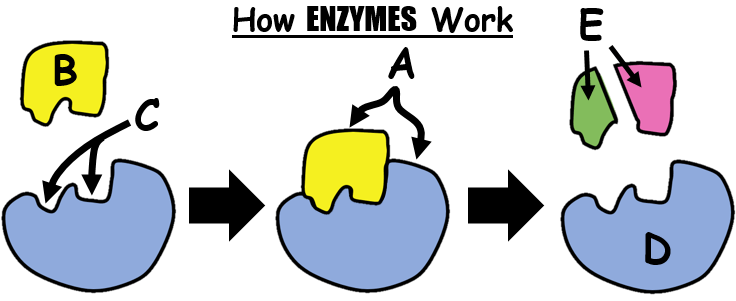
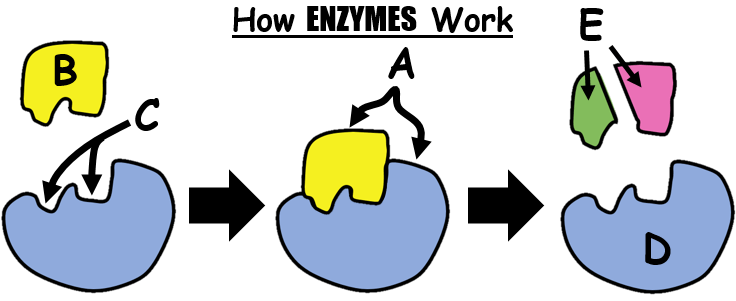
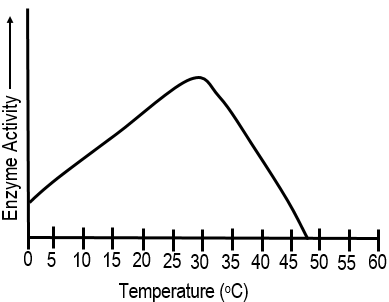
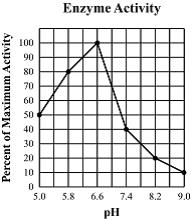
Enzyme can be used again and again
True
False
How does an enzymes shape relate to its function?
the shape of the enzyme has no relation to its function
the enzyme is shaped specially for certain substrates to perform a specific reaction
the enzyme shape acts as a receptor to certain products
the enzyme shape can fit into specific substrates to cease a reaction

