
Font size
S
M
L
XL
 Worksheets
Diffusion Quiz
Total questions: 15
Worksheet time: 15mins
Name
Class
Date
1.
Passive Transport is the movement of particles across the membrane from an area of [ ___ ] to an area of [ ___ ]
a)
high to low
b)
low to high
c)
low to low
d)
high to high
2.
Passive Transport uses ____ energy
a)
no
b)
a lot of
c)
a little bit of
d)
some
3.

The picture below is an example of _________________.
a)
osmosis
b)
isotonic
c)
diffusion
d)
active transport
4.

_______ regulates what enters and leaves a cell.
a)
Cell Membrane
b)
Nucleus
c)
Mitochondria
d)
Cytoplasm
5.
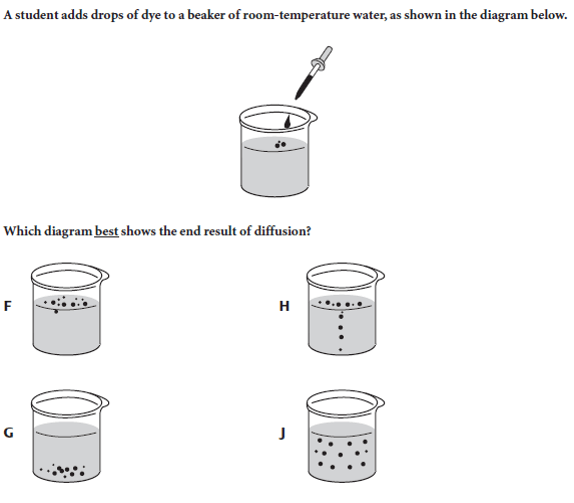
Which diagram best shows the end result of diffusion?
a)
F
b)
G
c)
H
d)
J
6.

What is the definition of Selective Permeability?
a)
The movement of materials across the cell membrane that requires NO ENERGY from the cell.
b)
The movement of materials through (or across) the cell membrane
c)
The ability of the cell membrane to allow some things to pass through while preventing other things from passing through.
d)
The movement of molecules from an area of high concentration to a area of low concentration
7.
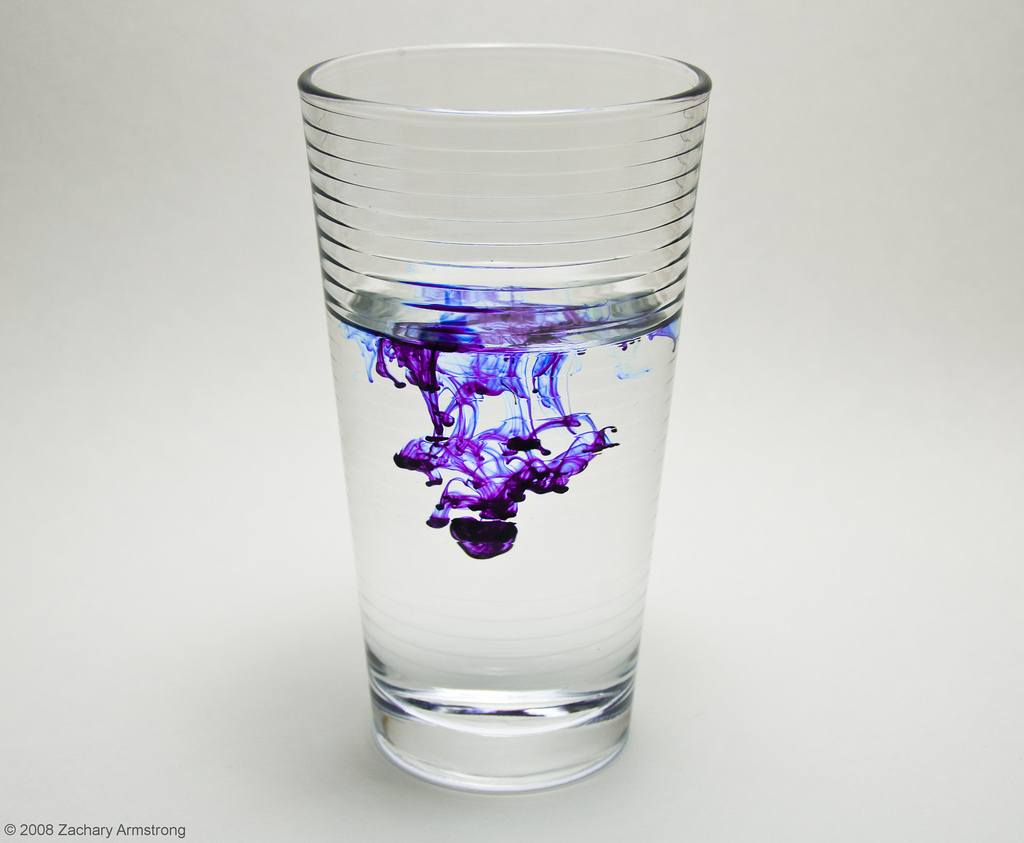
Where is there a low concentration of dye?
a)
at the bottom of cup
b)
in the color
c)
at the top of cup
d)
no concenteraion gradient
8.
Permeable means
a)
things can pass through
b)
the concentration levels are different
c)
it is permanent
d)
things are stuck
9.

Where is there a high concentration of water?
a)
in the flower
b)
cannot be determined by picture.
c)
in the vase
d)
in the leaves
10.
What a cell needs to transport particles by active transport?
a)
Sun
b)
Wind
c)
Energy
d)
Channels
11.
When both inside and outside of a cell have the same amount of water it is said that the cell has reached a state of
a)
Osmosis
b)
Diffusion
c)
Equilibrium
12.
Sometimes, energy is required for ____ molecules to go in or out of the cell because they cannot fit into the membrane.
a)
big
b)
small
c)
crunchy
d)
water
13.
A molecule that diffuses down a concentration gradient goes from an area of ______ concentration into an area of ______ concentration.
a)
high, low
b)
low, high
c)
passive, active
d)
active, passive
14.
Which of the following is the same for all Passive Transport processes?
a)
Low to High concentrations
b)
High to Low concentrations
c)
Requires ATP energy
d)
Doesn't require ATP energy
15.

The main goal of Passive Transport is to ...
a)
Move all molecules into the cell
b)
Move all molecules out of the cell
c)
Have molecules reach equilibrium
Reset

