
 Worksheets
ECM and Periodic Table Review
Total questions: 85
Worksheet time: 1hrs 2mins

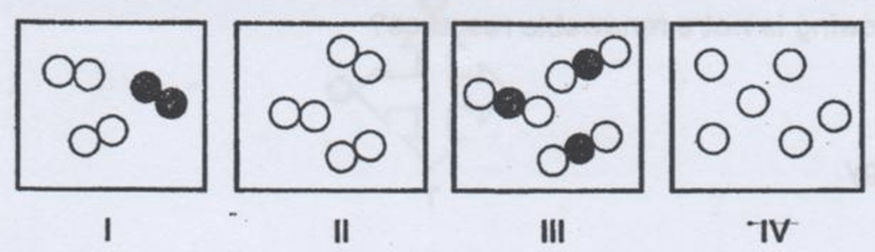
In the diagrams provided, the circles of different colors represent the atoms of different elements. Which diagram represents a mixture?
I
II
III
IV

Table salt, or sodium chloride has the chemical formula NaCl. How is sodium chloride classified?
as an element
as a compound
as a mixture
as a liquid
Brass is a metal that is bright red and gold. It is formed by combining, not chemically, two elements, zinc and copper. Based on the information, how would brass be classified?
an element
compound
mixture
suspension
Which is the smallest particle of an element that has the same properties as that element?
atom
molecule
compound
chemical
Compounds
are made of two or more types of atoms chemically bonded together
are made of one type of atom
are found on the periodic table
can be separated into their individual parts through physical means
Which of the following are examples of compounds? Check all that apply.
Salt
(NaCl)
Salt Water
(NaCl and H2O)
Sugar
(C6H12O6)
Carbon Dioxide
(CO2)
When substances combine chemically...
they form a mixture and their properties change
they form a compound and their properties change
they form a mixture where their properties stay the same
the form a compound where their properties stay the same
Which of the following are examples of Mixtures?
The atmosphere
(N + O + Ar + H2O...)
Carbon Dioxide (CO2)
Oxygen
(O2)
Lemonade
(sugar, lemon juice, water)
Anything on the Periodic Table
Mixtures
are made of two different types of atoms chemically bonded together
Are only liquids
Cannot be separated
Can be separated using physical properties
Which of the following are examples of a Pure Substance?
Water
(H2O)
Helium
(He)
Orange Juice
(oranges, water)
Uranium
(Ur)
Sugar
(C6H12O6)

8
4
26
56

18
8
40
3

Po
At
Rn
Lv

127
17
53
5

14
6
2
12

64
98
163
66

184
74
6
110
What are the three main groups of the periodic table?
groups
metal
nonmetals
metalloids
periods
What are the vertical columns on the periodic called?
groups
periods
nonmetals
metals
metalloids
What do the vertical columns on the periodic table tell us?
The number of orbitals
The number of valence electrons (electrons on the outer most shell)
What are the horizontal rows on the periodic table called?
periods
groups
metals
nonmetals
metalloids
What does the number of proton tell us?
electrons
atomic number
atomic mass
neutrons
How do you calculate the number of neutrons? *
Mass = Atomic number - Neutrons
Mass - Atomic number = Neutrons
Atomic number = Neutrons

How many protons and electrons does nickel have?
28
58.69

What is the atomic mass?
58.693
28

How many shells does Nickel have?
3
4
5
10
This element has two valence electrons and two energy levels?
Beryllium (Be)
Lithium (Li)
Zinc (Zn)
How many valence electrons and shells does (Pb) lead have?
4 valence electrons and 6 shells
6 valence electrons and 4 shells
5 valence electrons and 5 shells
5 valence electrons and 10 shells
Which label is the atomic mass or the amu?
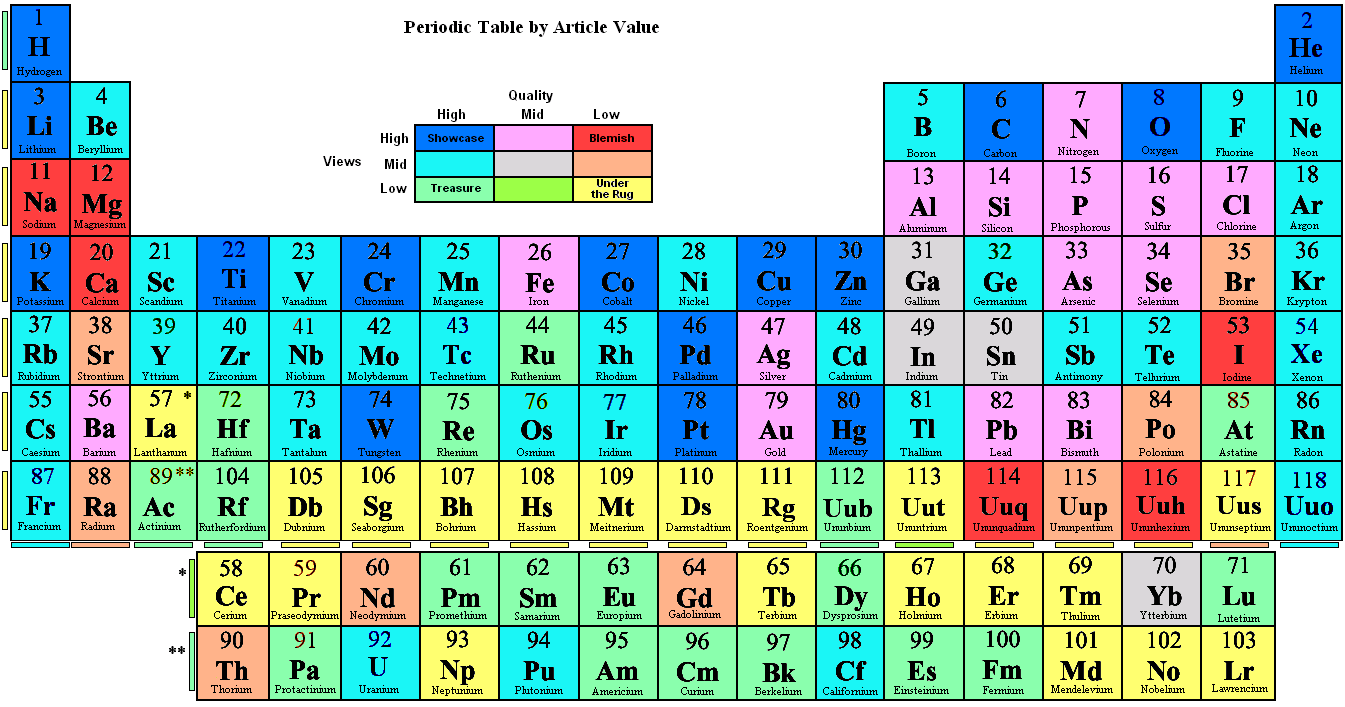
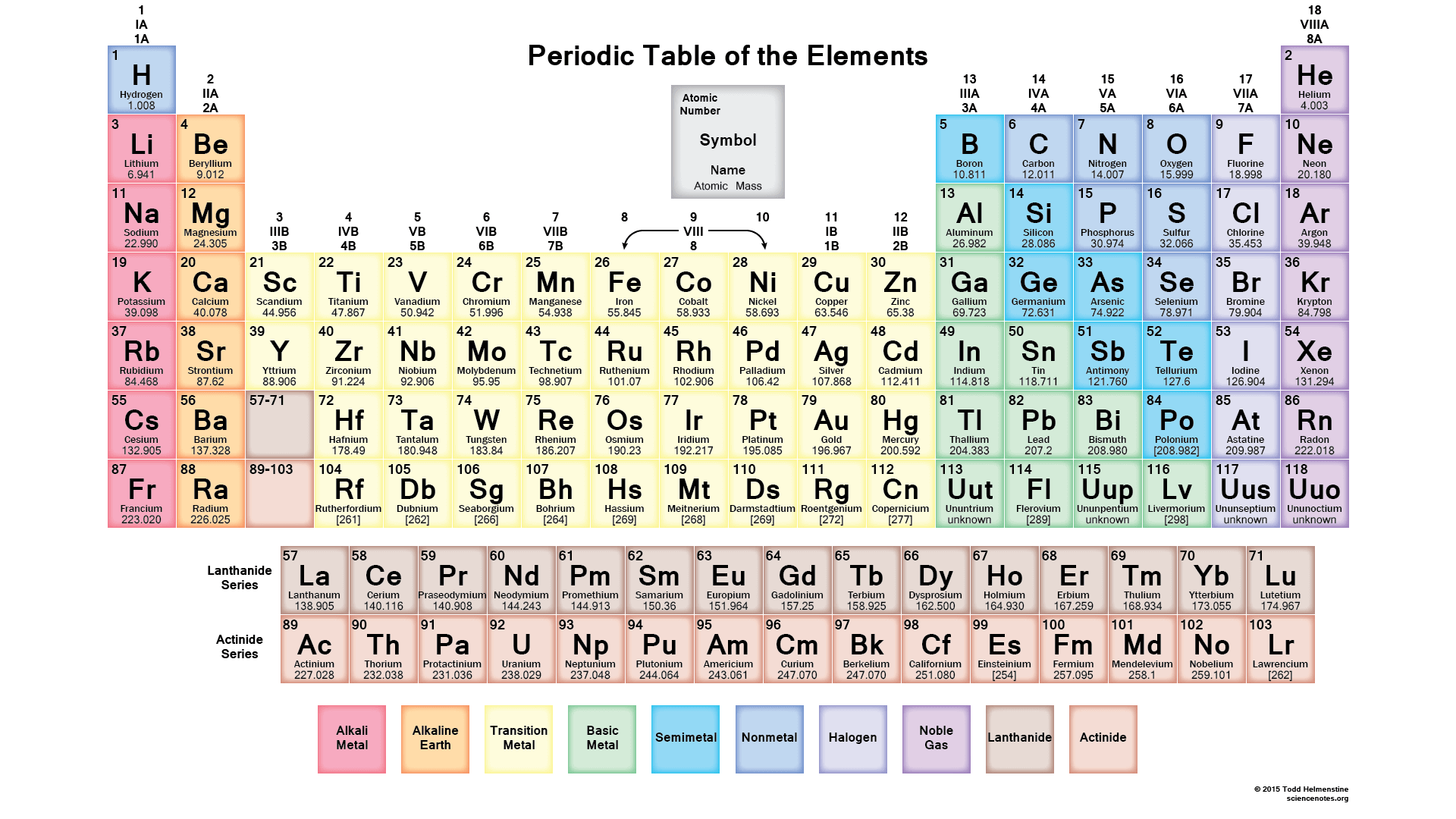
What does the atomic mass (mass number) tell you?
number of electrons and protons
the number of protons and neutrons
The number of protons
The atomic number tells you what?
the number of both electrons and protons


What is the mass number of "F"
Which statement best describes the arrangement of elements in the periodic table?
Elements are arranged in decreasing atomic mass from left to right.
Elements are arranged in decreasing atomic number from left to right.
Elements are arranged in increasing atomic number from left to right
Elements are arranged in increasing number of neutrons from left to right.
Which pair of elements has the most similar properties?
Be and B
O and S
H and Hg
Na and F
He, Ne, and Ar are all noble gases. What is common among these gases?
They are flammable.
They are highly reactive.
They are metals.
They are unreactive.
What group of elements are highly reactive and is placed on the first column on the left side of the periodic table?
Group IA (Alkali Metals)
Group IIA (Alkali Earth Metals)
Group VIIA (Halogens)
Group VIIIA (Noble Gases)
What group of elements are highly reactive and is placed on the second column on the right side of the periodic table?
Group IA (Alkali Metals)
Group IIA (Alkali Earth Metals)
Group VIIA (Halogens)
Group VIIIA (Noble Gases)
What group of elements are least reactive and is placed on the last column on the right side of the periodic table?
Group IA (Alkali Metals)
Group IIA (Alkali Earth Metals)
Group VIIA (Halogens)
Group VIIIA (Noble Gases)
Sodium reacts with water. Which element is most likely to have a similar
effect to sodium if it is exposed to water?
carbon
nitrogen
boron
lithium
In which side of the periodic table are nonmetals most likely found?
left
right
middle
bottom
In which groups did Mendeleev most likely place highly-reactive
elements?
IA (Group 1) and VIIA (Group 17)
IA (Group 1) and VIIIA (Group 18)
IIA (Group 2) and VIIIA (Group 17)
Which element has 7 valence electrons?
Na
B
Cl
Xe
Elements within a group have similar properties.
TRUE
FALSE
Igualar
4 Electrones de Valencia
Si
2 Electrones de Valencia
Mg
1 Electron de Valencia
Rb
8 Electrones de valencia
Ne
6 Electrones de Valencia
Se
Where in an atom are the electrons located
Inside the nucleus
Outside the nucleus
What is the atomic number of hydrogen?
0
1
2
3
Which equation do we use when trying to find # of neutrons?
APE
MAN
APE - MAN
Atomic number only
Which number is the atomic mass number?
The top one
The bottom one
They're the same
What does the E in APE MAN stand for?
Atomic Number
Atomic Mass
Protons
Electrons
Neutrons
What does the P in APE MAN stand for?
Atomic Number
Atomic Mass
Protons
Electrons
Neutrons
What does the A in APE MAN stand for?
Atomic Number
Atomic Mass
Protons
Electrons
Neutrons
Label the element tile
Element Symbol
Atomic Number
Atomic Mass
Element Name
Which group numbers do NOT follow the same rules as the rest of the groups in the periodic table to determine the number of valence electrons?
groups 1 and 2
group 8
groups 5-7
groups 3-12
Chose all properties of metal:
Brittle
Shiny
Malleable
Good Conductors
Ductile
Chose all properties of
non-metal:
Brittle
Dull
Malleable
Good Conductors
Insulator
Where are metalloids located on the periodic table?
Right side of periodic table
Left side of periodic table
zig-zag line of periodic table
none of the above
Chose all properties of
metalloids:
can be Brittle
can be shiny
can be Malleable
Semi-conductor
can be Insulator
The ability of a material to be hammered into sheets
Conductivity
Malleability
Luster
The appearance of a material when it reflects light
Conductivity
Malleability
Luster
I have properties of both metals and nonmetals
Metals
Metalloids
Non Metals
Group 18
Noble Gases
Group 1
Alkali Metals
Group 2
Alkaline Earth Metals
Groups 3-12
Transition metals
Group 17
Halogens
choose the metalloid element
Alumunium
Germanium
Silver
Helium

According to the diagram, which list represents elements that share the most similar chemical properties?
O, Se, and Kr
Se, Cl, and Ne
S, Cl, and Ar
Ne, Ar, and Kr

