
 Worksheets
Classification Review
Total questions: 25
Worksheet time: 2hrs 36mins

Canis lupus

I am an autotroph
I am multicellular
What am I?
I am eukaryotic
I reproduce sexually
I am multicellular
What kingdom do I belong to?
The 7 levels of classification, most broad to most specific.
Genus, Family, Order, Class, Phylum, Kingdom, Species
Species, Kingdom, Genus, Phylum, Family, Class, Order
Kingdom, Phylum, Class, Order, Family, Genus, Species
Order, Kingdom, Species,Phylum, Family, Class, Genus
When trying to identify organisms, what do we look at?
physical features
weather patterns
environment
diet
Why have scientists most likely classified archaebacteria and eubacteria together?
They have similar DNA.
They are both eukaryotes.
They are both prokaryotes.
They evolved around the same time.
Which two organisms are least closely related?
two organisms from the same kingdom
two organisms from the same order
two organisms from the same family
two organisms from the same genus

Unicellular organisms that lack a nucleus and other cellular organelles are known as...
Prokaryote
Eukaryote
Heterotroph
Autotroph
Which kingdom includes organisms that are multicellular, eukaryotic, and obtain energy by consuming other organisms?
Protista
Animalia
Which kingdom includes organisms that are mostly unicellular, eukaryotic, and can be autotrophic or heterotrophic?
Fungi
Protista

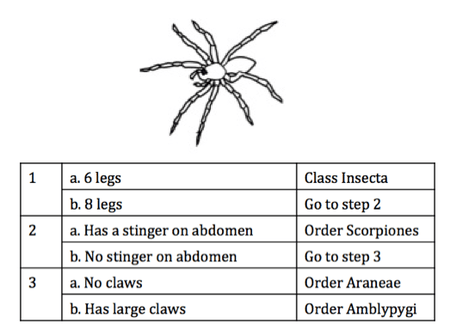

arachnids and insects?

A student discovers an arachnid without a segmented abdomen, and legs longer than its body. The student uses the dichotomous key below to identify it. Which arachnid has the student found?
Whip Scorpion
Wind Scorpion
Daddy long legs
Scorpion
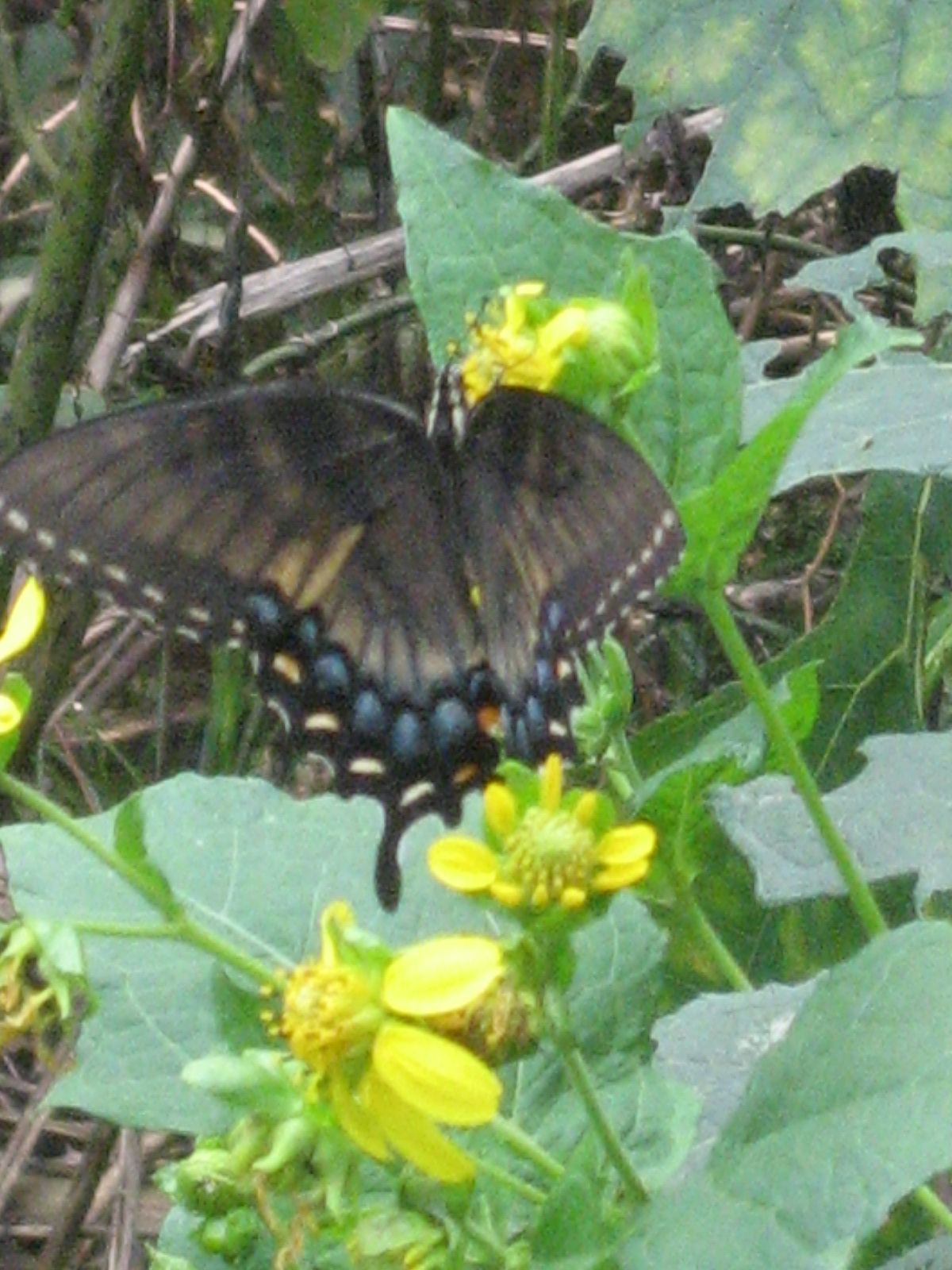
Which of the following characteristics will most likely be helpful in identifying a butterfly using a dichotomous key?
It migrates north in the summer
It has long tail
It likes only certain plants
Its wings beat very fast in hot weather

What type of protist is this?
euglena
volvox
paramecium
amoeba
As a dichotomous key is made, the number of organisms in each step ______, while the similar traits among the organsims ________.
increases, decreases
increases, increases
decreases, increases
decreases, descreases

