
 Worksheets
U1LC2 REVIEW
Total questions: 47
Worksheet time: 2hrs 45mins
Which is an example of an endothermic reaction?
gas --> liquid
solid --> liquid
liquid --> solid
In an endothermic process ...
energy is added to the system
energy is released from the system
Match the processes
Example of an endothermic process
solid --> gas
Example of an exothermic process
gas --> solid
Exothermic Process
energy is released
Endothermic Process
energy is added
A higher boiling point indicates...
a greater density
a lower density
a greater attraction between particles
a lower attraction between particles
If a substance has stronger forces it will...
have a higher boiling point
have a lower boiling point
have a higher density
have a lower density
Which is NOT a way to know if a substance has reached boiling
You'll see bubbles
The liquid will begin to turn into a gas
The temperature will continue to increase
The temperature will plateau

The melting point of the sample is
-60 ºC
-100 ºC
60 ºC
100 ºC

Given the heating curve of a solid being heated at a constant rate, what is the boiling point of this substance?
20°C
50°C
110°C
170°C


In a heating curve, diagonal lines indicate temperature is __________, while flat lines indicate temperature is __________.
Constant, changing
Changing, constant

At what temperature does the substance in the graph freeze?
140°C
100°C
40°C
0°C
At what temperature does the substance in the graph condense?
140°C
100°C
40°C
0°C
What state of matter/phase change is occurring during line segment D on the graph?
Gas
Condensation
Liquid
Freezing
Solid

The graph represents the temperature of a substance while it is cooled.
At what interval is the substance a liquid and a solid?
AB
BC
CD
DE
EF
How many Joules of energy are required to make 0.100 kg of ice at 0 οC completely melt?
The specific latent heat of fusion of ice is 334000 J/kg
Calculate the amount of energy required to melt 35.0 grams of ice.
Hf = 80.0 cal/g, Hv = 560.0 cal/g
(Hint: If you are melting, do you use the Heat of Fusion or Vaporization?)
How many calories are required to boil 75 grams of water?
Hf = 80.0 cal/g, Hv = 560.0 cal/g
(Hint: If you are boiling, do you use the Heat of Fusion or Vaporization?)
When 20 g of a substance are completely melted at its melting point, 3444 J are absorbed. What is the heat of fusion of this substance?
68880 J/g
172.2 J/g
0.0058 J/g

What is the total pressure of the heliox gas in the diagram?
300 kPa
100 kPa
400 kPa
500 kPa
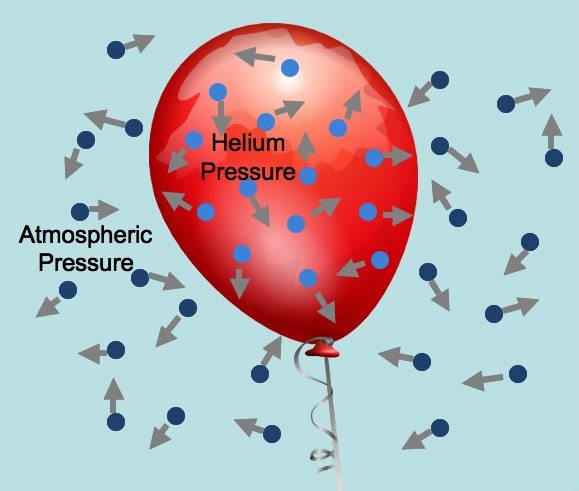
In a mixture of gases, each gas contributes to the total pressure. The individual contribution of each gas is known as the _________________.
partial volume
partial pressure
molar mass
mole ratio
A container holds three gases: oxygen, carbon dioxide, and helium. The total pressures of the three gases is 9 atm, respectively. If there is an equal amount of all 3 gases, what is the partial pressure of each?
300 atm
0.30 atm
3.00 atm
320 atm
Match the following. Also, pay attention to the state of matter (solid, liquid, gas)

Pure solid element

Pure gas compound

Pure liquid element

Heterogeneous mixture of a liquid & gas

Homogeneous mixture of 2 gas elements
Match the following

Pure gas compound

Pure gas diatomic element

Homogeneous mixture of liquid elements

Pure gas monotomic element
Which describes a gas at 25oC (room temp)?
Fills it's container
Condenses to a liquid
Has no mass
Moves very slow
How does temperature affect particles?
High temp (speed)
Particles move faster
Low temp (speed)
Particles move slower
High temp (volume)
Volume increases
Low temp (volume)
Volume decreases

The heat absorbed while a solid is melting is known as....
heat of fusion
heat of solid
heat of liquid
heat of vaporization
Heat always flows from a __________________ to a cooler object.
warmer
cooler
liquid
gas
If an unknown sample is at its coldest temperature, the particles will be
far apart
close together
neither
both

A heated substance changes from a solid to a liquid to a gas. During this time, how does the strength of the forces of attraction change among particles?es
the strength of attraction decreases
the strength of attraction increases
the strength of attraction remains the same
none of the above

Match the image to A-B on the heating curve.


Match the image to C-D on the heating curve.
Match the image to E-F on the heating curve.

Which substance has the highest specific heat capacity?
Liquid water
Solid water
Water vapor
Lead
In our coffee cup calorimetry experiment, we dropped a piece of hot metal into cool water. The heat lost by the metal was ___________ the heat gained by the water.
equal to
greater than
less than

Which way does energy flow?
Hot to cold
Cold to hot
Cold to Cold
Hot to Hot

