
Font size
 Worksheets
Chemistry Unit 1 Pre-Test
Total questions: 26
Worksheet time: 16mins
The variable that is being measured or observed is called the _______________. Hint: this is the variable that is the result or effect
independent variable
dependent variable
control variable
The process of obtaining information by using the senses is called a/an
Conclusion
Observation
Inquiry
Scientific method
The independent variable is
The variable that you change in an investigation
The variable that you measure in an investigation
A variable that you keep the same in an investigation
Two objects with different temperature in thermal contact will reach thermal equilibrium when.....
both object becomes hotter
both objects become colder
both object reach the same final temperature
net heat transfer other than zero
At thermal equilibrium, heat absorbed by cool object is________ to the heat released by the heat object
equal
larger
smaller
not equal

After some time, the metal spoon on the oatmeal
have the same initial temperature as the oatmeal
have the same final temperature as the oatmeal
hotter than the oatmeal
colder than the oatmeal

What happens to the temperature if I add ice cubes to a glass of soda
The heat transfers from the coke to the ice
The heat transfers from the ice to the coke
The energy of movement is ___.
potential energy
kinetic energy
mechanical energy
The more energy that particles have, the ___ they move.
slower
faster

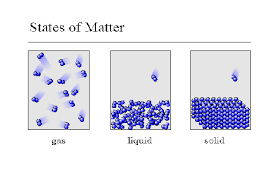
These properties describe a ___.
solid
liquid
gas

These properties describe a ___.
solid
liquid
gas

These properties describe a ___.
solid
liquid
gas
The particles of ___ generally have the least amount of energy.
solids
liquids
gases
Liquid particles have more energy than ___ particles.
solid
gas
How can you compare conductors based on their thermal conductivity?
Select conductors based on their weight, assuming heavier ones have better thermal conductivity.
Compare conductors based on their thermal conductivity values, where higher values indicate better heat transfer capabilities.
Choose conductors randomly without considering thermal conductivity values.
Compare conductors based on their color, where darker colors indicate better thermal conductivity.
What is the dependent variable in an experiment measuring thermal conductivity?
Volume expansion
Color change
Pressure increase
Temperature change or heat transfer rate
List some safety precautions that should be followed while investigating thermal conductors.
Follow safety precautions such as wearing appropriate PPE, working in a well-ventilated area, using insulated tools, and being cautious around hot surfaces.
Leaving tools unattended near hot surfaces
Wearing sunglasses indoors
Using wet hands while handling conductors
What is the definition of thermal conductivity?
It is the ability of a material to conduct heat.
It is the resistance of a material to heat flow.
It is the temperature difference between two objects.
It is the rate at which a material absorbs heat.

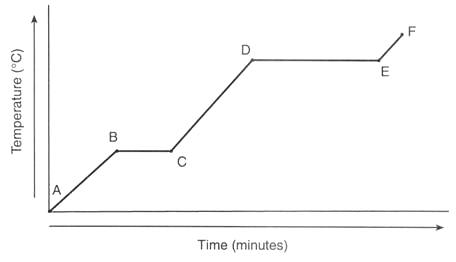

Is the substance gaining or losing energy?
Gaining
Losing

Where on the graph are phase changes taking place?
1
2
3
4
5

