
 Worksheets
NMH7 Historical Thinking BP Task
Total questions: 131
Worksheet time: 1hrs 12mins
What is a historian?
a person who researches, studies, and writes about the past, and is considered an expert on it
a person who studies human activity through the recovery and analysis of artifacts from today and the past
a person who studies the history of life on Earth through the fossil record
a person who studies the solid, liquid, and gaseous matter that constitutes Earth and other terrestrial planets
What is a primary source?
an artifact, a document, diary, manuscript, autobiography, a recording, or other source that was created at the time of study
created later by someone who did not experience first-hand or participate in the events researched
prejudice in favor of or against one thing, person, or group compared with another, usually in a way considered to be unfair
an educated guess based on evidence & prior knowledge
What is a secondary source?
an artifact, a document, diary, manuscript, autobiography, a recording, or other source that was created at the time of study
created later by someone who did not experience first-hand or participate in the events researched
prejudice in favor of or against one thing, person, or group compared with another, usually in a way considered to be unfair
an educated guess based on evidence & prior knowledge
What is a generalization?
a period of history with a particular feature or characteristic
a period of ten years
a period of a thousand years
assuming something about a group of people based on little information
Why is contextualization a useful skill?
Giving context to the source helps to understand how the environment influences what is in the text.
Finding out when/where the source was written.
It helps you determine if a source is reliable.
causation (SSP.04)
determining how one event leads to another
a particular attitude or way of considering a matter; perspective
a confident and forceful statement of fact or belief
a conclusion reached based on evidence and inferences
continuity & change over time (SSP.05)
an account of the past
acknowledging what stays the same, and what is different, over a period of time
imagining the time period in which a document was created
Putting events in sequence and making connections based on related continuity and change

Which piece of evidence could be used to BEST support this claim:
High school students should be required to wear uniforms.
When adding everything up, a school uniform could end up costing more than $200.
A student reported, "Allowing us to wear our own clothes gives us a chance to show our unique style and independence."
At one school that recently required students to wear uniforms, attendence rates went up, and behavior incidents went down.
School uniforms can be ordered online .
Which of the following is true about Historical Interpretations?
They remain the same.
History is about memorizing the facts.
Historical interpretations are open to revision based upon new facts and ideas.
History is only open to one interpretation based upon facts.
Bonus Question:
A challenge or problem that has been debated or discussed across time
claim
enduring issue
issue
This is the idea of having absolutely no bias or prejudice at all:
subjectivity
objectivity
perspective
subconscious
Which statement shows bias?
Johnny is in the 9th grade at Arlington High School
My son, Johnny, couldn't have cheated on his test, he's always so sweet and honest.
Johnny plays on the Admiral football team
Johnny has blonde hair and blue eyes.
Definition: Refers to where this historical development/event is taking place and why it is taking place there.
historical context
geographical context
source
claim
Claims testing involves using information to make an informed decision including:
scientific errors and gut instinct.
limited resources and limited data
A variety of evidence and well-trusted perspectives.
emotional responses such as feelings.
Selecting certain people to be interviewed is
Bias through selection and omission
Bias through placement
Bias through source control
Bias through crowd counts
'More than 900 people attended the event' is
Bias through selection and omission
Bias through placement
Bias through source control
Bias through crowd counts
'It is a moral outrage...' is bias through
Word Choice and Tone
Placement
Source Control
Headline
Bias in the media can influence the reader to feel
positively towards an issue
negatively towards an issue
either positively or negatively toward
Where a story appears in the newspaper or during the news segment is
Bias through use of names/titles
Bias through word choice and tone
Bias through placement
Bias through crowd counts
An editor can express bias by choosing some or none of a story what is this?
Bias through selection and omission
Bias through placement
Bias through source control
Bias through crowd counts
When the news calls someone who was in jail for a minor offense an "ex-con"
Bias through Placement
Bias by Headline
Bias through Names and Titles
Bias by statistics
Newspapers put stories on front page that they want you to read
Bias through Placement
Bias by Headline
Bias through Names and Titles
Bias by statistics
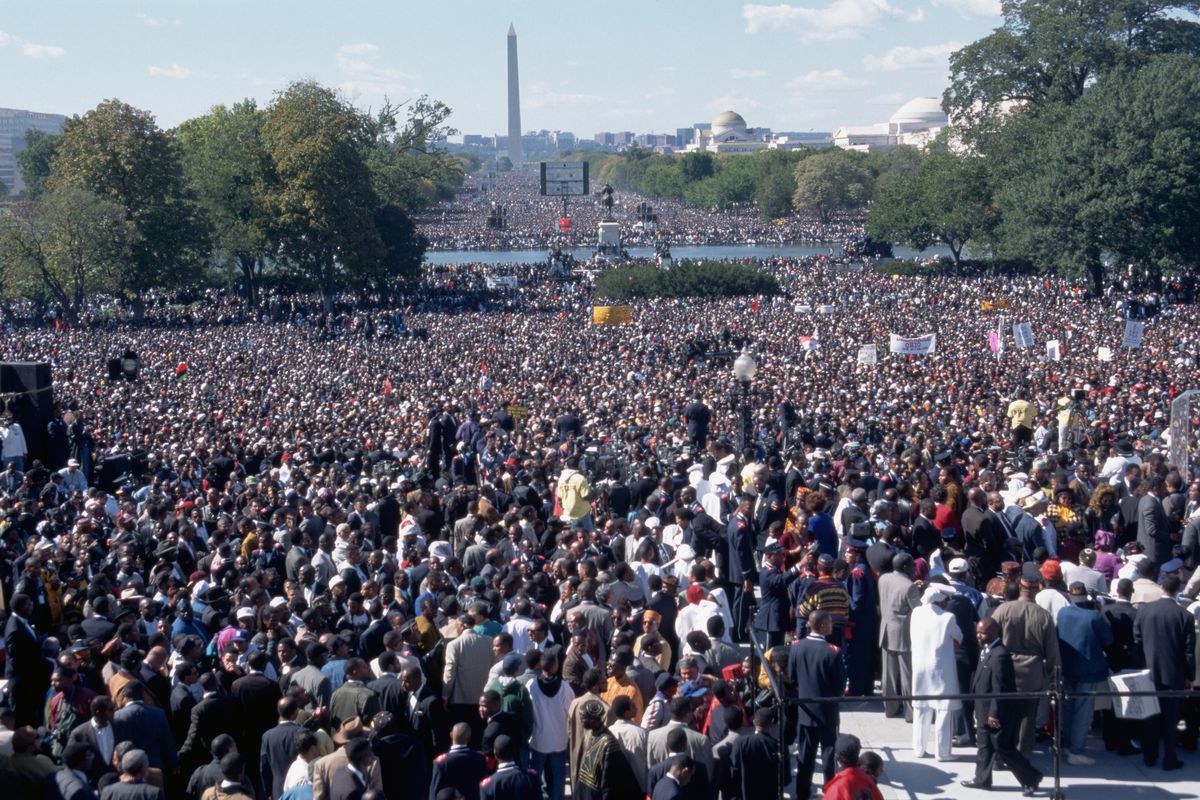
To make a story interesting numbers can be inflated
Bias through Placement
Bias by Headline
Bias through Names and Titles
Bias by Statistics and Crowd Counts
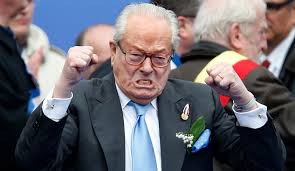
Do pictures show the subject in a flattering/unflattering way?
Bias through Source Control
Bias through Photo's, Captions and Camera Angles
Bias through Placement
Bias through Headline
News covers story of kneeling football players by interviewing ONLY Players. This is
Bias by Word Choice and Tone
Bias through Source Control
Bias through crowd counts and statistics
Will the following give bias answers?
Question: What is your favorite sport?
Group: People who play soccer
Yes because they play soccer so they are likely to say it is their favorite sport
No because playing the sport will not influence their opinion
Will this give bias answers?
Question: What is your favorite soft drink?
Group: Picking names out of a telephone book
Yes because the people randomly selected in the phone book is a pre-selected group.
No because the people in the phone book would be randomly selected and not based on anything else.
Would this get a biased response?
Question: Should more money be put into athletic programs or music programs?
Group: Students in the band program
Yes because they only asked students in the band program, so their opinion is likely to be band.
No because they could be randomly selected band students.
Reading for pleasure is a waste of time. However, 63% of people who spend a hour of reading will see an increase in their test scores because of the practice time spent reading. Which is a biased statement?
Reading for pleasure is a waste of time.
63% of people who spend a hour of reading will see an increase in their test scores because of the practice time spent reading.
I just got back from soccer practice, and when I was there my friends and I agreed that soccer is the best sport to play. We believe it is the best sport to play because of the running and coordination it takes to play. Which is a biased statement?
... my friends and I agreed that soccer is the best sport to play.
We believe it is the best sport to play because of the running and coordination it takes to play.
Which is a biased statement about social studies?
Social Studies includes American and World History, Current Events, Government, Geography, and Psychology.
Social Studies is the best subject the school teaches.
In a news article you noticed that the author left out important information or facts. What type of bias could this be?
Bias by labeling
Bias by placement
Bias by omission
Bias by labeling
The newspaper decided to place a story above-the-fold so that you saw that story first. What type of bias could this be?
Bias by omission
Bias by story selection
Bias by selection of sources
Bias by placement
The author chooses only to use sources that support their argument. What type of bias could this be?
Bias by omission
Bias by selection of sources
Bias by placement
Bias by labeling
What is a secondary source?
A document or recording that relates or discusses information originally presented elsewhere.
A document or recording that was created at the time of study.
A document or recording that is based on personal bias.
A document or recording that is based on scientific errors.
What type of bias could be present if a news outlet only interviews people from a specific political party?
Bias through selection and omission
Bias through placement
Bias through source control
Bias through crowd counts
What is the term for a statement that is not based on fact or knowledge?
Opinion
Fact
Claim
Source
What is the term for the idea that everyone has their own unique view or perspective?
Subjectivity
Objectivity
Generalization
Enduring issue
Which statement is an example of bias through word choice and tone?
The politician's speech was filled with lies and deceit.
The politician gave a speech yesterday.
The politician's speech was about the economy.
The politician's speech was held at the city hall.
First-hand account of a historical event (ex. journal)
Primary Source
"Say"
"Matter"
Source
Second-hand account of a historical event (ex. biography); created after the event occurred by someone who was not a witness
"Matter"
Secondary source
Perspective
Context
A particular attitude or way of seeing something
DBQ
Secondary source
Perspective/Point of View
Primary Source
What is bias?
Being open minded
Giving both points of view or perspective
Favoritism in favor of or against something
Strictly informational

What continent is this?
North America
Asia
Antarctica
Europe
Antarctica is surrounded by which ocean?
Southern
Pacific
Atlantic
Indian
Things made by humans and used by archeologists and historians to recreate a picture of the past
Evidence
Compass rose
Artifacts
Perspective
Shows information in a chronological order based on events or a story.
Timelines
Perspectives
Primary Sources
Accounts
North America is the
continent in the Western Hemisphere as well as mostly in the Southern Hemisphere. It has the Amazon Rainforest.
Europe
the largest continent with 60% of the earth's population and occupies the eastern four-fifths of the giant Eurasian landmass.
3rd largest continent & the continent you live on consisting of the United States, Mexico, and Canada.
An orientation graphic that indicates the direction NORTH on a map or globe
Hemisphere
Compass Rose
North America
Geography
South America is a
continent in the Western Hemisphere as well as mostly in the Southern Hemisphere. It has the Amazon Rainforest.
continent north of Africa and west of Asia; 2nd smallest of the world's continent
3rd largest continent & the continent you live on
Europe is
largest continent with 60% of the earth's population.
an extremely cold continent at the south pole almost entirely below the Antarctic Circle
continent north of Africa and west of Asia;2nd smallest of the world's continent.
Asia is
2nd largest continent(after Asia), covering about one-fifth of the total land surface of Earth
the largest continent with 60% of the earth's population. It occupies the eastern four-fifths of the giant Eurasian landmass.
3rd largest continent & the continent you live on

Africa is
2nd largest continent (after Asia), covering about one-fifth of the total land surface of Earth
an extremely cold continent at the south pole almost entirely below the Antarctic Circle
the smallest continent and one of the largest countries on Earth, lying between the Pacific and Indian oceans in the Southern Hemisphere.
Facts or information that can be used to test whether a proposition is true or valid; proof
Credible
evidence
perspective
arguement
Definition: fit to be trusted or relied on
perspective
reliable
persuade
Definition: Finding out who created a source, when, where, and why it was created in order to see if it is reliable
Sourcing
Social Studies
Close Reading
Evidence
One-half of the terrestrial globe
cup
globes
scarcity
hemisphere
a picture of a compass on a map that shows the cardinal directions
map legend
compass rose
scale
globes


One of the large landmasses of the Earth
Geography
Oceans
Continents
I don't know, but I need a nap
An imaginary line around the center of the earth
Hemisphere
Longitude
Equator
Waistline
The study of the Earth's physical and cultural features
Artifact
Geography
Evidence
Primary Source
An expert in or student of history
Geographer
Historian
Compass Rose
Social Studies
A personal representation of an event from the past
Historical Account
History
Social Studies
Geography
Events or accounts of events from the past
Social Studies
Geography
History
Telenovela
An explanation of the meaning of something
Fib
Interpretation
Point of View
Evidence
The study of how people over time have interacted with each other and their environment
Math
Science
ELA
Social Studies
Historians divide periods of time with similar characteristics into eras in order to —
predict the future
analyze historical maps
record economic data about Texas
organize information about the past
What is an era?
any time span of ten years
another name for a time line
a visual that shows how a set of data changes over time
a span of years often named for a particular trend or pattern of events
A form of government in which people elect representatives.
legislative
republic
executive
federalism
Political maps usually show human-made divisions, such as capitals and cities.
True
False

The legislative branch holds the power to...
make laws
carry out laws
interpret and apply the laws
Select the two paths to citizenship.
By birth
By migrating to the United States as a baby
By going to college in the U.S.
By naturalization
In a free enterprise system, private individuals and groups have the right to own property and businesses and to make a profit, with limited government interference.
True
False
The executive branch holds the power to...
make laws
carry out laws
interpret laws
Which map is a 'political map'?


Jon overslept this morning, so he missed the bus. His dad had to drive him to school. What social studies skill does this represent?
categorizing
making decisions
cause-and-effect relationship
making predictions
Which branch of government is responsible for interpreting the laws?
executive
legislative
judicial
Which of the following best describes a democracy?
A system where a single ruler has absolute power
A system where citizens elect representatives to make decisions on their behalf
A system where the government controls all aspects of life

Which city has the lowest average temperature in March?
Tokyo
New York
Berlin
London
What is the main purpose of a constitution?
to establish the fundamental laws and principles of a government
to create new laws
to interpret existing laws
to enforce laws
A(n) _______________ is a human made object such as a tool, button, or old vase.
artifact
secondary source
bias
question
A document or record of past events created by people who were present at that time is called ____________.
Secondary Source
Primary Source
Corroboration
Sourcing

Geography is...
the study of maps.
the study of maps & globes.
the study of other countries.
the study of the earth & its physical features.
A ________________ is written after the time period by an expert or historian and can include books, magazines, and short articles.
primary Source
secondary Source
bias
artifact
Example of a primary sources...
photograph
textbook
magazine article

Example of a secondary source...
photograph
speech
textbook
decade: ten years :: century : _____
1000 years
a lot of years
100 years
10,000 years
Rudy Riptide is a famous news reporter. On his latest assignment, he was in NYC reporting on a new bridge being being constructed out of Playdough. He took a ton of pictures and write a news story. He produced a _________
primary source
secondary source
effect
cause
History is _____________.
the study of middle school social studies
writing a paragraph about cells
the study of events that happened in the past
the way someone looks at a person, an issue, or and event

To answer the question, "Where is it?", there are TWO types of locations;
Exact & Relative
Precise & Rounded
Absolute & Relative
Absolute & Relation
an unreasoned, emotional judgment about people and events
Bias
Point of View
Conclusion
Historian
Used to measure distance on a map


Define culture:
the things that ALL cultures have
when everyone believes the same thing
shared beliefs and values of a group of poeple
the shared beliefs, customs, practices, and values of a group of people
Which of the following best describes a primary source?
A document created after an event by someone who was not present
A firsthand account of an event
A summary of historical events
An analysis of past events

