
 Worksheets
Cells Part 1
Total questions: 23
Worksheet time: 17mins
Which of the following are part of the Cell Theory? Select all that apply.
Cells are the basic unit of structure and function of life.
All living things are made of one or more cells.
The cell is the basic unit of matter.
All cells come from preexisting cells.
Which of the following statements is true?
Plants and animal cells have cell walls for protection.
Animal cells have one large vacuole; the plant cell has tiny ones.
Plant cells contain chloroplasts; animal cells have vacuoles.
Animal cells have a cell wall, plant cells do not.
Which of the following is NOT made up of cells?
snowflake
earthworm
tree
human

The structure labeled "E" has the function of
Power plant of the cell. They create energy.
Stores water and nutrients for the cell to survive.
Protects the cell.
Controls all activity in the cell (the brain) and stores DNA.
What is the outer lining of the cells. Controls what goes in and out.
Mitochondria
Cell Membrane
Cell Wall
Cytoplasm
A rigid exterior which protects and supports a plant cell.
Cell Membrane
Cell Wall
Cytoplasm
Vacuole
Controls all activity in the cell (the brain) and stores DNA
Mitochondria
Chloroplasts
Nucleus
Cytoplasm
Fluid that fills the cell and keeps the organelles in place.
Cell Membrane
Cell Wall
Vacuole
Cytoplasm
Power plant of the cell. They create energy through a process called cellular respiration.
Nucleus
Chloroplasts
Mitochondria
Large central vacuole
Makes food for the plant cells in a process called photosynthesis.
Mitochondria
Chloroplast
Nucleus
Vacuoles
Stores water and nutrients for the cell to survive
Vacuole
Cell Wall
Cell Membrane
Cytoplasm
Perform photosynthesis
Control what enters and exits the cell
telescope
magnifying glass
scale
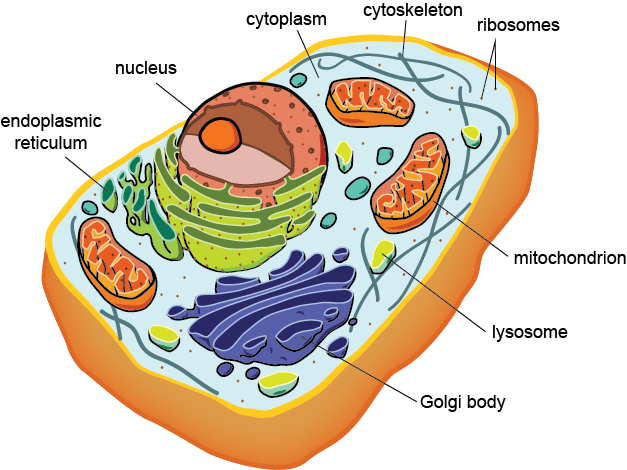

Looking in a microscope, you see cells that have rectangular shapes, chloroplasts, and cell walls. What type of cells are you probably viewing?
plant cells
animals cells
muscle cells
blood cells

Cell Membrane
A semi-permeable membrane allowing only certain things in and out of the cell.
Storage for the cell. Plant cells have very large vacuoles because they cannot get a drink of water whenever they want.
Strong rigid outer wall of plant cells giving them their strong structure.
The boss of the cell sending messages and containing DNA
All of the following are found in an animal cell except:
vacuole
cell membrane
cytoplasm
cell wall
Unicellular organisms, like bacteria, are made of _____ cell(s).
One
Two
Many
Multicellular organisms, like plants and animals, are made of _____ cell(s).
One
Many

