
 Worksheets
Unit 2 Review 2024
Total questions: 42
Worksheet time: 56mins
In the chemical reaction CH₄ + 2O₂ → CO₂ + 2H₂O, what are the reactants?
CH₄ and O₂
CO₂ and H₂O
CH₄ and H₂O
CO₂ and O₂
How many molecules of oxygen (O₂) are required in the reaction CH₄ + 2O₂ → CO₂ + 2H₂O?
1
2
3
4
What does the Law of Conservation of Mass state?
Matter is created during a chemical reaction.
Matter is destroyed during a chemical reaction.
Matter is neither created nor destroyed during a chemical reaction.
Matter is both created and destroyed during a chemical reaction.
Which of the following best describes the Law of Conservation of Mass?
The total mass of reactants is always less than the total mass of products.
The total mass of reactants is always more than the total mass of products.
The total mass of reactants is equal to the total mass of products.
The total mass of reactants and products cannot be compared.
H2 + O → H2O
A shorter, easier way to show a chemical reaction, using symbols instead of words, is called a..............
chemical formula
symbol
chemical equation
subscript

How many atoms in all are in a molecule of serotonin?
C10H12N2O

2HgO → 2Hg + O2
Al + O2 → 2Al2O3
6CO2+ 6H2O → C6H12O6 + 6O2
The carbon atoms are balanced with ____ on each side of the reaction.
1
6
2
Determine whether the following equations is balanced or unbalanced. H4 + O2 ---> 2H2O
Balanced
Unbalanced
Determine whether the following equation is balanced or unbalanced. 2Fe + 3Cl2 ---> FeCl3
Balanced
Unbalanced


The arrow in this equation is the
reactants
products
yield sign
Coefficient
The number 2 that is partially below the chemical formula in this equation is the
reactants
products
subscript
Coefficient
yield sign
the number placed in front of a chemical formula in a chemical equation; represents the number of molecules of that substance.
coefficient
subscript

How many F atoms are in this compound?
6MgF2
2
6
8
12
What is the total number of atoms in this chemical formula? C8H3NaBr12
18
12
25
24
three hydrogen (H)
one sulfur (S)
four oxygen (O)
What are the evidences of a chemical reaction?
Color , temperature
Gas, precipitate
Light
All above
In elephants toothpaste a chemical reaction occurs
hydrogen peroxide → water + oxygen gas
Which of the following indicates the products(s)?
water and oxygen gas
hydrogen peroxide, water and oxygen gas
hydrogen and peroxide
hydrogen peroxide
What determines an element's chemical reactivity?
protons
electrons
neutrons
valence electrons
All atoms are most stable with (or would "prefer") how many electrons in their valence shell?
1
2
8
18


Which elements have the most similar chemical properties?
boron and carbon
oxygen and sulfur
aluminum and bromine
argon and silicon

Compare the data shown in the table. What reasonable conclusion can be made from the information given?
Element 1 has the same atomic mass as Element 4
Element 3 has a very similar chemical properties as Element 4
Element 1 has very similar chemical properties as Element 3
None of the above

According to the diagram, which list represents elements that share the most similar chemical properties?
O, Se, and Kr
Se, Cl, and Ne
S, Cl, and Ar
Ne, Ar, and Kr

Where are valence electrons located on the model?
Near the nucleus
In the middle of the atom
At the innermost level
At the outermost level
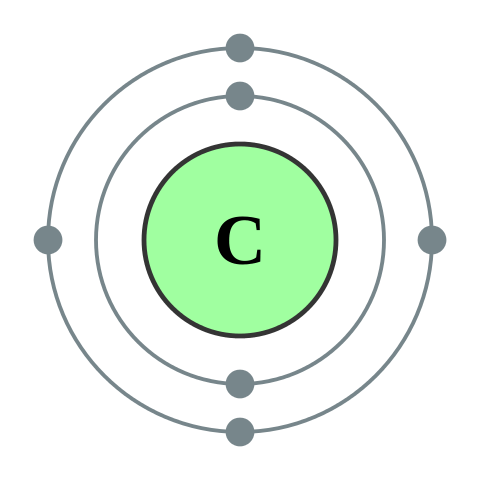
How many valence electrons does carbon have?
4
5
6
7
USE THE PERIODIC TABLE
How many valence electrons does sodium have?
1
2
3
4

What group does this element belong to?
15
16
17
18

