
NEW
Font size
 Worksheets
Principles of Art
Total questions: 25
Worksheet time: 12mins
The Mnemonic device to remember the Principles of Art is BRUCE PM.
True
False

What type of balance do you see in this image?
Symmetrical
Asymmetrial
Radial

What type of balance do you see in this image?
Symmetrical
Asymmetrial
Radial

What type of balance do you see in this image?
Symmetrical
Asymmetrical
Radial
The distribution of visual weight in a piece of artwork describes what Principle of Art?
Unity
Balance
Rhythm
Emphasis
When all elements of art are working together you have what principle of art?
Pattern
Balance
Emphasis
Unity
Contrast is when there are differences in the elements of art in a piece of artwork. Which one of these images has the MOST CONTRAST?


In this artwork, the artist has used the principle of ___________ to create a sense of action in the painting.
Rhythm
Movement
Emphasis
Unity
The focal point in an image is the same as what principle of art?
Emphasis
Movement
Balance
Pattern

In this painting, there is a collection of different types of bottles, but they all seem to work well together in the composition. Which principle of art is defined as the elements of art working together in a piece of artwork?
Emphasis
Unity
Rhythm
Balance

In this digital artwork, there is a repetition of movement in the lines. What Principle of art can be defined as a repetition of movement?
Balance
Pattern
Rhythm
Emphasis

In this photograph, the artist has used the principle of Emphasis to place our eyes on a focal point. What is the focal point in this photo?
The sky
The girl with the umbrella
The rock
The clouds

What type of balance is seen in this image?
Symmetrical
Radial
Asymmetrical

A principle of design that focuses on a repetition of any of the elements of art is ________.
Shape
Pattern
Value
Proportion

What principle of art is being used in these two works of art?
Emphasis
Pattern
Asymmetrical Balance
Shape
What principle of art can be defined as the differences in any of the elements of art?
Pattern
Unity
Balance
Contrast

This painting by Wassily Kandinsky represents what style of art?
Realism
Abstract
Portraiture
Landscape

This image demonstrates the Rule of Thirds by having AT LEAST 1 INTERSECTING POINT on the ______________.
Mid-ground
Building supports
Background
Focal point

The area of emphasis in this image is ..........
The clouds
The blue part of the sky
The bird on the branch
The entire image
When an object or part of an object in a piece of artwork is ACTUALLY moving (like a wind chime), this type of movement would be considered.........
Kinetic movement
Implied Movement
Directional movement
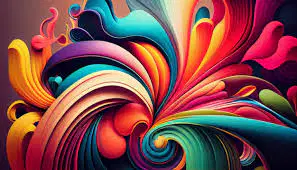
What type of movement do you see in this image?
Kinetic Movement
Implied Movement
Directional Movement
Implied movement can be described as an image that looks like it is moving but it does not actually move.
True
False
Directional movement can be defined as the elements in a piece of artwork directing the view's eye to the focal point.
True
False

What element of art is creating contrast in this image?
Form
Line
Color
Texture

What type of movement do you see in this image?
Kinetic
Implied
Directional

