wayground logo

Free Printable Worksheets

Font size

S
M
L
XL
Worksheets

Physical Science Ch. 3 Review

Total questions: 23

Worksheet time: 20mins
Name
Class
Date
1.
A substance with definite volume & definite shape is
a)
a solid
b)
a liquid
c)
a gas
2.
A substance with definite volume & no definite shape is
a)
a solid
b)
a liquid
c)
a gas
3.
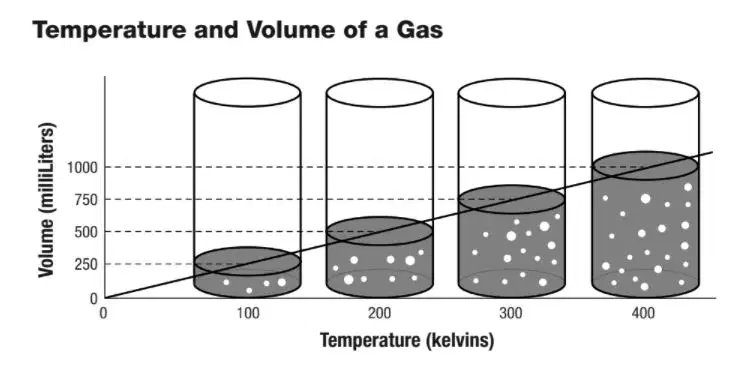
The graph below shows the temperature and volume change in a gas. Which measurement would be the best prediction for the volume of the gas at a temperature of 500 K?
a)
1250 mL
b)
1500 mL
c)
1750 mL
d)
200 mL
4.
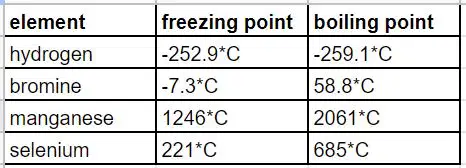
What state will bromine be in at room temperature (37*C)?
a)
solid
b)
liquid
c)
gas
d)
plasma
5.
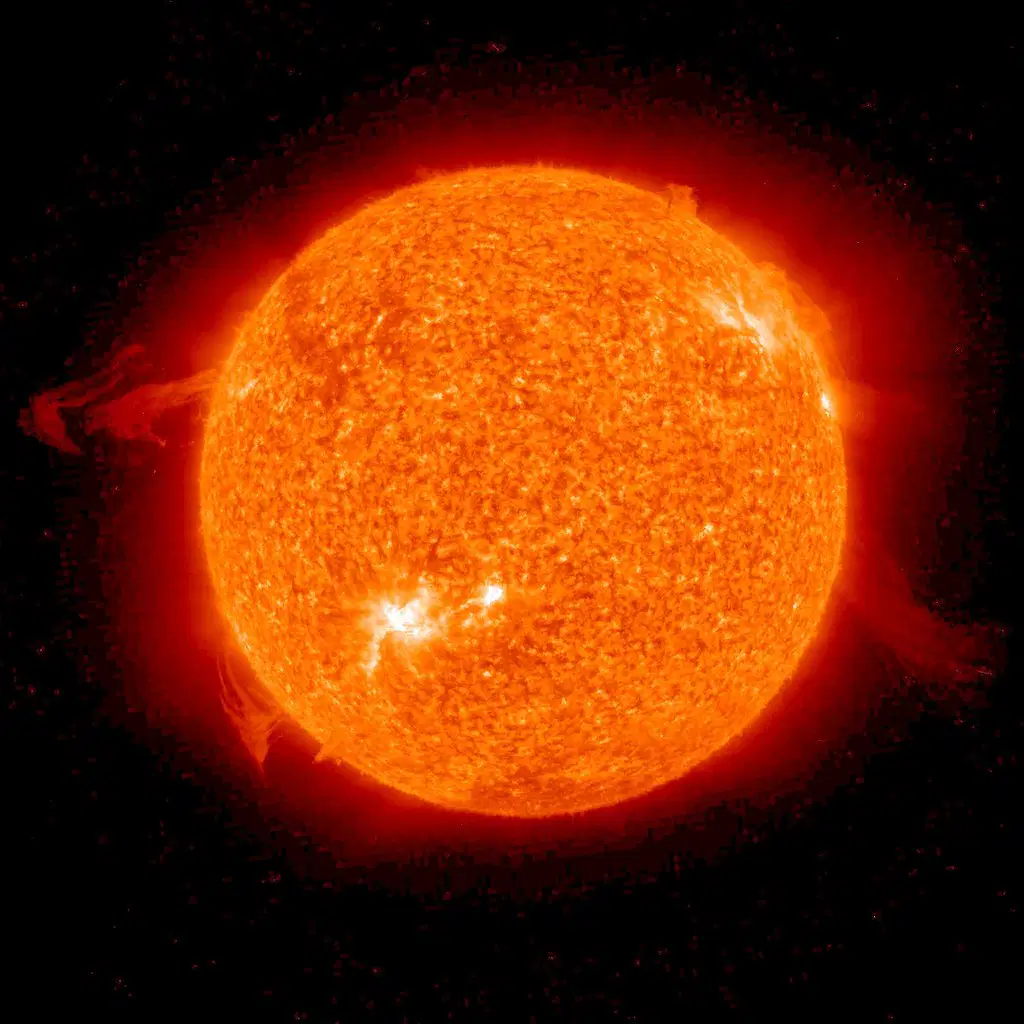
Most of the matter in the universe is
a)
a solid
b)
a liquid
c)
a gas
d)
a plasma
6.
What says all matter is composed of tiny particles, these particles are in constant, random motion, the particles collide with each other and with the walls of any container in which they are held, and the amount of energy that the particles lose from these collisions is negligible?
a)
potential theory
b)
gravitational theory
c)
evolutionary theory
d)
kinetic theory
7.
Which change is endothermic?
a)
solid to liquid
b)
liquid to solid
c)
gas to liquid
d)
gas to solid
8.
The change from a solid to a gas is called
a)
evaporation
b)
melting
c)
deposition
d)
sublimation
9.
During a phase change (choose all that apply)
a)
the temperature of a substance changes.
b)
the state of the substance changes
c)
the temperature of a substance does not change.
d)
the state of the substance does not change.
10.
The energy absorbed by 1 gram of ice as it melts is known as the _____ of water.
a)
heat of melting
b)
heat of fusion
c)
phase change
d)
vaporization
11.
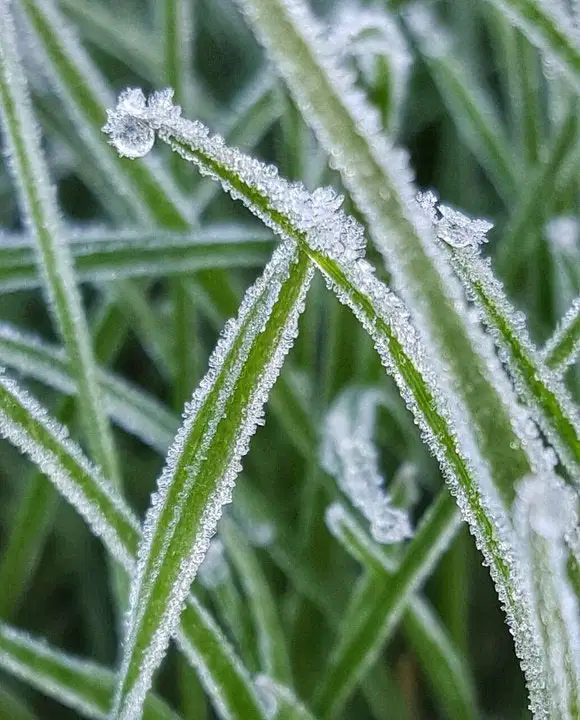
Frost forms on surfaces because of
a)
sublimation
b)
heat of fusion
c)
vaporization
d)
deposition
12.
The energy an object has due to the motion of its particles is called
a)
potential energy
b)
kinetic energy
c)
gravitational energy
d)
thermal energy
13.
The kinetic theory of gases says (choose all that apply)
a)
particles of a gas are in constant motion
b)
the motion of one particle is unaffected by the motion of the other particles unless the particles collide
c)
forces of attraction among particles in a gas can be ignored under ordinary conditions
d)
a gas will not take the shape of its container
14.
The forces of attraction have the strongest effect on the behavior of
a)
solids
b)
liquids
c)
gases
d)
plasmas
15.
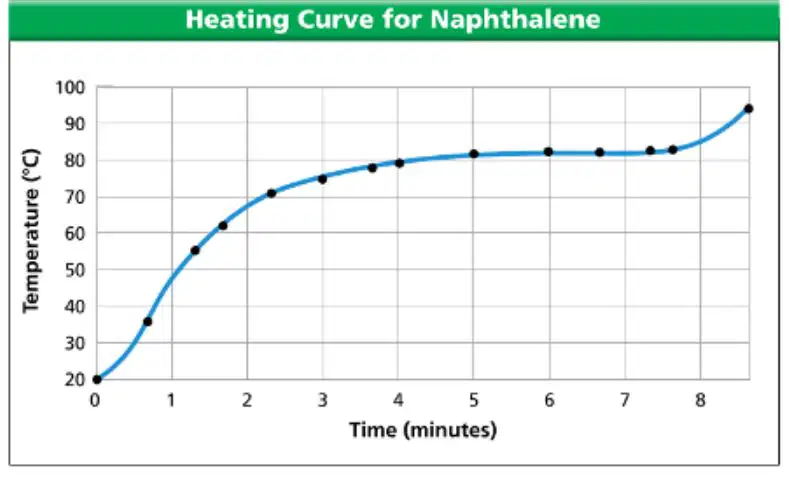
In the lab, naphthalene (the chemical in moth balls) is being heated and the temperature change is graphed as shown below. It is a solid at 20*C, and a liquid at 97*C on the graph. Which statement is correct about this lab activity?
a)
Naphthalene is freezing between 20*C and 80*C.
b)
Naphthalene is melting between 20*C and 80*C.
c)
Naphthalene is melting at 80*C.
d)
Naphthalene is melting above 80*C.
16.
Which of the following phase changes are exothermic? Choose all that apply.
a)
condensation
b)
freezing
c)
deposition
d)
evaporation
e)
melting
17.
Which of the following phase changes are endothermic? Choose all that apply.
a)
evaporation
b)
melting
c)
sublimation
d)
condensation
e)
freezing
18.

What is the process called when a gas turns into a liquid?

a)

condensation

b)

evaporation

c)

sublimation

d)

deposition

19.

In which state of matter are particles closely packed but can only vibrate in fixed positions?

a)

solid

b)

liquid

c)

gas

d)

plasma

20.

What is the term for the amount of energy required to change a substance from the solid phase to the liquid phase?

a)

heat of vaporization

b)

heat of fusion

c)

thermal energy

d)

kinetic energy

21.

What is the process called when a liquid turns into a gas?

a)

condensation

b)

evaporation

c)

sublimation

d)

deposition

22.

Which state of matter has particles that are far apart and move freely?

a)

solid

b)

liquid

c)

gas

d)

plasma

23.

What is the term for the amount of energy required to change a substance from the liquid phase to the gas phase?

a)

heat of fusion

b)

heat of vaporization

c)

thermal energy

d)

kinetic energy