
NEW
Font size
 Worksheets
Cell Structure
Total questions: 14
Worksheet time: 7mins

What is a key feature that distinguishes prokaryotic cells from eukaryotic cells?
Presence of a plasma membrane
Lack of membrane-enclosed organelles
Presence of DNA
Ability to perform photosynthesis
What molecule forms the plasma membrane of cells?
Carbohydrates
Lipids
Proteins
Nucleic acids
Why are most cells very small?
To fit more cells in the body
To reduce the volume
To maintain a high surface area to volume ratio for efficient material exchange
To minimize energy consumption
Which of the following is not a function of the cytoskeleton?
Providing structural support
Facilitating cell movement
Assisting in intracellular transport
Translation of genetic information
What is the primary function of ribosomes?
DNA replication
Protein synthesis
Lipid breakdown
Energy production
Which component of the endomembrane system is responsible for modifying, sorting, and packaging proteins?
Rough ER
Smooth ER
Golgi body
Lysosome
Which structure in eukaryotic cells contains DNA?
Mitochondria
Nucleus
Chloroplasts
All of the above

Which of the following is a major function of the extracellular matrix?
Energy storage
DNA replication
Providing structural support and enabling cell signaling
Synthesizing proteins
Which of the following statements supports the endosymbiotic theory for the origin of mitochondria and chloroplasts?
They have their own circular DNA and double membranes.
They are found only in prokaryotes.
They are synthesized in the Golgi apparatus.
They perform photosynthesis and respiration.
These two cell structures are said to have been prokaryotes before being engulfed by an ancestral eukaryote
Smooth and Rough ER
Lysosome and Peroxisome
DNA and RNA
Mitochondria and Chloroplast
Which cell structure is responsible for producing sugars via photosynthesis?
Mitochondria
Chloroplasts
Plasmodesmata
Ribosomes
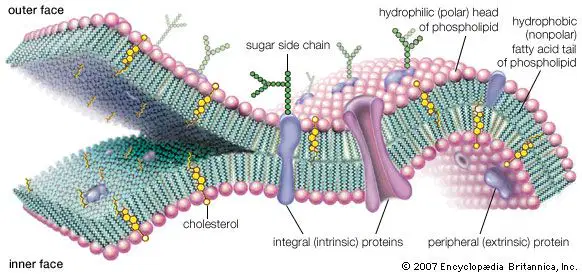
Cell membranes consist mainly of ______ and ______.
lipids; carbohydrates
phospholipids; proteins
lipids; proteins
phospholipids; ECM
Despite the diversity of cell type and functions, all cells have these three things in common:
cytoplasm, DNA, and organelles with membranes.
a plasma membrane, DNA , and a nuclear envelope
cytoplasm, DNA, and a plasma membrane
cell wall, cytoplasm, DNA
In a lipid bilayer, the ______ of all the lipid molecules are sandwiched between all of the ______.
hydrophilic tails; hydrophobic heads
hydrophilic heads; hydrophilic tails
hydrophobic tails; hydrophilic heads
hydrophobic heads; hydrophilic tails

