
 Worksheets
UNIT 01 - Civil War
Total questions: 22
Worksheet time: 11mins
Name
Class
Date
1.
In which speech did President Lincoln state that the Civil War was necessary to preserve the Union and that America was one nation, not a collection of individual states?
a)
a. The Emancipation Proclamation
b)
b. The Dedication of Bull Run
c)
c. The Gettysburg Address
d)
d. His Third Inaugural Address
2.
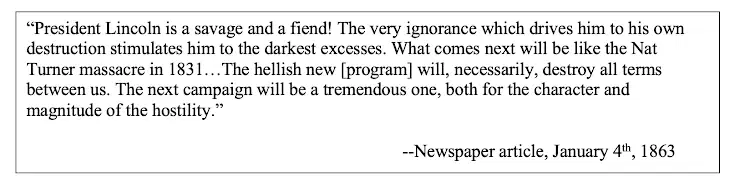
Using your knowledge from the unit, identify which city below was MOST LIKELY to have a newspaper that published the below article in response to President Lincoln's Gettysburg Address.
a)
a. Boston, Massachusetts
b)
b. San Francisco, California
c)
c. Burlington, Vermont
d)
d. Richmond, Virginia
3.
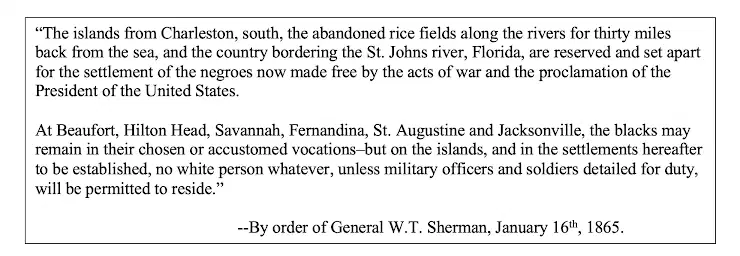
The below excerpt describes a future for the freed Black people of the South that is MOST similar to--
a)
a. Scottish immigrant neighborhoods in Philadelphia.
b)
b. French-Canadian fur trading outposts in Vermont.
c)
c. Reservations created for indigenous peoples in the West.
d)
d. Chinese immigrant mining camps in California.
4.

In the below excerpt, President Lincoln was talking about--
a)
a. The free Black movement to return to Africa and establish their own independent country of Liberia.
b)
b. The fact that the Civil War was a fight between neighbors, brothers, sisters, and fellow Americans.
c)
c. The need to convert all freed Blacks to Christianity, because that was God's plan.
d)
d. None of the above
5.
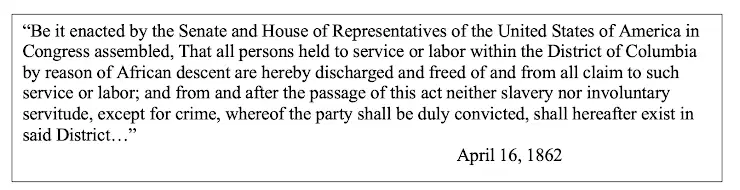
What was the result of the below resolution from the United States Congress?
a)
a. Irish and Scottish indentured servants in the North were freed.
b)
b. Enslaved people of African heritage were freed in the District of Columbia.
c)
c. Workers in factories in the District of Columbia were paid more.
d)
d. None of the above.
6.
Clara Barton was most closely associated with--
a)
a. Healthcare for soldiers during the Civil War.
b)
b. Abolitionism before, during, and after the Civil War.
c)
c. Literature, as the author of Uncle Tom's Cabin.
d)
d. Women's rights, such as those discussed at the Seneca Falls Convention.
7.
Which of the following individuals believed that secession was not permitted by the U.S. Constitution?
a)
a. Jefferson Davis
b)
b. Abraham Lincoln
c)
c. Harriet Beecher Stowe
d)
d. Stonewall Jackson
8.
Abraham Lincoln once joked that the following person started the Civil War because of his/her writing.
a)
a. Harriet Beecher Stowe
b)
b. Ulysses S. Grant
c)
c. Clara Barton
d)
d. Frederick Douglass
9.
Which of the following events happened FIRST?
a)
a. The Gettysburg Address
b)
b. The Emancipation Proclamation
c)
c. The Battle of Antietam
d)
d. The secession of South Carolina from the Union.
10.
Which of the following is TRUE about tariffs in the 19th century?
a)
a. Southerners opposed tariffs because they believed tariffs would scare off foreign buyers of their goods and make the imported goods they needed more expensive.
b)
b. Northerners opposed tariffs because the economy of the North was dependent on other parts of the country for most of its agricultural needs.
c)
c. People in both the North and the South approved of tariffs because foreign imports were already too expensive.
d)
d. None of the above statements are true.
11.
Which of the following is NOT TRUE of the North during the Civil War?
a)
a. Most of the battles were fought in Northern territory.
b)
b. It had a huge advantage in weapons and supplies.
c)
c. It had more railroads and were therefore able to get troops to the front quickly.
d)
d. It had a larger population and therefore more men available for military service.
12.
Which of the following is TRUE about the differences between the North and the South prior to the Civil War?
a)
a. The North was more urban and industrialized.
b)
b. The people of the South needed more infrastructure, such as roads, canals, and railways.
c)
c. Southerners were strong supports of states' rights.
d)
d. All of the above statements are true.
13.
What happened at Fort Sumter?
4 lines
14.
What was the importance of the Appomattox Courthouse?
a)
a. It is where General Lee surrendered to General Grant, ending the Civil War.
b)
b. It is where General Lee accepted the position of general.
c)
c. It was the Union headquarters during the Battle of Gettysburg.
d)
d. It was the location of the first-ever military field hospital in the Union, started by Clara Barton.
15.
Which of the following is NOT TRUE of the Emancipation Proclamation?
a)
a. It had little immediate effect on the lives of enslaved peoples.
b)
b. With it, President Lincoln "freed" all the slaves in the rebelling Southern states.
c)
c. It gave the Union a moral purpose for fighting for victory.
d)
d. It made foreign countries less likely to send aid to the South.
e)
e. All of the above statements are true.
16.
The Battle of Gettysburg was--
a)
a. fought in Southern territory.
b)
b. won by the North.
c)
c. Caused by General Robert E. Lee invading Massachusetts in 1863.
d)
d. the first battle of the Civil War.
17.
Which of the following was NOT true of Jefferson Davis? --
a)
a. He was President of the Confederacy.
b)
b. He was a plantation owner.
c)
c. He served as a senator from Mississippi.
d)
d. All of the above statements are true.
18.
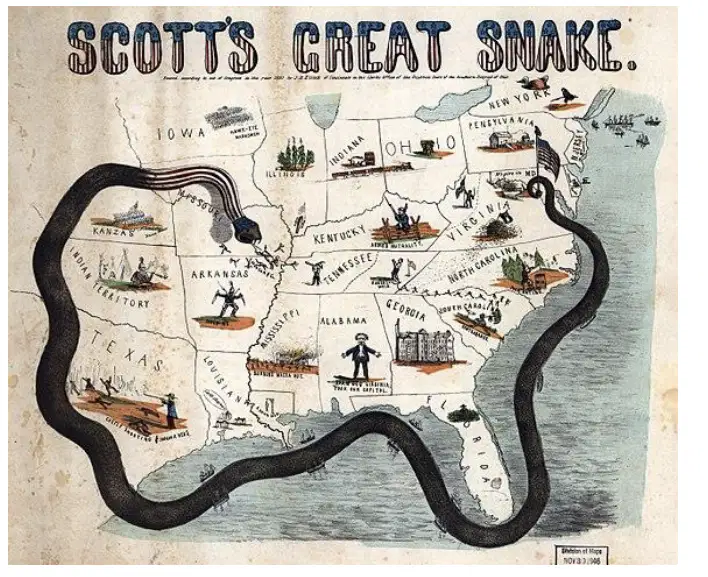
Using the below map and your knowledge from the unit, "Scott's Great Snake" was the--?
a)
a. route of the explorers who followed Lewis & Clark's old route to Arkansas.
b)
b. route Robert E. Lee took with his army and navy to attack Virginia.
c)
c. borders of the Confederate States of America in 1859.
d)
d. Union blockade of the South.
19.

Who said and/or wrote the below statement?
a)
a. Elizabeth Cady Stanton, in The Declaration of Sentiments.
b)
b. Abraham Lincoln, in The Emancipation Proclamation.
c)
c. Frederick Douglas in his third debate.
d)
d. None of the above.
20.
To "secede" is to--
a)
a. Leave the United States.
b)
b. Succeed in business, specifically in the South.
c)
c. Combine more than one plantation under one owner.
d)
d. Raise tariffs on imported goods, specifically from Spain.
21.
What is popular sovereignty?
a)
a. The idea that the people have the right to elect their own sovereign in a traditional monarchy.
b)
b. The philosophy that the people have the right to determine for themselves the nature of their own government.
c)
c. Abraham Lincoln's term for abolitionism.
d)
d. The concept stating that if the South wanted to leave the Union, they should be allowed to leave, in peace.
22.
What is an "abolitionist?"
a)
a. A person who fought for the rights of indigenous people.
b)
b. A supporter of Mexican land rights in Texas.
c)
c. A financial donor to the cause of women's rights in the 19th century.
d)
d. An individual who worked to end the institution of slavery.
100 %

