
 Worksheets
Mechanisms of Evolution
Total questions: 21
Worksheet time: 13mins
Which type of selection is NOT included in the four types of natural selection discussed?
A) Stabilizing
B) Directional
C) Disruptive
D) Random
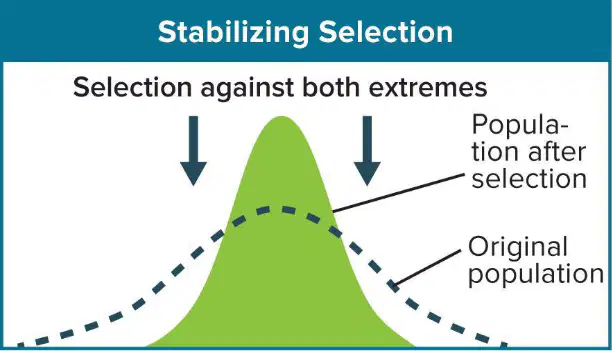
What is the most common form of natural selection?
Disruptive selection
Stabilizing selection
Directional selection
Balancing selection
When does directional selection occur?
When an extreme version of a trait makes an organism less successful
When an extreme version of a trait makes an organism more successful
When all traits are equally successful
When no traits are successful.
What can cause the distribution of traits in a population to change?
Stable environmental conditions
Changing environmental conditions
Lack of environmental conditions
Constant environmental conditions
What is directional selection?
A process where average traits are favored
A process where extreme traits are favored
A process where no traits are favored
A process where all traits are favored.
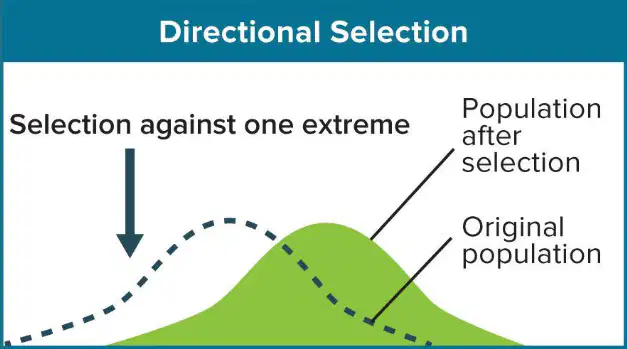
What is directional selection?
A process that moves a trait in one direction along continuous variation
A process that eliminates all variations
A process that maintains the status quo
A process that moves a trait in both directions along continuous variation
Which of the following best describes the effect of directional selection on a population?
Stabilizes the population
Increases genetic diversity
Favors one extreme of a trait
Eliminates all extremes
Which direction does directional selection pressure move a trait?
In both directions
In one of the two possible directions
In no direction
In a random direction.
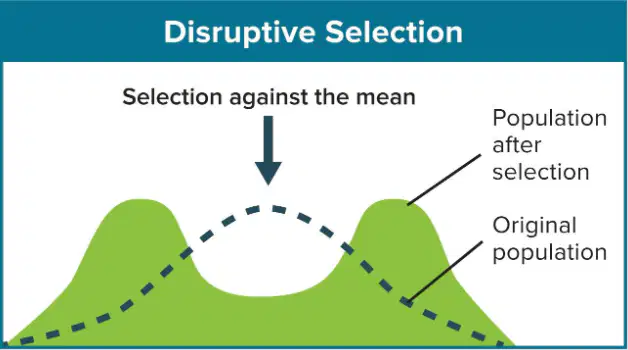
What happens to a population under disruptive selection?
It becomes more uniform
It splits into two groups
It becomes extinct
It remains unchanged
Nonrandom mating affects a population by:
Increasing genetic diversity.
Decreasing genetic diversity.
Selecting mates based on specific traits.
Introducing new alleles.
Reindeer from a rancher in Alaska escape from their pen during an enormous snow storm. After their escape, they mate with wild caribou that are migrating across the land. The offspring of these have traits for short legs and have tame behavior.
Gene Flow
Genetic Drift
Non-Random Mating
Natural Selection
Males of the bighorn sheep species fight one another to show females who is the dominant male and are more likely to mate with females.
Natural Selection
Mutation
Genetic Drift
Non-Random Mating
During a hurricane, a population of beetles almost gets completely wiped out. The only beetles that survived were lucky that they were in their nest at the time of the hurricane and had enough food to survive.
Natural selection
Genetic Drift
Gene Flow
Non-Random Mating
Insects become resistant to pesticides very quickly, sometime in one generation. If an insect is resistant to the chemical, most of the offspring will also be resistant. Considering that insect generations can be a matter of weeks, insects in an area can become immune to a chemical within months.
Mutation
Natural Selection
Genetic Drift
Gene Flow
A chemical spill causes a genetic change in the offspring of ladybugs to have blue dots instead of black dots.
Natural Selection
Genetic Drift
Mutation
Gene Flow
A certain type of plant can produce blue or yellow flowers. During a fire, many yellow flowers are destroyed and now since blue is the dominant trait, the plant reproduces offspring that produce only blue flowers.
Non-Random Mating
Gene Flow
Mutation
Genetic Drift
This is the pattern of natural selection where BOTH of the extreme versions of a trait are more advantageous than the average, so a population evolves in both directions away from the average
Directional Selection
Disruptive Selection
Stabilizing Selection
Radical Selection
What is the effect of a bottleneck event on a population's genetic diversity?
Increases genetic diversity
Decreases genetic diversity
Has no effect on genetic diversity
Randomly alters genetic diversity
Which of the following is an example of gene flow?
A population of birds migrates and breeds with another population
A mutation occurs in a single individual
A natural disaster reduces population size
Individuals select mates based on specific traits
What is the primary cause of genetic drift in small populations?
Natural selection
Random chance events
Gene flow
Non-random mating

