
 Worksheets
Angle Relationships Task Cards
Total questions: 56
Worksheet time: 5hrs 8mins

Find the measures of the angles.
m∠1 = (a)

Find the measures of the angles.
m∠2 = (a)
Find the measures of the angles.
m∠3 = (a)

Find the measures of the angles.
m∠1 = (a)
Find the measures of the angles.
m∠2 = (a)
Find the measures of the angles.
m∠3 = (a)
Find the measures of the angles.
m∠4 = (a)

If m∠CFG = 129, and m∠ HFD = 93, Find the m∠EFC = (a) .
If m∠CFG = 129, and m∠ HFD = 93, Find the m∠HFE = (a) .
If m∠CFG = 129, and m∠ HFD = 93, Find the m∠DFE = (a) .
If m∠CFG = 129, and m∠ HFD = 93, Find the m∠HFC = (a) .
If m∠CFG = 129, and m∠ HFD = 93, Find the m∠HFG = (a) .

Solve for x and y. What is the value of x?
(a)
Solve for x and y. What is the value of y?
(a)

Solve for x and y. What is the value of x?
(a)
Solve for x and y. What is the value of y?
(a)
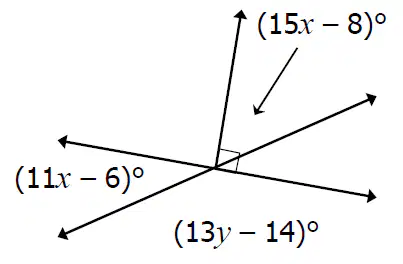
Solve for x and y. What is the value of x?
(a)
Solve for x and y. What is the value of y?
(a)

Solve for x and y. What is the value of x?
(a)
Solve for x and y. What is the value of y?
(a)

If RT bisects ∠QRS, m∠QRT = 15x – 2, and m∠QRS = 27x + 5, find the value of x.
(a)
If RT bisects ∠QRS, m∠QRT = 15x – 2, and m∠QRS = 27x + 5, find m∠QRS.
(a)
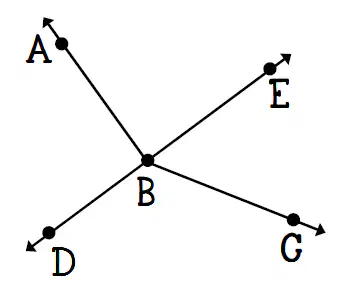
If DE bisects ∠ABC, find the value of x if m∠ABC = 7x + 29 and m∠DBC = 99º.
(a)
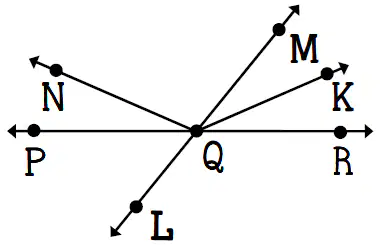
If QK bisects ∠MQR, QN ⊥ LM, and m∠MQK = 34º, find each missing measure.
m∠MQR = (a)
If QK bisects ∠MQR, QN ⊥ LM, and m∠MQK = 34º, find each missing measure.
m∠LQR = (a)
If QK bisects ∠MQR, QN ⊥ LM, and m∠MQK = 34º, find each missing measure.
m∠NQP = (a)
If QK bisects ∠MQR, QN ⊥ LM, and m∠MQK = 34º, find each missing measure.
m∠PQK = (a)
If QK bisects ∠MQR, QN ⊥ LM, and m∠MQK = 34º, find each missing measure.
m∠NQK = (a)
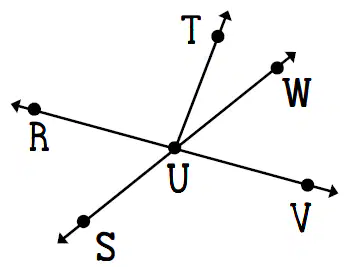
If UT ⊥ RV, m∠TUW = x + 10, and m∠WUV = 4x – 15, find each missing measure.
x = (a)
If UT ⊥ RV, m∠TUW = x + 10, and m∠WUV = 4x – 15, find each missing measure.
m∠TUW = (a)
If UT ⊥ RV, m∠TUW = x + 10, and m∠WUV = 4x – 15, find each missing measure.
m∠WUV = (a)
If UT ⊥ RV, m∠TUW = x + 10, and m∠WUV = 4x – 15, find each missing measure.
m∠SUV = (a)
If UT ⊥ RV, m∠TUW = x + 10, and m∠WUV = 4x – 15, find each missing measure.
m∠SUT = (a)
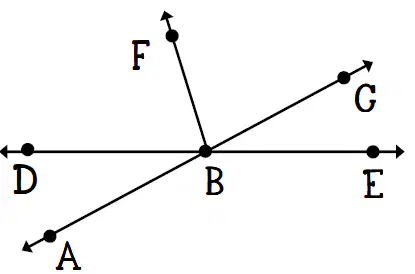
If BF bisects ∠DBC, m∠DBF = 8x – 10, and m∠FBC = 5x + 23, find each missing measure.
x = (a)
If BF bisects ∠DBC, m∠DBF = 8x – 10, and m∠FBC = 5x + 23, find each missing measure.
m∠DBF = (a)
If BF bisects ∠DBC, m∠DBF = 8x – 10, and m∠FBC = 5x + 23, find each missing measure.
m∠DBC = (a)
If BF bisects ∠DBC, m∠DBF = 8x – 10, and m∠FBC = 5x + 23, find each missing measure.
m∠CBE = (a)
If BF bisects ∠DBC, m∠DBF = 8x – 10, and m∠FBC = 5x + 23, find each missing measure.
m∠ABE = (a)
If BF bisects ∠DBC, m∠DBF = 8x – 10, and m∠FBC = 5x + 23, find each missing measure.
m∠ABF = (a)
∠1 and ∠2 form a linear pair. If m∠1 = 6x + 1 and m∠2 = 2x – 5, find the measure of ∠1.
(a)
∠1 and ∠2 form a linear pair. If m∠1 = 6x + 1 and m∠2 = 2x – 5, find the measure of ∠2.
(a)
∠A and ∠B are complementary angles. If m∠A = x + 10 and m∠B = 13x – 4, find the m∠A.
(a)
∠A and ∠B are complementary angles. If m∠A = x + 10 and m∠B = 13x – 4, find the m∠B.
(a)
∠1 and ∠2 are vertical angles. If m∠1 = 3x + 21 and m∠2 = 5x – 35, find the m∠1.
(a)
∠1 and ∠2 are vertical angles. If m∠1 = 3x + 21 and m∠2 = 5x – 35, find the m∠2.
(a)
Lines a and b intersect forming two adjacent angles, ∠1 and ∠2. If m ∠1 = 7x – 8 and m ∠2 = 11y + 2, find
the values of x and y
so that a ⊥ b.
x = (a)
Lines a and b intersect forming two adjacent angles, ∠1 and ∠2. If m ∠1 = 7x – 8 and m ∠2 = 11y + 2, find
the values of x and y
so that a ⊥ b.
y = (a)
∠1 and ∠2 form a linear pair. If m∠1 is eight more than m∠2 find the measures of both angles.
m∠1 = (a)
∠1 and ∠2 form a linear pair. If m∠1 is eight more than m∠2 find the measures of both angles.
m∠1 = (a)
∠F and ∠G are supplementary angles. If m∠F is two less than six times the measure of ∠G, find the measures of both angles.
m∠F = (a)
∠F and ∠G are supplementary angles. If m∠F is two less than six times the measure of ∠G, find the measures of both angles.
m∠G = (a)
∠Q and ∠R are complementary angles. If m∠Q is nine less than twice the measure of ∠R, find
m∠Q = (a) .
∠Q and ∠R are complementary angles. If m∠Q is nine less than twice the measure of ∠R, find
m∠R = (a) .
∠X is complementary to ∠Y and supplementary to ∠Z. If ∠Z is eight less than three times ∠X, find the measures of all three angles.
m∠X = (a)
∠X is complementary to ∠Y and supplementary to ∠Z. If ∠Z is eight less than three times ∠X, find the measures of all three angles.
m∠Y = (a)
∠X is complementary to ∠Y and supplementary to ∠Z. If ∠Z is eight less than three times ∠X, find the measures of all three angles.
m∠Z = (a)

