
 Worksheets
Practical Research 2 (First Quarter)
Total questions: 45
Worksheet time: 23mins
According to these two people, Quantitative research is "explaining phenomena by collecting numerical data that are analyzed using mathematically based methods. Who are these two people?
Anderson and Galiego
Alibaba and Gerald
Maniego and Gunther
Aliaga and Gunderson
Below are the importance of Quantitative Research in different fields EXCEPT one:
Education
Business
Medical and Health Allied Services
Religion
Quantitative research is reliable and subjective.
TRUE
FALSE
Quantitative Research uses statistics to generalize a finding.
TRUE
FALSE
Quantitative Research increases and structures a complex problem to a limited number of variables.
TRUE
FALSE
The result is reliable since the study uses a big sample of the population.
ADVANTAGE
DISADVANTAGE
Having a large study sample requires researchers to spend more resources.
ADVANTAGE
DISADVANTAGE
Results are limited since they are usually based on the analysis of numbers and are not obtained from detailed narratives
ADVANTAGE
DISADVANTAGE
Personal biases can be avoided since personal interaction is not part of the research process
ADVANTAGE
DISADVANTAGE
It allows the researchers to measure and analyze the data to arrive at an objective answer to the problem posed or stated.
ADVANTAGE
DISADVANTAGE
It is also known as NON-EXPERIMENTAL RESEARCH.
Survey Research
Correlational Research
Descriptive Research
Evaluation Research
It is a systematic investigation of the nature of relationships or associations between and among variables without necessarily investigating into casual reasons underlying them.
Descriptive Research
Causal-Comparative Research
Correlational Research
Survey Research
This kind of research aims to assess the effects, impacts or outcomes of practices, policies or programs.
Descriptive Research
Evaluation Research
Survey Research
Causal-Comparative Research
This kind of research is used to gather information from groups of people by selecting and studying samples chosen from a population.
Experimental Research
Causal-Comparative Research
Descriptive Research
Survey Research
What are the two sub-types of Survey Research?
Cross-Sectional and Longitudinal
Cross-Variable and Longitudinal
Cross-Sectional and Latitudedinal
Cross Variable and Latitudedinal
This kind of research derives conclusions from observations and manifestations that already occurred in the past and now compared to some dependent variables.
Causal-Comparative Research
Descriptive Research
Experimental Research
Survey Research
This research utilizes scientific methods to test cause and effect relationships under conditions controlled by the researcher.
Correlational Research
Causal-Comparative Research
Survey Research
Experimental Research
A variable that can take infinite number on the value that can occur within a population its values can be divided into fractions.
Continuous Variable
Discrete Variable
Dependent Variable
Independent Variable
Also known as categorical variable is any variable that has a limited number of distinct values and which cannot be divided into fractions.
Independent Variable
Dependent Variable
Discrete Variable
Continuous Variable
Also called outcome variable is the result of effect of the changes brought about by another variable.
Discrete Variable
Independent Variable
Continuous Variable
Dependent Variable
The one responsible for the conditions that act on something else to bring about changes
Continuous Variable
Independent Variable
Dependent Variable
Discrete Variable
A measurement where the difference between two values does have meaning. The ________ between values makes sense and can be interpreted.
Interval
Ratio
Nominal
Ordinal
It possess the properties of interval variable and has a clear definition of zero. Indication that there is none of that variable
Interval
Ratio
Ordinal
Nominal
A variable with no quantitative value it has two or more categories but does not imply ordering of cases.
Interval
Ratio
Nominal
Ordinal
A variable that has two or more categories which can be ranked but the value cannot be placed to them. Distances between attributes do not have any meaning.
Ordinal
Ratio
Nominal
Interval
This chapter has hypothesis, statement of the problem, significance of the study and many more. What chapter in traditional format is this?
Chapter 4
Chapter 5
Chapter 3
Chapter 1
This chapter has research design, respondents, research instrument and more. What chapter is this in the traditional research?
Chapter 2
Chapter 4
Chapter 3
Chapter 1
This chapter has the findings, interpretation and the presentation of tables and graphs. What chapter is this in the traditional research.
Chapter 2
Chapter 4
Chapter 5
Chapter 3
This chapter has the related literature and related study. What chapter is this on the traditional research?
Chapter 2
Chapter 4
Chapter 1
Chapter 5
This chapter has the Summary of findings, Conclusion and recommendation. What chapter is this in the traditional research.
Chapter 1
Chapter 4
Chapter 3
Chapter 5
____________ is the subject of a research project or study.
Research Title
Research Topic
Research Proposal
Research Method
When selecting a research topic it must be not original.
TRUE
FALSE
When selecting research topic it must be new or different.
TRUE
FALSE
When selecting a research topic it should be heavy and must have long time period.
TRUE
FALSE
When selecting a research topic it should be the researchers not interested to.
TRUE
FALSE
When selecting a research topic it should consider the availability of the data.
TRUE
FALSE
When selecting a research topic it should considered a survey questionnaire of the researcher to support the project.
TRUE
FALSE
When selecting a research topic it should consider the time factor involved in the undertaking.
TRUE
FALSE
What is the meaning of related studies?
To see how the research flows frequently from before.
to justify the novelty of a research work and allow readers to see if the study's findings confirm or contradict previous work.
To know how the research aims to address teh problems.
To investigate something that is related from the research.
What is the meaning of Review of Related Literature?
To provide information that is not said on the research to be tackled soon
To provide information that is founded by other kinds of research and copy all of it.
To provide additional information to research to make the research more longer and better.
To collect relevant, timely research on your chosen topic, and synthesize it into a cohesive summary of existing knowledge in the field.
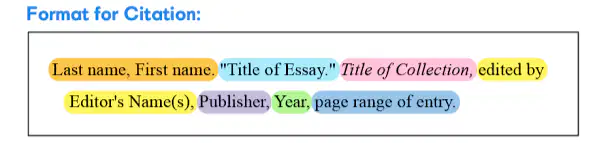
What kind of Citation is the picture above?
MLA
APA
CHICAGO
IE
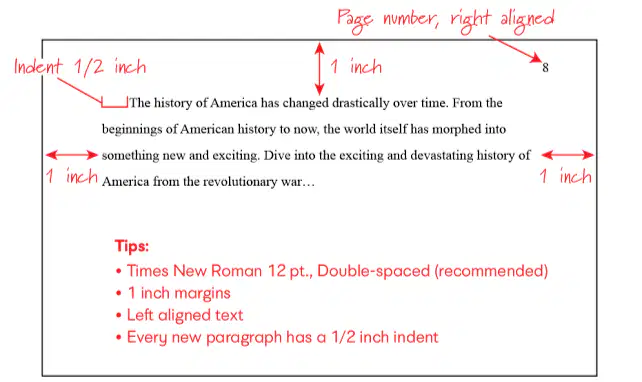
What kind of citation is the picture above?
APA
Chicago
MLA
IE

What kind of citation is the picture above?
Chicago
IE
MLA
APA
When doing citation in APA do you need the authors last name?
*/leaves
Yes
No
I don't know
When you're doing citation in MLA do you need the title of the essay/book/site?
Yes
No
I don't know
*/quits

