
Font size
 Worksheets
Italian Renaissance
Total questions: 20
Worksheet time: 1hrs 7mins
Lorenzo Valla's demonstration that the Donation of Constantine was fraudulent weakened the papacy's claim
that Lutheranism was a heresy
of supremacy over the Orthodox Church
that good works were necessary for salvation
to extensive territories in Italy
to supremacy over church councils
The term "humanism," when applied to Renaissance Italy, refers primarily to the
renewed interest in the scientific method at many Italian universities
capitalist values advanced by leading Italian merchant bankers
antireligious movement among leading Italian intellectuals
scholarly interest in the study of the classical cultures of Greece and Rome
non-Christian themes that became prominent in Italian art and literature
"If a Prince wants to maintain his rule, he must learn how not to be virtuous, and to make use of this or not according to his need."
The passage above best reflects the argument of
Thomas More
Machiavelli
Louis XIV
Fredrick the Great
Napoleon I
Which of the following describes a major difference between northern humanists and Italian humanists?
Italian humanists focused on human intellect and achievements, whereas northern humanists concentrated on nature and emotion.
Italian humanists focused on national consciousness, whereas northern humanists rejected politics.
Italian humanists viewed human nature as corrupt and weak, whereas northern humanists viewed human nature as generally good.
Both concentrated on spiritual concerns, but northern humanists also focused on secular matters.
Both looked to classical sources, but northern humanists also emphasized Christian sources.
Advocates of northern humanism believed which of the following?
The fusion of Christian and Classical ideals provides the best definition of virtuous conduct.
The conventions of romantic love enhance social respect for women.
Education and scholarship should be equally open to men and women.
The new poetic forms, such as the sonnet, could be used to articulate their beliefs.
Political rights should be extended to all men.
The emphasis of Northern Renaissance humanists on religious themes was most closely connected to their
concern over the threat posed by the expansion of the Islamic Ottoman Empire
desire to reform what they saw as shortcomings of the Roman Catholic Church
attempts to revive belief in the ancient Greek and Roman gods
hope to create a new religion based on reason rather than tradition
What two themes dominated European education in the Middle Ages?
History
Profession
Art
Literature
Theology
Match the following writers to their works.

Considered the "Father of Humanism"

The Prince

In Praise of Folly

Utopia

The Decameron
Renaissance humanism is primarily defined as
a curriculum based on the study of the classics, rhetoric, and history
an antireligious program dedicated to destruction of the Church
an artistic style that portrayed the depraved state of human beings
a philosophical movement that emphasized the beauty of nature
a religious movement that attempted to make Christianity relevant to daily experience
In what part of Europe did the Renaissance begin?
Categorize the following art as either Medieval or Renaissance Art


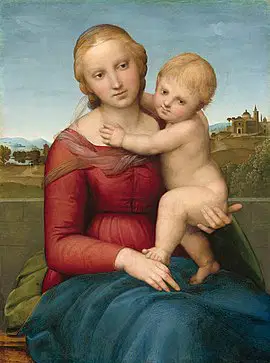

Match the following Renaissance Artists, Sculptors, or Architect with their works.

Leonardo da Vinci

Michelangelo

Raphael
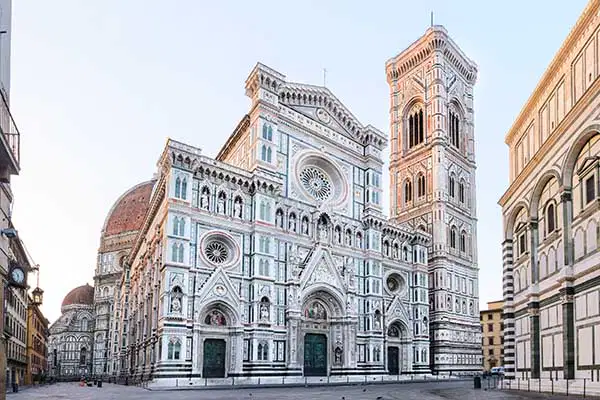
Filipo Brunelleschi

Rembrandt

Erasmus's critique of the clergy was most clearly influenced by which of the following historical developments at the time he wrote In Praise of Folly?
The continued focus of universities on religious inquiry
The spread of cheap printed materials as a result of the development of Gutenberg's printing press
The revival of interest in secular models for political and individual behavior
The humanist challenge to the institutional power of the Catholic Church
Galileo was found guilty of heresy and condemned by the inquisition on the grounds that he
left the Roman Catholic Church and became a Protestant
used his telescope to explore the heavens
actively supported the Gallican cause in France against papal supremacy
publicly advocated Copernicus' heliocentric system
discovered the law of universal gravitation
The term "humanism," when applied to Renaissance Italy, refers primarily to the
renewed interest in the scientific method at many Italian universities
capitalist values advanced by leading Italian merchant bankers
antireligious movement among leading Italian intellectuals
scholarly interest in the study of the classical cultures of Greece and Rome
non-Christian themes that became prominent in Italian art and literature

Which of the following pieces of evidence best supports Jardine's argument regarding the change in intellectual outlook in the sixteenth and seventeenth centuries?
The new ideas in astronomy and anatomy led intellectuals to challenge the authority of ancient and classical sources of knowledge
The development of new methods of scholarship based on the reinterpretation of classical texts
The willingness of Protestant reformers to challenge the scholarly and intellectual authority of the Catholic Church
The development and spread of vernacular literacy as a result of Gutenberg's development of the printing press

The passage above best reflects the argument of
Thomas More
Machiavelli
Louis XIV
Frederick the Great
Napoleon I
Advocates of northern humanism believed which of the following?
The fusion of Christian and Classical ideals provides the best definition of virtuous conduct.
The conventions of romantic love enhance social respect for women.
Education and scholarship should be equally open to men and women.
The new poetic forms, such as the sonnet, could be used to articulate their beliefs.
Political rights should be extended to all men.
Rene Descartes and Francis Bacon contributed to scientific development in the seventeenth century by
making observations of planetary movements
perfecting the metric system
conducting experiments about gravitational forces
introducing logarithms
articulating theories of the scientific method
Describe one significant cultural or intellectual change during the Renaissance.

