
Font size
 Worksheets
Chemistry Review Cumulative
Total questions: 35
Worksheet time: 2hrs 0mins

H2O is MOST accurately described as a ______, because it has different elements that have combined to make something different.
chemical
compound
element
atom
Organize these options into the right categories. There are 4 in each group.
Au
Ti
Neon
Platinum
Water
NaCl
NH₃
Sugar

How many atoms of hydrogen are in this compound? Use the key to determine which color of atom is hydrogen.
1
2
3
4

Label the characteristics of the element
Atomic number
Symbol
Atomic mass
Chemical formula
An element is determined by the number of ________ in its nucleus (also known as its atomic number / positively charged particles).
neutrons
electrons
protons
Each chemical element is made up of only one kind of
atom
molecule
electron
neutron

What is the atomic number (number of protons) of this element?
O
8
16
Is WATER (H2O) an element or a compound?
ELEMENT
COMPOUND
Is NITROGEN (N) an element or a compound?
ELEMENT
COMPOUND
The universal solvent is ______, because most things that are solvent will dissolve in it.

If I want more sugar to dissolve in water, I should heat the water, because heating the water creates more energy and allows more sugar molecules to dissolve.
true
false

If I want more sugar to dissolve in water faster, I should stir the water, which adds more energy to the water molecules.
true
false

This is an example of a
Solution
Mixture

This is an example of a
Solution
Mixture

Is melting butter for popcorn a chemical or physical change?
Chemical Change
Physical Change

Is Gatorade powder (sugar and salt) dissolving in water physical or chemical change?
Physical Change
Chemical Change


Identify what type of change happening in the picture below...
Chemical Change
Physical Change
Molecular Change
Solvent Change

Identify what type of change is happening in the picture below...
Chemical Change
Physical Change
Elemental Change
Carbon Change

You can increase the rate of dissolution (dissolving into a solution) by doing which of the following? (choose two)
Stirring the solvent and solute with a spoon.
Increasing the heat of the solvent by microwaving the liquid.
Adding food coloring helps the solute dissolve faster.
Decrease the heat of the solvent by putting the liquid in the refrigerator.
Which of the following is a solute?
Water
Sugar
Milk
Rocks
Which of the following is a solvent?
Water
Sugar
Salt
Rocks
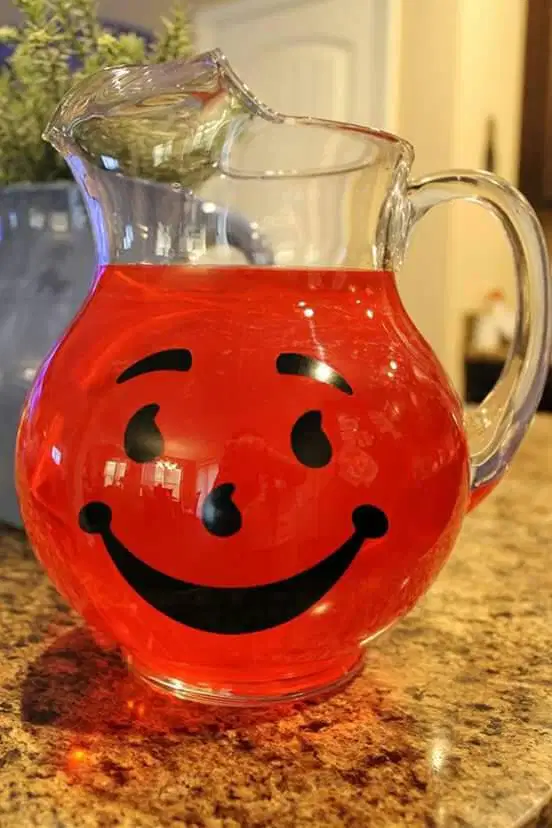
Sarah made Kool-Aid for her teammates. She used two times the amount of powder she was supposed to. What is the result?
The correct answer is not here.
Adding more powder does not affect the taste of the Kool-aid.
The solution is over saturated and tastes really strong and sweet.
The solution is under saturated and tastes really watered down.
Organize these options into the right categories.
Sugar
Salt
Lemonade Powder
Sand
Rocks
Oil

What are the products of the chemical reaction pictured?
CH4 and CO2
CH4 and O2
CO2 and H2O
O2 and H2O
H2 + O → H2O
How many reactants are in A + B ---> C ?
1
2
3
4
How many products are in A + B ---> C
1
2
3
4
CH4 + 2O2 → CO2 + 2H2O

