
 Worksheets
Exploring Ceramic Techniques and Stages
Total questions: 20
Worksheet time: 7mins
Which firing stage is typically the hottest?
Bisque firing
Glaze firing
Preheat
Cooling
Which surface decoration technique involves applying a colored underglaze to a leather-hard piece and then carving through it?
Mishima
Sgraffito
Stenciling
Marbling
What is the main difference between underglaze and glossy glaze decoration?
Underglaze is applied before bisque firing
Glossy glaze is applied after bisque firing
Underglaze is applied after glaze firing
Overglaze is applied before bisque firing
Why not apply glossy glaze to greenware?
because it will disappear when firing
to keep it from a glossy finish
If the piece explodes from air bubbles, the glaze will spray all over the other pieces in the kiln
the clay absorbs the glaze

Which surface decoration technique involves using a stencil to apply a pattern to a ceramic piece for incising or glazing?
Sgraffito
Engobe
Stenciling
Marbling

What glazing technique is this?
Stamping
painting
sponging
swiping

Using the 7 stages of clay, which stage is this?
(a)
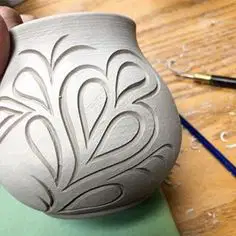
Which technique was used on this piece?
Mashiima
Incising
sgraffito
carving
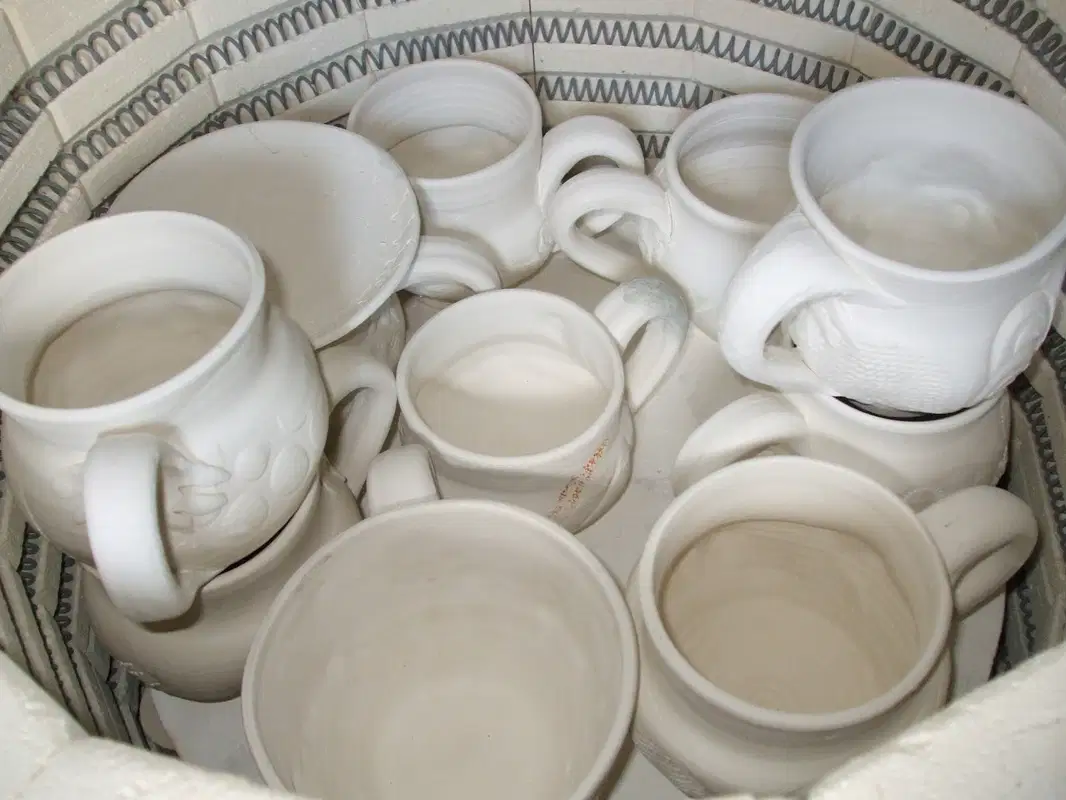
Which stage of drying is this?
(a)

What do you do to the clay to remove air bubbles?
roll it
glaze it
wedge it
pat it
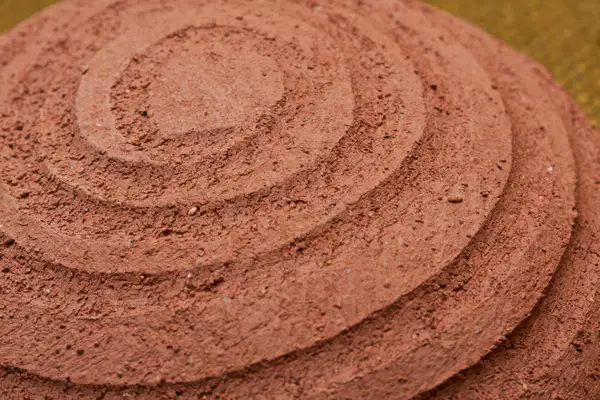
The sandy/gritty material found in the clay that gives it strength is called
Grog
Bog
Fog
Sand
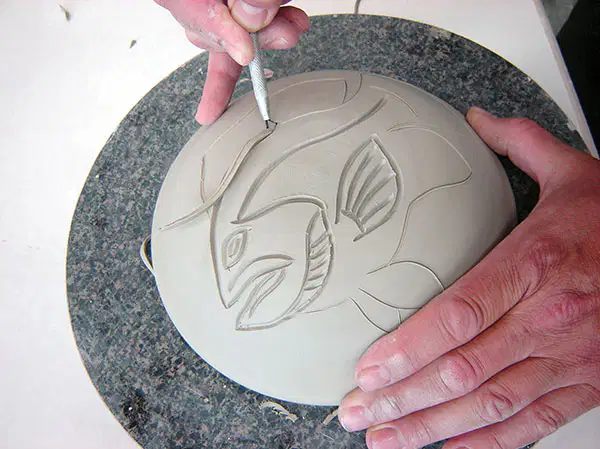
Which stage of drying is best for incising, but also for mishima and sgraffito?
(a)

What type of glaze can be used before bisque firing and can give more details?
glossy glaze
clear glossy glaze
underglaze
cinnamon glaze
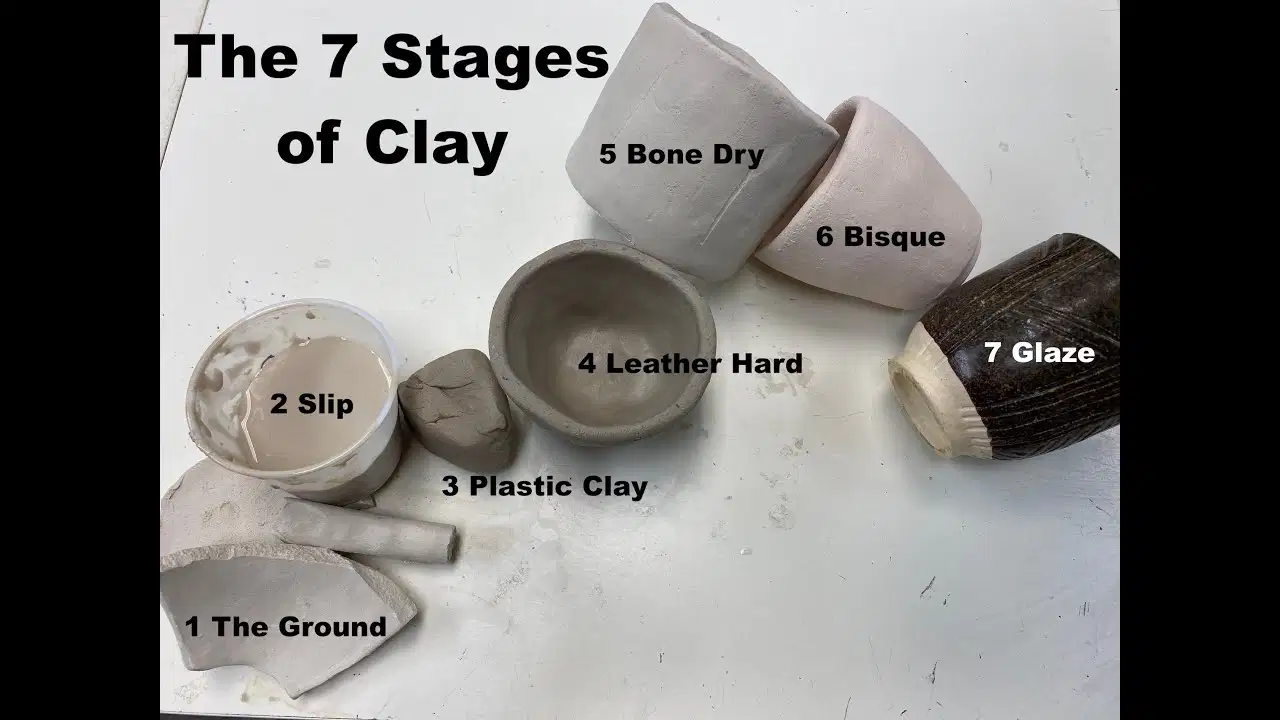
Which stage of clay do we want just before firing?
leatherhard
bone dry
bisque
glaze

Name this type of glazing
(a)

What technique was used on this?
(a)

What is the name of this japanese technique?
carving
antiquing
mishima
smoothing

What type of glaze has little glass crystals in it, is waterproof, and creates a shiny finish?
(a)
How many coats of glaze do you apply for all glossy glazes?
1
2
3
5
Usually how long is the process for firing bisqueware or glazeware?
6 hours
12 hours
24 hours
4 days

