
Font size
 Worksheets
Chem Pointers #1
Total questions: 74
Worksheet time: 49mins
What describes the motion of gas particles?
Gas particles are tightly packed and vibrate in place.
Gas particles move freely and rapidly in constant, random motion.
Gas particles are stationary and do not move.
Gas particles move in a straight line without changing direction.
How does gas pressure relate to particle collisions?
Gas pressure remains constant regardless of collision frequency.
Gas pressure is unrelated to particle collisions.
Gas pressure increases with more frequent and forceful particle collisions.
Gas pressure decreases with fewer particle collisions.
What is the relationship between temperature and kinetic energy?
Kinetic energy decreases as temperature increases.
Temperature is directly proportional to kinetic energy.
Temperature is inversely proportional to kinetic energy.
Temperature has no effect on kinetic energy.
Define elastic collisions in the context of gases.
Elastic collisions in gases are collisions where total kinetic energy and momentum are conserved.
Elastic collisions result in energy loss during the interaction.
Inelastic collisions in gases conserve kinetic energy but not momentum.
Elastic collisions occur only at high temperatures.
What is diffusion in gases?
Diffusion in gases refers to the mixing of gases at equal concentrations.
Diffusion in gases is the process of gas molecules moving randomly without any concentration gradient.
Diffusion in gases is the compression of gas molecules into a smaller volume.
Diffusion in gases is the movement of gas molecules from high to low concentration.
Explain effusion and how it differs from diffusion.
Effusion is the mixing of gases in a container.
Diffusion occurs only in liquids, not gases.
Effusion is the process of gas expanding in a vacuum.
Effusion is the escape of gas through a tiny hole; diffusion is the movement of gas from high to low concentration.
How does increasing temperature affect gas particle speed?
Temperature has no effect on gas particle speed.
Increasing temperature decreases gas particle speed.
Increasing temperature increases gas particle speed.
Gas particle speed remains constant regardless of temperature.
What happens to gas volume when pressure increases?
The gas volume fluctuates randomly with pressure changes.
The gas volume increases when pressure increases.
The gas volume remains constant when pressure increases.
The gas volume decreases when pressure increases.
Describe the behavior of gas particles in a vacuum.
Gas particles in a vacuum move freely and are widely spaced, with minimal interactions.
Gas particles in a vacuum are tightly packed and do not move.
Gas particles in a vacuum collide frequently with each other.
Gas particles in a vacuum are stationary and do not have energy.
What is the significance of the average kinetic energy of gas particles?
It reflects the pressure exerted by gas particles.
It determines the color of gas particles.
It indicates the temperature and energy of gas particles, influencing gas behavior.
It measures the volume of gas particles.
How do gas particles behave at absolute zero?
Gas particles expand to fill the entire container.
Gas particles would have minimal motion and occupy the lowest quantum state.
Gas particles move rapidly and collide violently.
Gas particles freeze into a solid state.
What factors influence the rate of diffusion in gases?
Humidity levels
Color of the gas
Presence of light
Temperature, pressure, molecular weight, and concentration gradient.
Explain how the ideal gas law relates to kinetic molecular theory.
The ideal gas law only applies to liquids and solids.
The ideal gas law relates to kinetic molecular theory by linking macroscopic gas properties (P, V, T) to the microscopic behavior of gas particles, explaining pressure as a result of particle collisions.
The ideal gas law is unrelated to temperature and pressure.
Kinetic molecular theory states that gas particles are stationary.
What role does molecular mass play in effusion rates?
Heavier gases effuse faster than lighter gases.
Molecular mass has no effect on effusion rates.
All gases effuse at the same rate regardless of mass.
Lighter gases effuse faster than heavier gases.
How does the concept of pressure apply to gas mixtures?
Gas mixtures exert pressure only when they are heated.
The total pressure of a gas mixture is determined by the temperature alone.
The pressure of a gas mixture is always equal to the pressure of the most abundant gas.
The total pressure of a gas mixture is the sum of the partial pressures of its individual gases.
The temperature of a substance is a measure of the average kinetic energy of the particles.
True
False
Diffusion is the movement of particles from a high concentration to a low concentration.
True
False

What force does this refer to?
London Dispersion
Hydrogen bond
Dipole-dipole
none of the above
These forces occur when the partially positively charged part of a molecule interacts with the partially negatively charged part of the neighboring molecule.
Dipole-dipole interaction
Hydrogen bonding
London Dispersion Forces
ion-dipole interaction
These are the weakest of the intermolecular forces and exist between all types of molecules, whether ionic or covalent—polar or nonpolar.
Dipole-Dipole interaction
London Dispersion
Hydrogen Bonding
Ion - dipole interaction
is formed when atoms of slightly different electronegativities share electrons.
ionic bond
covalent bond
polar covalent
metallic bonding
Define kinetic energy
energy of motion
static energy
stored energy
energy use
This bond is formed between atoms that have similar electronegativities—the affinity or desire for electrons.
Ionic bond
covalent bond
dipole
ion-dipole
It is a type of chemical bond that generates two oppositely charged ions.
Ionic bond
Covalent Bond
Dipole
Ion-dipole
Which of the following is an assumption of the kinetic-molecular theory of gases?
Collisions between gas particles are inelastic.
Gases consist of closely spaced particles.
Gas particles move around in an orderly manner.
The temperature of a gas depends on the average kinetic energy of the gas particles.
A hypothetical gas that perfectly fits all the assumptions of the kinetic molecular theory is known as
real gas
ideal gas
imaginary gas
perfect gas
Which of the following is not true about the volume of a gas?
Most of the volume is empty space.
The volume is occupied by particles in continuous, rapid, random motion.
The volume is about 10 times greater than that occupied by an equal number of particles in the liquid or solid state.
Generally, the volume can be easily changed

The state of matter shown in the figure below has a(n) _____________ volume and the particles ______________.
definite
move past each other
indefinite
vibrate in a fixedposition
definite
are easily compressed
definite
vibrate in a fixed position
When a gas molecule with an initial kinetic energy collides with another gas molecule, all of the kinetic energy will be ___________.
transferred
divided
disappeared
neglected
Gas molecules are small and far apart from one another. This cause them to ___________ of their container.
lend energy
take the shape
manipulate
burst walls
The molecules have no definite ______, but have definite ______.
speed, velocity
distance, displacement
volume, mass
height, weight
The ______ the temperature, the more energy is acquired by the gas molecules allowing them to move faster.
constant
wide
dominant
higher
True or False.
Kinetiv Molecular Theory of Gases is derived from the Kinetic Molecular Theory of Matter.
True
False
Gas molecules are very small and ________ from one another.
very far
closed
very thin
big
The following factors are relatively affect the behavior of gas molecules EXCEPT -
Pressure
Gravity
Volume
Temperature
True or False.
Kinetic Molecular Theory of Plasma is a model to describe the behavior of gases.
True
False
Elastic collision means no ______ energy is lost when molecules collide.
potential
light
nuclear
kinetic
Each molecule moves in a straight line until it collides with another molecule or walls of the container. This movement known as ______________.
Mendelian motion
Brownian motion
Boylean motion
Bohrian motion
The ______ the temperature, the more energy is acquired by the gas molecules allowing them to move faster.
constant
wide
dominant
higher
Gas molecules are very small and ________ from one another.
very far
closed
very thin
big
True or False.
Kinetic Molecular Theory of Plasma is a model to describe the behavior of gases.
True
False
Elastic collision means no ______ energy is lost when molecules collide.
potential
light
nuclear
kinetic
The more energy that particles have, the ___ they move.
slower
faster
Each molecule moves in a straight line until it collides with another molecule or walls of the container. This movement known as ______________.
Mendelian motion
Brownian motion
Boylean motion
Bohrian motion
The more energy that particles have, the ___ they move.
slower
faster
The energy of movement is ___.
potential energy
kinetic energy
mechanical energy
A gas A has three times the molar mass of gas B, then_______________.
gas B diffuses slower than A
gas A and B diffuses at the same rate
gas B diffuses faster than gas A.
a mole of gas A is lighter than a mole of gas B
The energy of movement is ___.
potential energy
kinetic energy
mechanical energy
A gas A has three times the molar mass of gas B, then_______________.
gas B diffuses slower than A
gas A and B diffuses at the same rate
gas B diffuses faster than gas A.
a mole of gas A is lighter than a mole of gas B

Which process is shown in the image?
Diffusion
Effusion
Which process is shown in the image?
Diffusion
Effusion
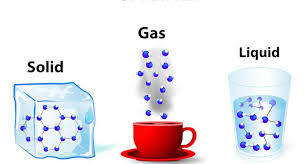
According to the Kinetic Molecular Theory a liquid's (SELECT ALL THAT APPLY)
particles are held close together by intermolecular forces
particles are in constant motion
particles are vibrating in place and closely packed
particles are not moving
The properties of plasma include (SELECT ALL THAT APPLY)
definite volume
indefinite shape
large spaces between particles
are incompressible
is a good conductor of electricity
According to the Kinetic Molecular Theory a liquid's (SELECT ALL THAT APPLY)
particles are held close together by intermolecular forces
particles are in constant motion
particles are vibrating in place and closely packed
particles are not moving


If you remove heat, energy decreases so atoms move ______________
faster
slower
stays the same

If you add heat, energy ____________, so atoms move faster.
decreases
increases
stays the same
Molecular motion is least in ____________
solid
liquid
gas
plasma
Molecular motion is less in _____________
solid
liquid
gas
plasma
Principle 6: Molecular motion ___________ is in gas, less in liquids and least in solids.
greatest
less
least

Principle 5: Collisions between atoms are perfectly ________ (no energy is lost)
stretchable
dangerous
elastic
unknown

Which is Principle 4?
Collisions between atoms are perfectly elastic (no energy is lost)
There is a transfer of energy as atoms collide.
Molecular motion is greatest in gas, less in liquids and least in solids.

Principle 3: Atoms in motion have kinetic energy and their motion __________ as they gain energy.
increases
decreases
stays the same

Principle 2: Atoms are in constant random __________
molecules
energy
motion
space

Principle 1: All matter is made up of________
space
mass
air
atoms

There are ___ Principles in KMT
2
4
6
8

Why do you need to study Kinetic Molecular Theory?
Just for fun
To understand force and motion
To understand earthquakes
To understand behavior of solid, liquids, and gases

1. Kinetic refers to _______________
Force
Energy
Motion
Acceleration

