
Font size
 Worksheets
Unit Test: Physical Oceanography
Total questions: 26
Worksheet time: 13mins
What does salinity measure?
the amount of dissolved salts in water
the amount of dissolved oxygen in water
the amount of water in the sample
The density of the amount of water

As salinity increases, is there a change in density?
Yes, the density also increases
Yes, the density decreases
No, the two are not related.
No, only temperature changes.
What is the average salinity of the ocean?
45 ppt
25 ppt
15 ppt
35 ppt

Gyres tend to flow
Counterclockwise in both the Northern and Southern Hemisphere
clockwise in both the Northern and Southern Hemisphere
clockwise in the Northern Hemisphere and counterclockwise in the Southern Hemisphere
counterclockwise in the Northern Hemisphere clockwise the Southern Hemisphere

The ocean conveyor belt is important because...
It is the primary method fishermen have to process what they catch.
it redistributes heat and moderates the Earth’s climate.
it creates energy for the Earth
it makes fish migrate

Without currents, the world’s climates would be
more extreme.
more moderate.
no different.
changing daily.
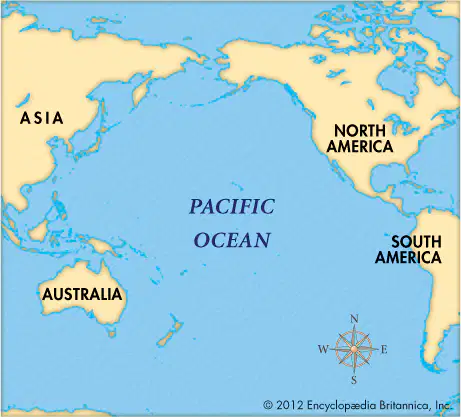
During El Niño, warm water pushes toward the eastern Pacific. This event causes ____.
flooding in the northern U.S.
drought in the southern U.S.
no change to weather
flooding in the southern U.S.
La Niña weather patterns generally cause which of the following:
No upwelling in the eastern Pacific, and drought in California.
Upwelling in the eastern Pacific, and drought in California.
No upwelling in the eastern Pacific, and drought in California.
Upwelling in the Eastern Pacific, drought in the Southern U.S.

The main disturbing force that causes waves is
Wind
Gravity
Coriolis effect
Temperature

____ is the distance between the identical spots on two waves (crest to crest or trough to trough).
Period
Fetch
wave length
wave height
The distance the wind blows over the water to cause a large wave is called
Period
Fetch
Wave length
Wave height

What type of breaker is found at a very steep beach and also associated with storms?
Surging
Rogue
Spilling
Plunging

Tsunamis are NOT caused by
Earthquakes.
Landslides.
Heavy winds.
Volcanic eruptions

Tsunamis don’t destroy ships in the open sea because
The ships are able to see it approaching and get out of the path
The tsunami warning system gives ships time to get out of the way.
Tsunamis in the deep ocean may be only a few inches high.
none of the above. Tsunamis frequently destroy ships on the open sea.
Tides are caused by
the Coriolis effect on the surface of the water.
primarily the Sun’s gravity, with some effect from the Moon.
The density of the water.
primarily the Moon’s gravity, with some effect from the Sun.
Label the diagram of the types of tides (only 3 terms are correct)
During ____ tides the sun and moon are in a straight line relative to Earth. During ____ tides, they are at right angles to Earth.
neap, spring
summer, neap
spring, summer
spring, neap

What will most likely happen if a warm ocean current travels north or south from the equator?
The current will become warmer, causing it to become more dense and rise.
The current will become cooler, causing it to become less dense and rise.
The current will become cooler, causing it to become more dense and sink.
The current will become warmer, causing it to become less dense and sink.
Hurricanes are driven by the energy they get from ocean water. Which property of water allows it to retain the energy needed to power a hurricane?
low vapor pressure
high specific heat
high surface tension
low freezing point

A huge circular pattern of rotating ocean currents.
whirlpool
cyclone
hurricane
gyre


Which factors affect maximum wave size?
Temperature
Wind speed
Wind duration (time)
Fetch
all of these
Where is the Gulf Stream located?
When warm water from the equator mixes with cold water from the poles, the warm water (a) and the cold water (b) forming currents.
Match the following
rip tide
strong, narrow currents away from coast
upwelling
upward movement of cold water at coast
gyre
circular surface current
Great Conveyer Belt
global system of ocean currents
The tidal force causes Earth, and its water, to (a) on the side closest to the Moon and the side farthest from the moon.

