
 Worksheets
Test: (6th) WH-U1,L3
Total questions: 20
Worksheet time: 5hrs 0mins
A paleoanthropologist specializes in the study of the
kings and queens of the earliest modern humans.
development and culture of the earliest hominins.
communication and social systems of early apes.
trade and barter systems among modern humans.
How did the Leakeys discover the Homo habilis (Handy Man) hominin group?
They found skeletal remains in Africa.
They found modern documents.
They found a completely frozen male specimen.
They found cave paintings.
Which statement about Homo habilis (Handy Man) describes a capability that helped their group of hominins to survive?
They discovered how to make tools.
They discovered how to talk over long distances.
They lived in the same area as the Great Apes.
They knew how to swing through the trees.
Which of these helped Homo habilis to survive against animal attacks?
eating vegetables
burying their dead
living together in groups
searching for smaller animals to prey on
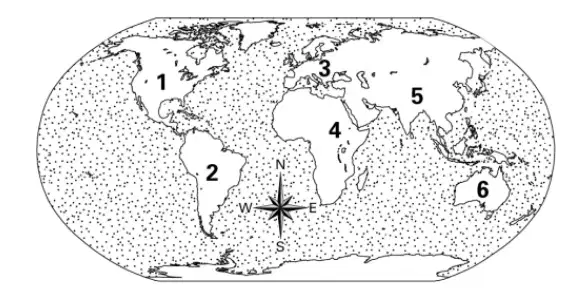
Use the map to answer this question:
Where were Homo habilis (Handy Man) bones first found?
continent 1
continent 2
continent 4
continent 5
Prehistoric humans made tools from
twigs and ropes
flowers and bushes
water and sand
stones and bones
Another word for "ablity" or "skill".
cutting
capability
trait
ritual
trait
a quality or characteristic
an early ancestor of humans
a way to travel
a suggestion
What advantage over previous hominin groups did the invention of the spear thrower give to early modern humans?
the ability to create more cave paintings
the ability to kill animals from a distance
the ability to communicate over longer distance
the ability to carry injured companions to medical aid
Large brains helped Homo neanderthalensis survive, giving them the ability to
walk longer distances
design better tools
open closed containers
bend to touch their knees
an early ancestor of humans
anthropologist
archaeologist
trait
hominin
Eugene Dubois and his team discovered which type of hominin?
Homo habilis
Homo erectus
Homo spacius
Homo intelligus
Homo neanderthalensis, or Neanderthal Man, was discovered in a mine in Germany and is considered to be...
a distinct kind of people not related to early modern humans
a distinct kind of people closely related to early Great Apes
a distinct kind of people closely related to early modern humans
a distinct kind of people closely related to the future Great Apes
Which clue leads paleoanthropologists to think that Neanderthals helped members of their group who were hurt or sick?
Neanderthal skulls were found that had thick bones and a ridge above the eyes, but were also very humanlike.
Neanderthal tools such as knives, scrapers, and spear points were found near hunting grounds.
Neanderthal bones were found that showed signs of serious breaks that had healed.
Neanderthals walked upright and were stockier and shorter than modern humans, but were also more heavily built.
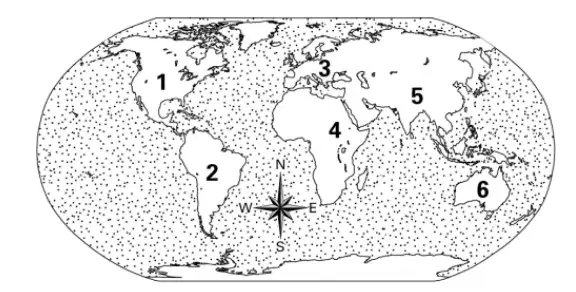
Which new capability enabled hominins to survive in the colder climate of continent 3?
building fire and shelters
drawing pictures on the walls of their dwellings
having language
burying their dead
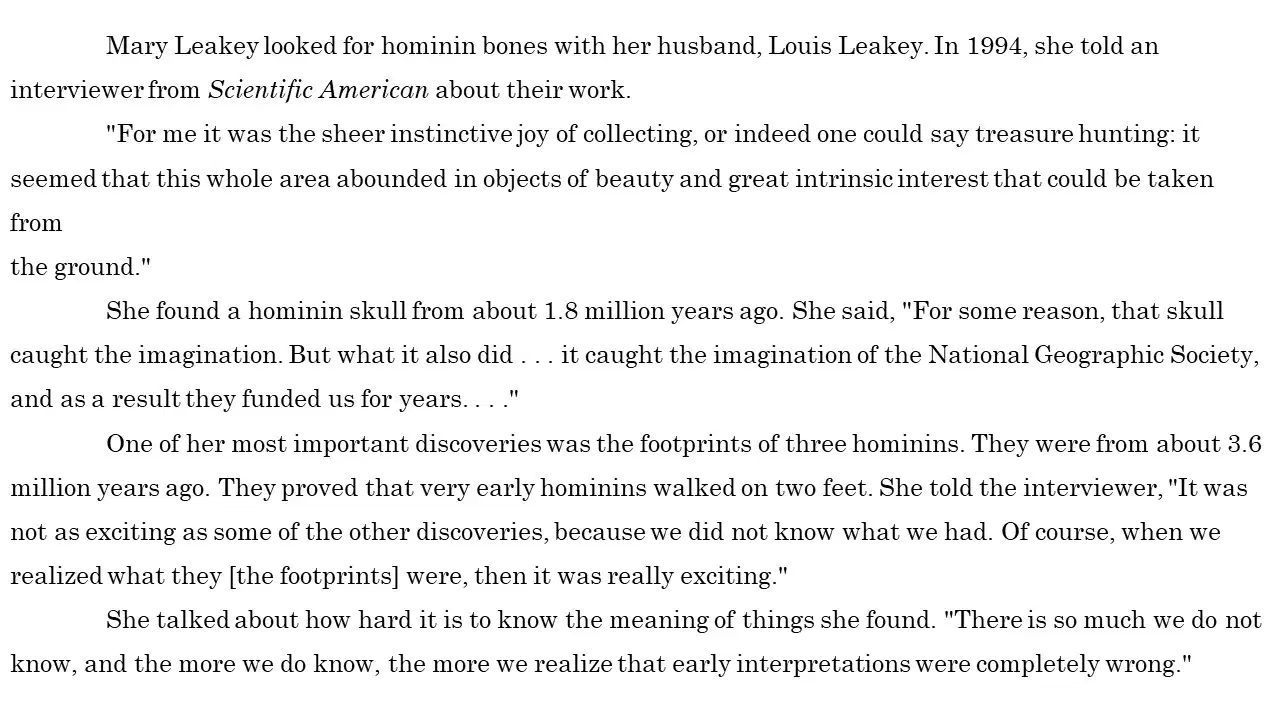
Use the passage and your knowledge of history to answer the following question:
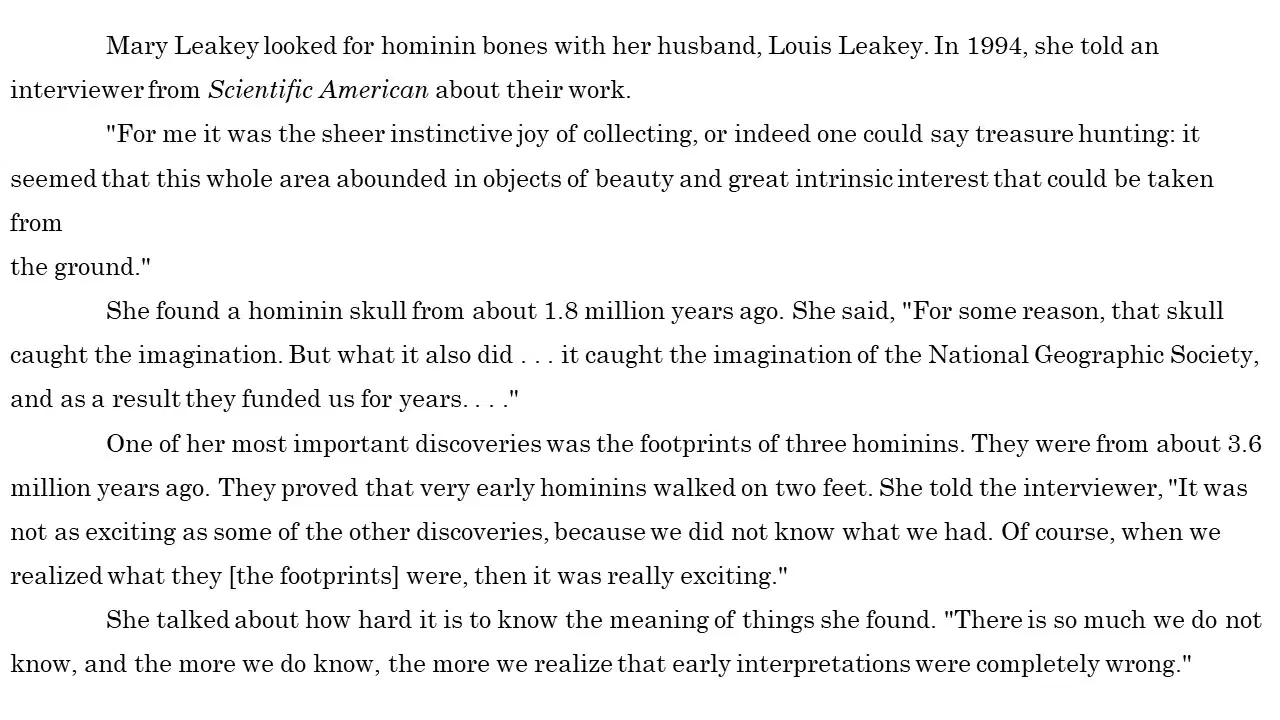
Who paid for much of the Leakeys’ work?
Scientific American
the National Geographic Society
Mary Leakey
the early hominins
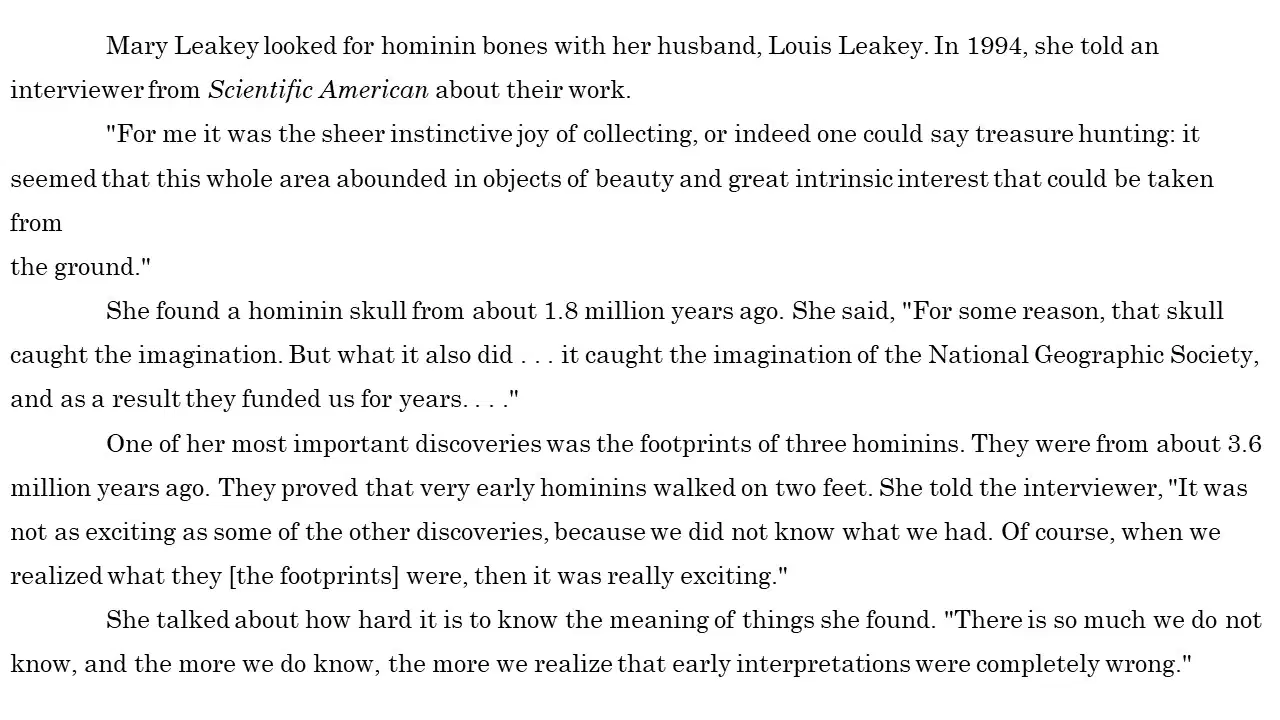
Use the passage and your knowledge of history to answer the following question:
What conclusion did Mary Leakey make based on her findings of footprints?
that early hominins were treasure hunters
that early hominins were objects of beauty and great intrinsic interest
that early hominins were extremely tall
that early hominins walked on two feet
Use the passage and your knowledge of history to answer the following question:
What have new findings shown about the early interpretations of hominin remains?
that early interpretations were completely wrong
that early interpretations were completely right
that early interpretations were published in the New Yorker
that early interpretations were making them a lot of money
Who made cave paintings, carvings, and musical instruments?
Homo erectus
Homo habilis
Homo neanderthalensis
Homo sapiens
What could Homo sapiens have the time to do once they had food and shelter?
carry a glowing ember with them as they moved from place to place to start a fire
use simple stone tools to skin animals
create art that expressed their feelings about the world, just like modern people
relate to later hominins and to us

