
 Worksheets
Bipolar Transistor Presentation Quiz
Total questions: 37
Worksheet time: 19mins
What is the primary function of bipolar transistors?
To store data
To control current flow
To generate electricity
To measure voltage
How do bipolar transistors control a larger current?
By using a large voltage
By using a small current
By using a high resistance
By using a magnetic field
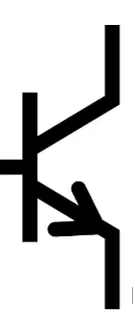
What are the three terminals of a transistor?
Anode, cathode, and gate
Source, drain, and gate
Base, collector, and emitter
Positive, negative, and ground
What are the three modes of operation for transistors?
Cut-off, active, saturated
On, off, neutral
High, medium, low
Start, stop, pause
In which mode does a transistor act as an amplifier?
Cut-off
Active
Saturated
Neutral
When does a transistor act as a switch?
Only in active mode
In cut-off and saturated modes
In active and neutral modes
Only in saturated mode
What is the purpose of the base resistor (RB) in a basic transistor circuit?
To increase the output voltage
To limit the input current
To amplify the input signal
To decrease the load resistance
What is the role of the load resistor (RL) in the output side of a basic transistor circuit?
To limit the input current
To increase the input voltage
To provide a load for the circuit
To decrease the base current
Why is the circuit called a common emitter circuit?
Because the base is common to both input and output
Because the collector is common to both input and output
Because the emitter is common to both input and output
Because the load resistor is common to both input and output
What forms a potential divider in the input circuit cut-off mode?
Base resistor and collector-emitter junction
Base resistor and base-emitter junction
Collector resistor and base-emitter junction
Emitter resistor and collector-emitter junction
What is the condition for the base-emitter junction to have extremely high resistance?
When $V_{in}$ is more than 0.5 V
When $V_{in}$ is equal to 0.5 V
When $V_{in}$ is less than 0.5 V
When $V_{in}$ is exactly 1 V
What is the value of $I_B$ in the cut-off mode?
$I_B = 1$
$I_B = 0.5$
$I_B = 0$
$I_B = 2$
What is the equation for $V_{in}$ in the input circuit cut-off mode?
$V_{in} = V_{RB} - V_{BE}$
$V_{in} = V_{RB} + V_{BE}$
$V_{in} = V_{RB} \times V_{BE}$
$V_{in} = V_{RB} / V_{BE}$
What forms a potential divider in the output circuit cut-off mode?
The load resistor and the collector-emitter junction
The base resistor and the collector-emitter junction
The load resistor and the base-emitter junction
The base resistor and the base-emitter junction
In cut-off mode, what is the state of the collector-emitter junction?
Extremely high resistance
Extremely low resistance
Moderate resistance
No resistance
What is the value of the collector current (I_C) in cut-off mode?
I_C = 0
I_C = V_S
I_C = V_RL
I_C = V_CE
What is the relationship between V_CE and V_S in cut-off mode?
V_CE = V_S
V_CE = 0
V_CE = V_RL
V_CE = I_C
What happens to $ V_{BE} $ when $ V_{in} $ increases?
$ V_{BE} $ decreases
$ V_{BE} $ remains constant
$ V_{BE} $ increases
$ V_{BE} $ becomes zero
At what range of $ V_{BE} $ does the resistance of the base-emitter junction fall?
0.1 V to 0.3 V
0.5 V to 0.7 V
0.8 V to 1.0 V
1.1 V to 1.3 V
What indicates that the transistor is active?
$ I_C $ flows
$ I_B $ flows
$ I_E $ flows
No current flows
How is $ V_{in} $ divided in the circuit?
Between $ V_{RB} $ and $ V_{CE} $
Between $ V_{RC} $ and $ V_{BE} $
Between $ V_{RB} $ and $ V_{BE} $
Between $ V_{RC} $ and $ V_{CE} $
What happens to the resistance of the collector-emitter junction in active mode?
It increases
It remains the same
It falls
It becomes infinite
What is the relationship between $I_C$ and $I_B$ in active mode?
$I_C$ is inversely proportional to $I_B$
$I_C$ is directly proportional to $I_B$
$I_C$ is equal to $I_B$
$I_C$ is independent of $I_B$
How is the current gain ($\beta$) defined in the circuit?
$\beta = \frac{I_B}{I_C}$
$\beta = I_C \times I_B$
$\beta = \frac{I_C}{I_B}$
$\beta = I_B - I_C$
What happens to $V_{RL}$ and $V_{CE}$ when $I_C$ rises?
$V_{RL}$ falls and $V_{CE}$ rises
Both $V_{RL}$ and $V_{CE}$ rise
Both $V_{RL}$ and $V_{CE}$ fall
$V_{RL}$ rises and $V_{CE}$ falls
What is the typical maximum value of $ V_{BE} $ in a saturated transistor mode?
0.6 V - 0.8 V
1.0 V - 1.2 V
0.2 V - 0.4 V
1.5 V - 1.7 V
In a saturated transistor, what is the relationship between $ V_{RB} $ and $ V_{in} $?
$ V_{RB} = V_{in} - 0.7 V $
$ V_{RB} = V_{in} + 0.7 V $
$ V_{RB} = V_{in} \times 0.7 V $
$ V_{RB} = V_{in} / 0.7 V $
What would happen to $ V_{BE} $ if the circuit did not have a base resistor?
$ V_{BE} $ would be equal to $ V_{in} $.
$ V_{BE} $ would be zero.
$ V_{BE} $ would be negative.
$ V_{BE} $ would be infinite.
What is the consequence if $ V_{in} $ exceeds 0.7 V?
The maximum value of $ V_{BE} $ would be exceeded.
The circuit would short circuit.
The current would stop flowing.
The voltage would drop to zero.
What would happen to $ I_B $ if $ V_{in} $ is more than 0.7 V?
$ I_B $ would rise to a very high level, damaging the transistor.
$ I_B $ would decrease to zero.
$ I_B $ would remain constant.
$ I_B $ would reverse direction.
What happens to the resistance of the collector-emitter junction when a transistor saturates?
It increases to a very high value.
It falls to a very low value.
It remains unchanged.
It becomes infinite.
In a saturated transistor, what happens to the collector current (I_C) as the base current (I_B) increases further?
I_C decreases.
I_C remains constant.
I_C increases indefinitely.
I_C becomes zero.
In the saturated mode of a transistor, what is the relationship between V_{RL} and V_S?
V_{RL} is much greater than V_S.
V_{RL} is almost equal to V_S.
V_{RL} is much less than V_S.
V_{RL} is zero.
What is the value of V_{CE} in a saturated transistor?
It is equal to V_S.
It is close to zero.
It is equal to V_{RL}.
It is negative.
What is the value of $ V_{CE} $ in this transistor circuit?
2 V
3 V
5 V
0 V
When the transistor is saturated, $ V_{CE} $ will be close to zero. Is this statement true or false?
True
False
Cannot be determined
Only true for certain transistors
What topic was covered in the presentation?
The history of transistors
The different modes of operation of a bipolar transistor
The applications of diodes
The structure of semiconductors

