
 Worksheets
PEDAGOGY QUIZ NCFSE 2023
Total questions: 15
Worksheet time: 10mins
What is pedagogy?
method and practice of teaching used in classrooms by the Teacher to help students learn
giving lecture to students
planning for assessment
all of these
What are the key aspects of how children learn?
The brain plays an important role in learning
Learning is based on the associations and connections that children make
Emotions are deeply connected to learning
The learning environment matters
All of these
‘Telling’ students about what values they should develop or uphold usually has little effect. True or False?
TRUE
FALSE
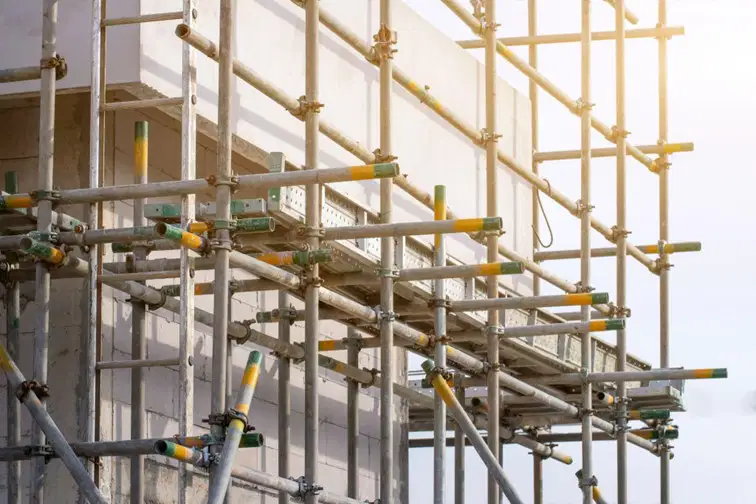
The structure given in the image is technically called.....
Permanent structure
Building
Scaffolding
None of these
The New Pedagogical & Curricular Structure in NEP 2020 is as follows: (a) (b) (c) (d)
Which of the following statements is not true about homework?
Homework should not be intended to merely repeat what has been learnt in class, but rather to apply it to different contexts.
Homework is the repetition of class work.
Homework can be fun and provides a different kind of interesting challenge to students.
Tasks and allocation of time spent on homework must be age appropriate.
What is the correct practice by teacher for students with special needs?
Teaching these students with the same pace as of other students
Labelling of students as ‘bright,’ ’slow,’ or ‘problem’ students.
Make differentiated assignments for the students with special needs
All of these
In cases where the school is not equipped to help or support a student with an identified disability adequately, it may rely on external resources or resource persons. True or False?
True
False
Which of the following are non-negotiable during teaching-learning process?
Inequity in the classroom on the basis of caste, gender, religion, socio-economic conditions, student performance, or any other factor
Punishment and fear
Memorisation as the primary form of learning
Students as passive receivers of information
All of these
Every child is capable of learning. Children are (a) learners.
Peers seem to become far more prominent in the lives of students at this point and this can be leveraged to the advantage of the learning atmosphere. Which stage is being talked about here?
Foundational Stage
Preparatory Stage
Middle Stage
Secondary Stage
At this Stage, students grapple with their changing bodies, may become self-conscious, and may be trying to make sense of their maturation. Which stage is being talked about?
Middle Stage
Preparatory Stage
Foundational Stage
Secondary Stage
What may be the reason/s for the inappropriate behaviour of student in classrooms?
lack of sleep
poor nutrition
health issues
stress
all of these
The major components of a teaching plan are:
Competencies, Learning Outcomes, and intended lesson objectives
Content and material to be used
Specific strategies for students who need extra help
Methods of assessment
All of these
Match the values developed in students with corresponding subjects:
Art Education and Physical Education
honesty, courage, perseverance, teamwork
Science and Mathematics
scientific temper, rigour in reasoning
Regular practices at the school assembly
pride in India’s unity and diversity
Regular dialogue and discussion with students
democratic values
Marking important days through community service
cultural values

