
 Worksheets
Access Equipment Quiz
Total questions: 20
Worksheet time: 10mins
Which of the following is a key step in scaffold inspection procedures?
Checking the colour of the scaffold
Ensuring all guardrails are in place
Measuring the height of the scaffold
Counting the number of planks
What is the primary purpose of fall protection measures?
To increase the speed of work
To prevent injuries from falls
To reduce noise levels
To improve visibility
Which type of access equipment is best suited for reaching high shelves in a warehouse?
Step ladder
Scissor lift
Scaffold tower
Cherry picker
What is the recommended angle for setting up a ladder against a wall?
60 degrees
75 degrees
45 degrees
90 degrees
How often should scaffolds be inspected?
Once a month
Before each use
Once a week
Every six months
Which of the following is NOT a type of access equipment?
Ladder
Crane
Scaffold
Scissor lift
What is the minimum height at which fall protection is required in the UK?
1 metre
2 metres
3 metres
4 metres
Which of the following is a common fall protection measure?
Safety net
Hard hat
High-visibility vest
Steel-toed boots
What should be checked first during a scaffold inspection?
The paint condition
The stability of the base
The number of workers
The height of the scaffold
Which of the following is a guideline for ladder safety?
Always carry tools in your hands
Face the ladder when climbing
Use a ladder in strong winds
Stand on the top rung
What is the primary function of a harness in fall protection?
To provide comfort
To prevent falls
To distribute weight evenly
To enhance visibility
Which type of access equipment is ideal for painting the exterior of a building?
Step ladder
Scaffold tower
Extension ladder
Trestle ladder
What is the maximum load a standard ladder can typically support?
100 kg
150 kg
200 kg
250 kg
Which of the following is a critical component of scaffold safety?
The colour of the scaffold
The number of workers on the scaffold
The presence of toe boards
The type of material used
What is the maximum time that can be spent working on an extension ladder?
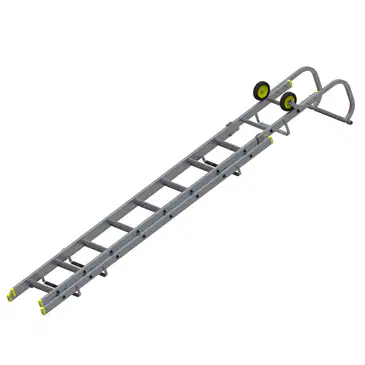
What type of access equipment is shown in the picture?
Roof Ladder

What type of access equipment is shown in the picture?
Trestle Scaffold
Mobile Scaffold
Why should a ladder not be painted?
What is a common method to ensure ladder stability on uneven ground?
Use a ladder stabilizer
Place a wooden plank under one leg
Lean the ladder against a tree
Use a shorter ladder
What is the recommended action if a ladder is found to have a structural defect?
Paint over the defect
Continue using it with caution
Repair it immediately
Remove it from service

