wayground logo

Free Printable Worksheets

NEW

Font size

S
M
L
XL
Worksheets

Unit 3 Check

Total questions: 44

Worksheet time: 2hrs 50mins

Name
Class
Date
1.

The name of FeCl₂ is

a)

iron chloride

b)

iron (II) chloride

c)

iron (I) chloride

d)

iron dichloride

2.

What is the name of the compound Na2(SO4)?

a)

Sodium sulfate

b)

Sodium sulfide

c)

Sodium sulfite

d)

Sodium sulfuroxide

3.

Lithium nitride

a)

Li3N

b)

LiN

c)

Li3(NO3)2

d)

LiNO3

4.
What is the name of N2O3
a)
Nitrogen trioxide
b)
Dinitrogen oxide
c)
Dinitrogen trioxide
d)
Nitrogen oxide
5.
A phosphorus atom needs to gain ___ electrons to achieve a full octet.
a)
3
b)
4
c)
6
d)
5
6.
Which of these combinations is an ionic compound made of?
a)
Metal and Metal
b)
Nonmetal and Nonmetal
c)
Metal and Nonmetal
d)
Cation and Cation
7.
What is the FORMULA for...
calcium arsenide
a)
Ca3As2
b)
CaAs2
c)
Ca3As
d)
Ca3Ar2
8.

The formula of calcium and phosphate is

a)

CaPO4

b)

Ca2(PO4)3

c)

Ca3PO4

d)

Ca3(PO4)2

9.
H2O
a)
Polar 
b)
Nonpolar 
10.

Which substance contains bonds that involve a sharing of electrons from one atom to another?

a)

CuO

b)

NH3

c)

KBr

d)

FeCl2

11.
Which of these molecules has nonpolar covalent bonding?
a)
H2O
b)
HCl
c)
I2
d)
NaCl
12.
Define the term allotropes
a)
Atoms with same proton number but different number of neutrons
b)
Atoms with same proton number but different mass number
c)
Atoms in different arrangement in structure
d)
Atoms in different arrangement and different physical form
13.

Metallic bonds form because metals

a)

"want" to give up valence electrons

b)

always share valence electrons

c)

have many valence electrons

d)

always gain valence electrons

14.

In metallic bonds, the force of attraction is between

a)

positive and negative ions

b)

cations and electrons

c)

two different metals

d)

neutrons and electrons

15.

Metal ions are surrounded by a "sea" of POSITIVE charge

a)

True

b)

False

16.

What do electrons do in a metallic bond?

a)

They stay on the metal atom.

b)

They are transferred from atom to atom.

c)

They form a covalent bond with another atom.

d)

They float around freely.

17.
What is the formula for aluminum fluoride?
a)
AlF
b)
Al2F3
c)
AlF3
d)
Al3F2
18.
A chemical bond resulting from the electrostatic attraction between positive and negative ions is called a(n)
a)
covalent bond.
b)
ionic bond.
c)
charged bond.
d)
dipole bond.
19.
How many valence electrons does a bromine atom have?
a)
1
b)
2
c)
6
d)
7
20.
If my charge becomes 2+ what does that say about me?
a)
I am stealing 2 electrons
b)
I am losing 2 electrons
c)
I am in period 2
d)
I have an atomic # of 2
21.
If I gain electrons I become
a)
Positive because I've added to my atom
b)
negative because I've added electrons
c)
same because i'm balanced
d)
equal because now I have electrons
22.
Metals tend to 
a)
gain electrons
b)
lose electrons
23.
What is the correct formula for the compound, lithium oxide?
a)
LiO
b)
Li2O
c)
LiO2
d)
Li2O2
24.
What do Roman Numerals represent in the name of a transition metal compound?
a)
how many atoms of the metal there are
b)
the oxidation number of the nonmetal
c)
the oxidation number of the metal
d)
the mass number
25.
The name for CrN:
a)
Chromium nitride
b)
Chromium (I) nitride
c)
Chromium (III) nitride
d)
Chromium nitride (III)
26.
The prefix for 4 is?
a)
quatro
b)
tetra
c)
quarto
d)
tri
27.
Covalent compounds
a)
Share electrons
b)
transfer electrons
c)
contain a sea of electrons
d)
conduct electricity
28.
What is the prefix for 6?
a)
hepta
b)
ses
c)
hexa
d)
sieta
29.
What is the prefix for nine?
a)
nina
b)
nona
c)
nuevo
d)
nuna
30.
7's prefix is
a)
hepta
b)
sieta
c)
hexa
d)
hoho
31.
BrO3
a)
bromine oxide
b)
monobromine trioxide
c)
bromine trioxide
d)
bromine (III) oxide
32.
Phosphorous trichloride
a)
PCl3
b)
P3Cl
c)
P3Cl3
d)
PCL
33.
What do we call a covalent bond where electrons are shared UNEVENLY or UNEQUALLY?
a)
Ionic
b)
Polar Covalent
c)
Nonpolar Covalent
d)
Van der Waals Force
34.
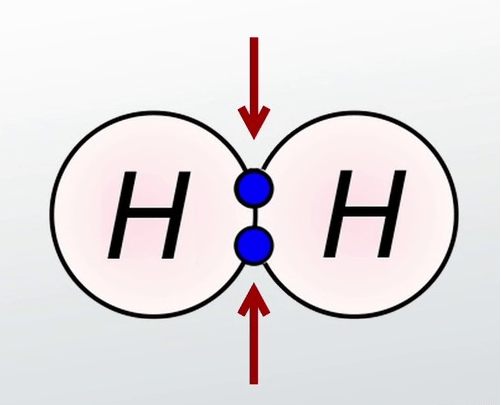
What type of bond is shown in this image?
a)
Ionic
b)
Polar Covalent
c)
Nonpolar Covalent
d)
Van der Waals Force
35.

Which compound has covalent bonds?

a)

H2O

b)

Na2O

c)

Li2O

d)

K2O

36.

In the ground state, an atom of which element has seven valence electrons?

a)

fluorine

b)

sodium

c)

nitrogen

d)

oxygen

37.

The degree of polarity of a covalent bond between two atoms is determined by calculating the difference in their

a)

atomic radii

b)

electronegativities

c)

melting points

d)

ionization energies

38.

When forming an ionic bond, a metal atom

a)

Gains electrons to form a cation

b)

Loses electrons to form a cation

c)

Gains electrons to form an anion

d)

Loses electrons to form an anion

39.
What elements generally make an ionic bond?
a)
metal and nonmetal
b)
2 or more nonmetals
c)
metal
d)
none of the above
40.
What elements generally make a covalent bond?
a)
metal and nonmetal
b)
2 or more nonmetals
c)
metal
d)
none of the above
41.

In chemical compounds, covalent bonds form when

a)

the electronegativity difference between two atoms is very large.

b)

electrons are completely transferred between two metals.

c)

pairs of electrons are shared between two nonmetal atoms.

d)

two nonmetal atoms are attracted to each other by opposite charges.

42.

Predict the bond that will form between Se and Cl.

a)

Ionic

b)

Covalent

c)

Metallic

43.

Predict the bond that will form between Cu and F.

a)

Ionic

b)

Covalent

c)

Metallic

44.
What is a valence electron?
a)
an electron that is found in the outermost shell of an atom. 
b)
an electron found in the innermost shell of an atom.
c)
an electron found in the middle shell.