
NEW
Font size
 Worksheets
History Of Music Sec4
Total questions: 60
Worksheet time: 30mins
What year is the Baroque era?
1500-1600
1600-1750
1650-1800
1580-1790
What year is the Classical era?
1500-1600
1600-1750
1750-1820
1580-1790
What year is the Romantic era?
1500-1600
1600-1750
1800-1900
1580-1790
Which of these people are not from Baroque era
Claudio Monteverdi
Tomaso Giovanni Albinoni
Mario Plumber
Antonio Vivald
Which composer is known as the "Father of the Symphony"?
Claudio Monteverdi
Tomaso Giovanni Albinoni
Joseph Haydn
Antonio Vivald
Which one of the 4 instruments were not used during baroque period
Maracas
Brass
Violin
Recorder
When did Mozart begin composing music?
5 years old
15 years old
25 years old
35 years old
Which one of the necessary musical instrument during baroque period
Harpsicord
Brass
Violin
Recorder
What musical instruments were not played in Classical era?
Harpsicord
Brass
Violin
Recorder
What is one of the main characteristics of Baroque music?
Simplicity and clarity
Complex counterpoint and ornamentation
A focus on improvisation
Use of electronic instruments
What is one of the main characteristics of Classical music?
Simplicity and clarity
Complex counterpoint and ornamentation
A focus on improvisation
Use of electronic instruments
What was the purpose of much of the art and music during the Baroque period?
To inspire political rebellion
To convey religious grandeur and emotion
To focus on nature and tranquility
To simplify human
period happens after Baroque period?
Renaissance
Romantic
Classical
Post- Modern
period happens after Classical period?
Renaissance
Romantic
Classical
Post- Modern
period happens before Baroque period?
Renaissance
Romantic
Classical
Post- Modern
period happens before Classical period?
Baroque
Romantic
Classical
Post- Modern
Which piece is not a from the Baroque period
Vivaldi, Four Seasons
Handel's, Messiah
Handel’s, Zadok the Priest
Beethoven, Für Elise
Which of the following is NOT a Classical composer?
Beethoven
Haydn
Mozart
Gershwin
Who wrote theme and variations on "Twinkle, Twinkle, Little Star?"
Beethoven
Haydn
Mozart
Gershwin
“The baroque period made sonata, opera, oratorio, cantata and concerto as genres”
True
False
“The word Baroque refers to “beautiful shaped diamond”
True
False
“Baroque was chosen by the Catholic Church and the European monarchies as the representative style of their power and their wealth”
True
False
Where did Baroque music originate before it expanded throughout Europe
France
Germany
Italy
Netherlands
Plenty Baroque pieces have religious themes
True
False
Which one of these is not a feature of Baroque music
High levels of ornamentation
Emotional expression
Complex details
Heavy contrasting elements
What city is the birthplace of Baroque?
Roma
Milan
Florence
Indonesia
Is Mozart a composer from the Baroque period?
True
False
“During baroque period, the composers become more aware of the power of music as a tool for communication”
True
False
The changes of tonal center present in Baroque music is rare
True
False
Baroque rhythm change greatly throughout a piece
True
False
Who composed Canon in D?
Beethoven
Handel
Mozart
Pachelbell
Who composed Ode to Joy?
Beethoven
Handel
Mozart
Pachelbell
Who composed Fur Elise?
Beethoven
Handel
Mozart
Pachelbell
Why did the piano become more popular than the harpsichord?
pianos were easier to roll around
pianos were cheaper
pianos could play loud or soft
arpsichords weren't popular anymore
The Classical orchestra was ____.
the same size as the Baroque Period
happier than the baroque period
larger than the baroque period
smaller than the baroque period
Mozart died at the age of...
35
40
55
78
What does Composer mean?
A person who writes music
A person who listens to music
A person who dances to music
A person who plays music

Who am I?
Wolfgang Amadeus Mozart
Leonardo da Vinci
Ludwig von Beethoven
Brunelleschi

Who am I?
Wolfgang Amadeus Mozart
Ludwig von Beethoven
Benjamin Franklin
Rembrandt
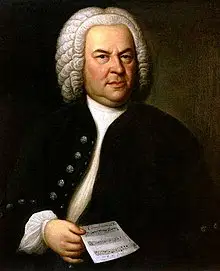
Who am I?
Wolfgang Amadeus Mozart
Ludwig von Beethoven
Benjamin Franklin
Johann Sebastian Bach

Who am I?
Wolfgang Amadeus Mozart
Ludwig von Beethoven
Antonio Vivaldi
Johann Sebastian Bach
Which of the following is a classical composition by Ludwig Van Beethoven?
Symphony No. 40 in G
Fur Elise
The Trumpet Concerto
The Magic Flute
What was the impact of the Romantic era?
Displaying the importance of expression
Making music available for the masses
Further emphasizing themes of sacredness
Developing music that differed from harmony

Which composer was known for composing The Hungarian Rhapsodies and was a virtuoso pianist of the Romantic era?
Franz Liszt
Johannes Brahms
Robert Schumann
Ludwig Van Beethoven
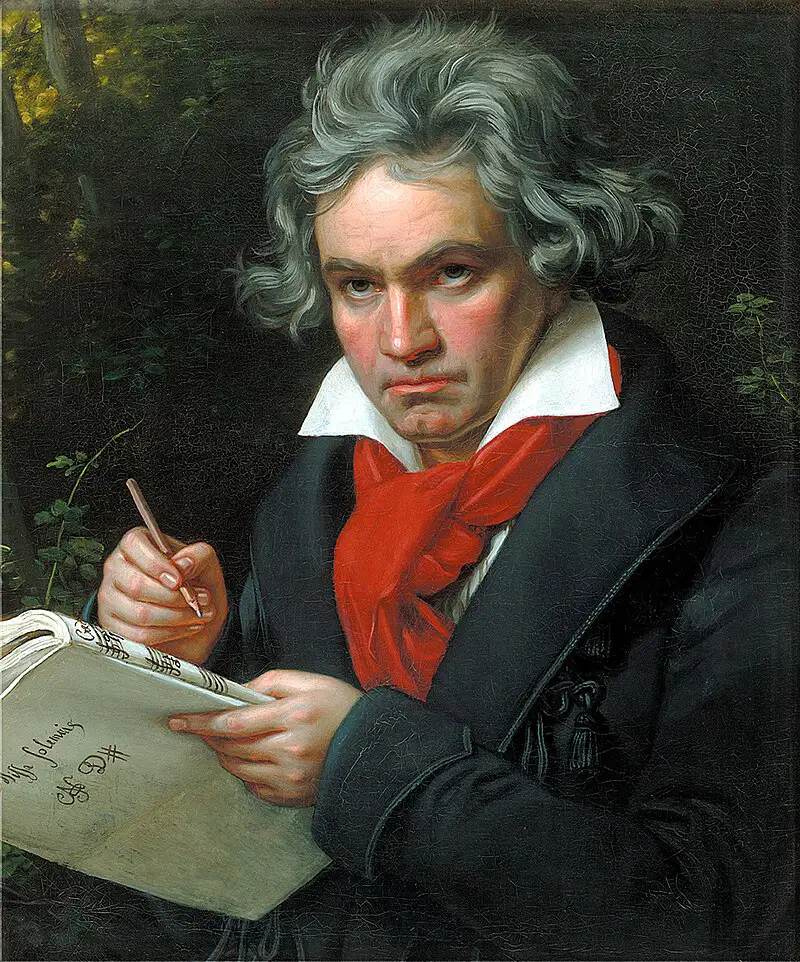
Which composer was influential in both the Romantic and Classical periods and is often considered a bridge between them?
Joseph Haydn
Ludwig Van Beethoven
Johann Sebastian Bach
Antonio Vivaldi
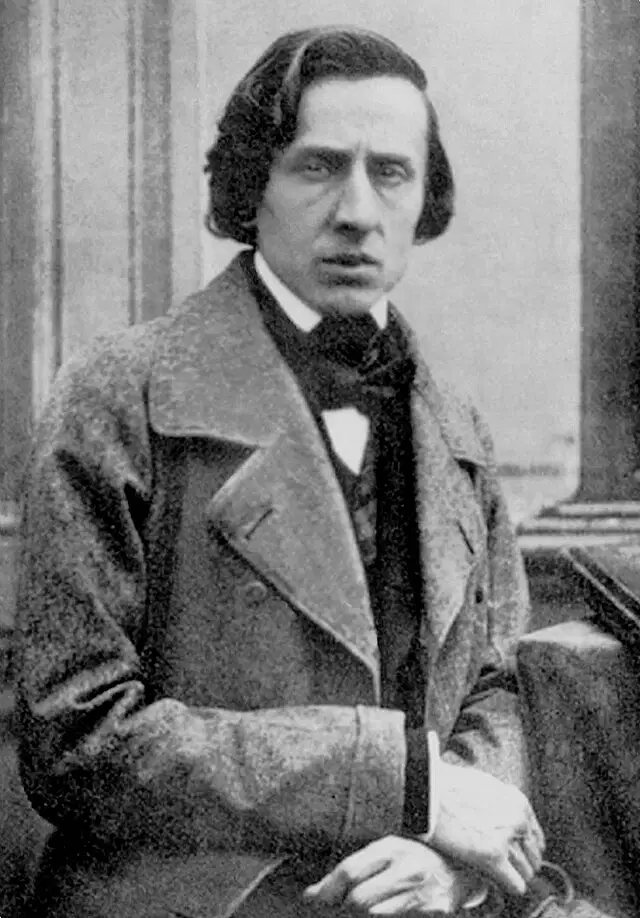
Chopin's compositions based on what instrument ?
Piano
Guitar
Vocal
Violin
Which of these is NOT a Romantic composer
Mozart
Rachmaninoff
Mendelssohn
Tchaikovsky
Which of the following is NOT one of the characteristics of the arts during the Romantic Era?
Religion
Emotion
Imagination
Individualism
The Romantic era was a time when composers...
Came up with new ways to compose
Got rid of the orchestra
Went back to Baroque music
Explored the power of music
Which of the following composers is NOT associated with the Romantic era?
Franz Schubert
Ludwig Van Beethoven
Johann Sebastian Bach
Johannes Brahms

Which composer is known for his operas and is a key figure in the Romantic Period?
Richard Wagner
Antonio Vivaldi
Johann Strauss II
Johann Sebastian Bach
Which of the following is a characteristic of Romantic Period music?
Use of chromatic harmonies
Limited use of orchestration
Emphasis on form and structure
Predominantly instrumental music
Which of the following best describes the role of the orchestra in Romantic Period music?
Smaller orchestras with limited instruments
Predominantly string instruments
Larger orchestras with a wide range of instruments
Limited use of percussion
A musical form during the romantic period which is also called as a night song that has a melancholic, calm and peaceful mood.
Polonaise
Nocturne
Symphonic Poem
Scherzo
Why does the piano had an important part during Romantic period?
The piano has the capability to deliver expressive emotion while playing.
Many people admirer pianist so it became popular that everyone must learn piano.
It is a symbol of power and knowledge during the time
Because the piano is cheap and the poor can afford it.
Short compositions for piano which are primarily used as exercises and practices for the young pianist to master.
Etude
Nocturne
Polonaise
Scherzo
Which Classical composer really pushed the boundaries of Classical form and helped usher in the Romantic Era?
Mozart
Beethoven
Haydn
Chopin
Who composed the music for the ballets, "The Nutcracker" and "Swan Lake"?
Frederic Chopin
Pyotr Ilyich Tchaikovsky
Niccolo Paganini
Robert Schumann
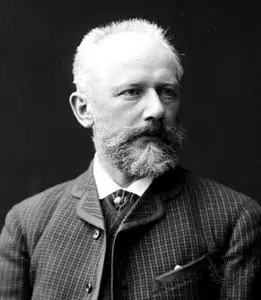
Which of these is a Romantic composer
Tchaikovsky
Beethoven
Mozart
Chopin
What is the complete sequence of the Music Periods?
Medieval, Renaissance, Baroque, Classical, Romantic, Contemporary
Medieval, Baroque, Renaissance, Classical, Romantic, Contemporary
Medieval, Renaissance, Roccoco, Classical, Romantic, Contemporary
Medieval, Renaissance, Baroque, Neo-Classical, Romantic, Contemporary

