
NEW
Font size
 Worksheets
UNIT 1 THE HUMAN MACHINE STUDY GUIDE
Total questions: 25
Worksheet time: 13mins
The moving places where the bones meet are called the ________.
joints
muscles
ligaments
tendons
The “strings” in your body that attach muscles to bones are called __________.
tendons
ligaments
cartilage
nerves
The process of learning about the different body systems by cutting them apart and observing them is called __________.
dissection
synthesis
integration
analysis
While robots have a motor to help move their different parts, we have __________ that cause our bones to move.
muscles
wires
gears
pulleys
__________ are the muscles that move our arms.
biceps
triceps
deltoids
pectorals
The clear layer in the front part of the eye is called the __________. It acts as a protective layer, keeping dust and dirt out.
cornea
lens
retina
iris
The layer at the back of your eyeball is called the __________. It is like a movie screen.
retina
cornea
lens
iris
__________ carry information from your senses to the brain.
sensory nerves
motor nerves
autonomic nerves
cranial nerves
__________ allow you to respond to what your brain is thinking.
movement nerves
sensory nerves
digestive nerves
respiratory nerves
Robots run on fuel, like a battery. Humans run on fuel too, in the form of:
Sleep
Electricity
Food
Nerves
Robots have a computer that tells them where to go. Humans have:
Muscles
A brain
Joints
A car
Your bones are the __________ of your body, giving you support.
Structure
Fuel
Computer
Central nervous system
How many bones does a finger have?
0
2
1
3
People with blurry vision have eyes that are too long or too:
Narrow
Short
Wide
Round
What happens to a person’s pupil when it is in darkness?
It gets bigger
It doesn’t change
It gets smaller
It changes color
What happens to people without a working cornea lens?
They are blind, seeing only darkness
They are blind but see lights and shadows
They have no pupil
They need glasses to fix their vision
When there is a problem in the back of the eye, then the person:
Is blind, seeing only darkness
Is blind but sees lights and shadows
Needs glasses to fix their vision
Has no pupil
What do nocturnal animals have in their eyes that humans don’t have?
Blood vessels
A reflective layer
A retina
Enlarged pupils
What is the job of the cord at the back of your eyeball?
Keeps the eye in place
Flips images upside down
Allows light to come in
Sends messages to the brain
When an eye is dissected, the pupil is black. Circle the correct response.
True
False
Light comes into the eye through the pupil. Circle the correct response.
True
False
Your brain is involved with your emotions. Circle the correct response.
True
False
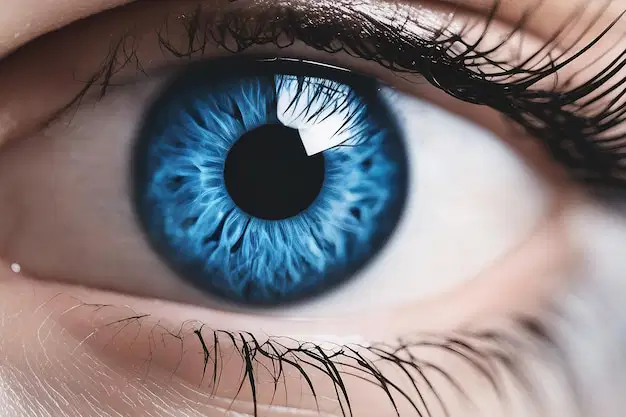
What word do we use to label the colored part of the eye?
White part of the eye
Pupil
Cornea
Retina
Iris
Which of the following brain functions happens FIRST?
Control the pulling of your muscles to make your body move.
Take information from your senses
Make decisions about the information that comes from your senses.
Which of the following brain functions happens LAST?
Control the pulling of your muscles to make your body move.
Take information from your senses
Make decisions about the information that comes from your senses.

