
 Worksheets
Anatomy - Unit 2 Histology
Total questions: 49
Worksheet time: 25mins
Named for its lack of obvious striations
Found in the walls of various organs
Involuntary
Skeletal muscle
Smooth muscle
Cardiac muscle
Fibrous connective tissue
Stores fat
Stockpiles energy
Pads and insulates the body
Nervous tissue
Adipose tissue
Blood
Epithelial tissue
Composed of cells that are branched and striated
Found only in heart tissue
Responsible for the contraction of the heart
Skeletal muscle
Smooth muscle
Cardiac muscle
Fibrous connective tissue
Is a connective tissue with a matrix of liquid
Contains red and white blood cells suspended in plasma
Fibrous Connective tissue
Blood
Bone
Adipose Tissue
Has a strong but rubbery matrix
Functions as a flexible, boneless skeleton
Forms the shock-absorbing pads that cushion the vertebrae of the spinal column
Bone
Blood
Cartilage
Fibrous Connective Tissue
Always has one surface open (not attached to other organs)
Covers the surface of the body
Lines organs and cavities within the body
Loose connective tissue
Skeletal muscle
bone
epithelia

Name the category
Blood
Epithelial tissue
Adipose tissue
Cardiac muscle

Name the tissue
Hyaline Cartilage
Elastic Cartilage
Fibrocartilage
Adipose

Striations can be seen in which type of muscle tissues?
Smooth and cardiac
smooth and skeletal
skeletal and cardiac
Cardiac only

What type of tissue is this?
Connective - Blood Tissue
Connective - Loose
Epithelium - Stratified Squamous
Nervous - Neuron

What type of tissue is this?
Bone tissue
Pseudostratified columnar
Stratified Squamous
Skeletal muscle

Name the Tissue Type:
Bone
Cartilage
Blood
Smooth muscle

Name this tissue
Skeletal
Cardiac
Smooth


What is the function of the this tissue?
Lines organs and cavities within the body
Binds epithelia to underlying tissues
Pads and insulates the body
Contains red and white blood cells suspended in plasma

Identify the tissue.
Smooth Muscle
Cardiac Muscle
Skeletal Muscle
Dense Regular

Identify the tissue
Simple Cuboidal
Simple Squamous
Pseudostratified squamous
Simple columnar

Identify the tissue
Simple Cuboidal
Simple Squamous
Pseudostratified squamous
Simple columnar

Identify the tissue
Simple Cuboidal
Transitional
Pseudostratified Columnar
Simple columnar
What is Histology?
The study of cells
The study of tissues
The study of organs
The study of organ systems
How many basic tissue types exist in the body?
3
4
12
6
Epithelial Tissue
Avoids exposed surfaces, retreats from internal passageways and chambers, destroys glands
Covers exposed surfaces, lines internal passageways and chambers, forms glands
Skin
If epithelial tissue appears in too large a quantity, it provides healing abilities akin to those of Wolverine
Connective Tissue
Causes the body to inflate like an airbag in case of impact
Connects stuff
Fills internal spaces, provides support for other tissues, stores energy reserves
Provides support for bones
Muscle Tissue
Contracts and expands to cool the body
Expands to move the body
Contracts to perform specific movements, generates heat in the process
Must be consciously moved
Nervous Tissue
Carries information between parts of the body in the form of electrical impulses
Carries information between the brain and spinal cord
Carries information between muscle groups
Allows for manipulation of electricity
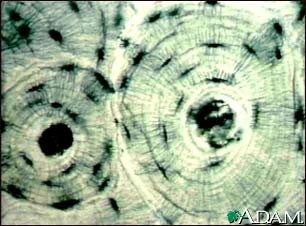
smooth muscle
bone
nerve
blood
Which muscles act involuntarily?
(i) Striated
(ii) Smooth
(iii) Cardiac
(iv) Skeletal
(i) and (ii)
(ii) and (iii)
(iii) and (iv)
(i) and (iv)
The epidermis (skin) is composed of _____.
Function of the adipose tissue in the inner layer of skin functions to...
insulate the body
provide pigment to the skin
help to make collagen and elastin
produce sebum
Epithelial cells present in the small intestine are tall and thin. They are called
squamous
cuboidal
columnar
rectangular
______________ tissue provides cushioning to our organs.
Areolar
Adipose
Cartilage
Lymph
Which of the following is not a type of connective tissue?
Blood
Bone
Skin
Adipose
Which type of muscle tissue would line the intestines?
Smooth
Skeletal
Cardiac
Transitional
The four types of tissue are
Cardiac, transitional, epithelial, connective
Muscle, Nervous, Epithelial, Connective
Connective, Epithelial, Transitional, Muscle
Epithelial, Connective, Muscle, Squamous
Cardiac muscle is found around the
Liver
Heart
Lungs
Stomach
This name means that there are multiple layers of cells
Simple
Stratified
Columnar
Pseudostratified
These cells are small and flat
Cuboidal
Columnar
Squamous
Pseudostratified

Name the tissue
Pseudostratified
Simple columnar
Transitional
Stratified Squamous
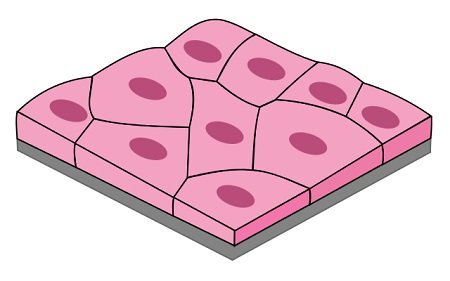
Name the type of epithelium
simple cuboidal
simple squamous
simple columnar
stratified squamous
Which tissue enables various forms of movement, both voluntary and involuntary?
Muscle
nerve
connective
epithelial
smooth muscle
bone
nerve
blood

What type of tissue is this?
Muscle
Epithelial
Nervous
Connective

What tissue is this?
Simple columnar
Simple cuboidal
Adipose
Skeletal muscle

