
 Worksheets
Unit 1 and 2 Review
Total questions: 60
Worksheet time: 36mins




Maintaining a stable internal
environment is called
homeostasis
equilibrium
balance
evenness
Identify the characteristic: A camel has eyelashes that work to keep the dust and sand out of its eyes.
All living things adapt/respond to their environment
All living things grow
All living things have cells
All living things use energy
Which of the following shows the levels of organization in order from simple to complex?
1. Cell
2. Tissue
3. Organ
4. Organ System
5. Organism
1. Cell
2. Tissue
3. Organelle
4. Organ
5. Organ System
1. Tissue
2. Organelle
3. Cell
4. Organ
5. Organism
1. Organ
2. Tissue
3. Cell
4. Organism
5. Organ System
Cells combine to form...
tissue
organs
organ systems
organisms
Which level of organization is the smallest and simplest?
Cell
Tissue
Organ
Organ System
Organisms

This picture represents which of the levels of organization?
tissue
organism
organ
organ system
Cell Membrane
maintains homeostasis by controlling what enters and leaves the cell
suspends the organelles and provides an environment for chemical reactions within the cell
makes proteins
provides structure for cells and movement of organelles
Cytoplasm
maintains homeostasis by controlling what enters and leaves the cell
suspends the organelles and provides an environment for chemical reactions within the cell
makes proteins
provides structure for cells and movement of organelles
Ribosome
maintains homeostasis by controlling what enters and leaves the cell
suspends the organelles and provides an environment for chemical reactions within the cell
makes proteins
provides structure for cells and movement of organelles
Nucleus
stores genetic information (DNA)
makes and transports proteins
makes lipids and membranes (also detoxifies and stores calcium)
modifies, sorts, and ships proteins
Rough Endoplasmic Reticulum
stores genetic information (DNA)
makes and transports proteins
makes lipids and membranes (also detoxifies and stores calcium)
modifies, sorts, and ships proteins
Smooth Endoplasmic Reticulum
stores genetic information (DNA)
makes and transports proteins
makes lipids and membranes (also detoxifies and stores calcium)
modifies, sorts, and ships proteins
Lysosome
creates energy (ATP) from food; site of cellular respiration
stores food, water, or wastes with the cell; plant cells have a special vacuole
uses enzymes to digest bacteria, viruses, and old organelles (old cell parts are recycled)
create special structures called spindle fibers that are used in cell division
Chloroplast
provides shape, structure, and protection for the cell
site of photosynthesis; uses the sun's energy to produce food
stores water in order to maintain plant shape (if a plant needs water, it wilts)
site of cellular respiration
Cell Wall
provides shape, structure, and protection for the cell
site of photosynthesis; uses the sun's energy to produce food
stores water in order to maintain plant shape (if a plant needs water, it wilts)
site of cellular respiration


The function of the muscular system is to...
regulate all biological processes in the body
move the body, maintain posture and temperature
remove waste from the body
break down food
What is the function of the excretory system?
move the body
remove waste from the body
break down food
bring in oxygen and remove carbon dioxide
The function of the digestive system is to...
support and protection
deliver oxygen to the cells and remove waste
move the body
break down food
What is the function of the respiratory system?
bring in oxygen and remove carbon dioxide
break down food
helps all parts of the body to communicate with other parts
maintain fluid levels in the body
What is the function of the skeletal system?
break down food
helps all parts of the body to communicate with other parts
maintain fluid levels in body
support and protection
The function of the circulatory systems is to...
deliver oxygen to the cells and remove waste from the cells
break down food
support and protection
move the body
What is made up of atoms?
Only living things
Only non-living things
Everything
None of the above
Select the subatomic particles that are found in the nucleus of an atom
protons
electrons
neutrons
none of the above
What is the charge on a proton?
positive
negative
neutral
What is the charge on an electron?
positive
negative
neutral
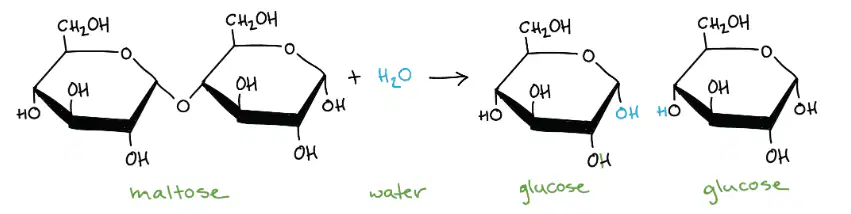
In this process water is added to break apart a polymer
Dehydration synthesis
Hydrolysis
Hydrogen Bonding
Covalent bonding
Which property of carbon is important in the forming of many types of organic compounds?
Carbon has 6 protons
Carbon can only bond with hydrogen
Carbon has 4 valence electrons
Carbon has 6 valence electrons
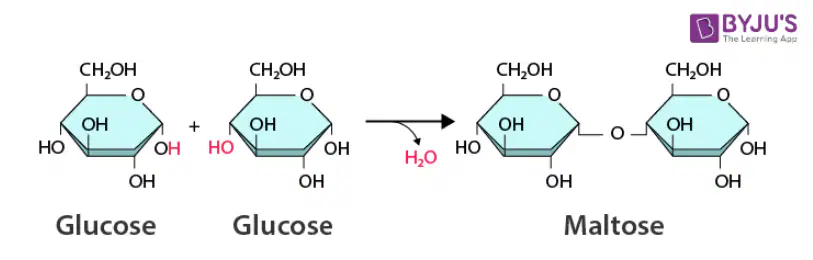
The image shows which process?
Hydrolysis
Building of a dimer
Photosynthesis
Dehydration Synthesis
Monomers bond to other monomers through this process
Dehydration Synthesis
Hydrolysis
Hydrogen Bonds
Molecule Building
What is the monomer of a carbohydrate?
Disaccharide
Monosaccharide
Glycerol
enzymes
DNA and RNA are examples of...
Carbohydrates
Lipids
Proteins
Nucleic Acids

What do disaccharides such as sucrose, and polysaccharides such as starch, have in common?
What is the ratio of carbon to hydrogen to oxygen in carbohydrates?
2:1:2
3:8:3
1:2:1
8:3:8
Pick all of the foods that are an example of proteins.
Beef Jerky
Eggs
Beans
Bagels
Lipids are...
Hydrophobic
Hydrophilic
Found in fats, oils, and waxes
made of glycerol and fatty acids
Which of the following elements are found in nucleic acids?
CHO
CHON
CHONP
CHOSK
Activation energy
proteins that speed up chemical reactions
Changing substances by breaking and forming bonds (includes hydrolysis and dehydration reactions)
the capacity for doing work
the energy needed to start a chemical reaction
Denature
the region of an enzyme that attaches to a substrate
a change in the shape of a protein (such as an enzyme) that can be caused by changes in temperature or pH (among other things).
substance that can bind to an enzyme and prevent the substrate from properly binding
macromolecules that contain carbon, hydrogen, oxygen, and nitrogen, include enzymes

Letter C...
products
substrate
enzymes
active site

Letter B...
substrate
active site
enzyme
products

Letter D...
enzyme
active site
substrate
products
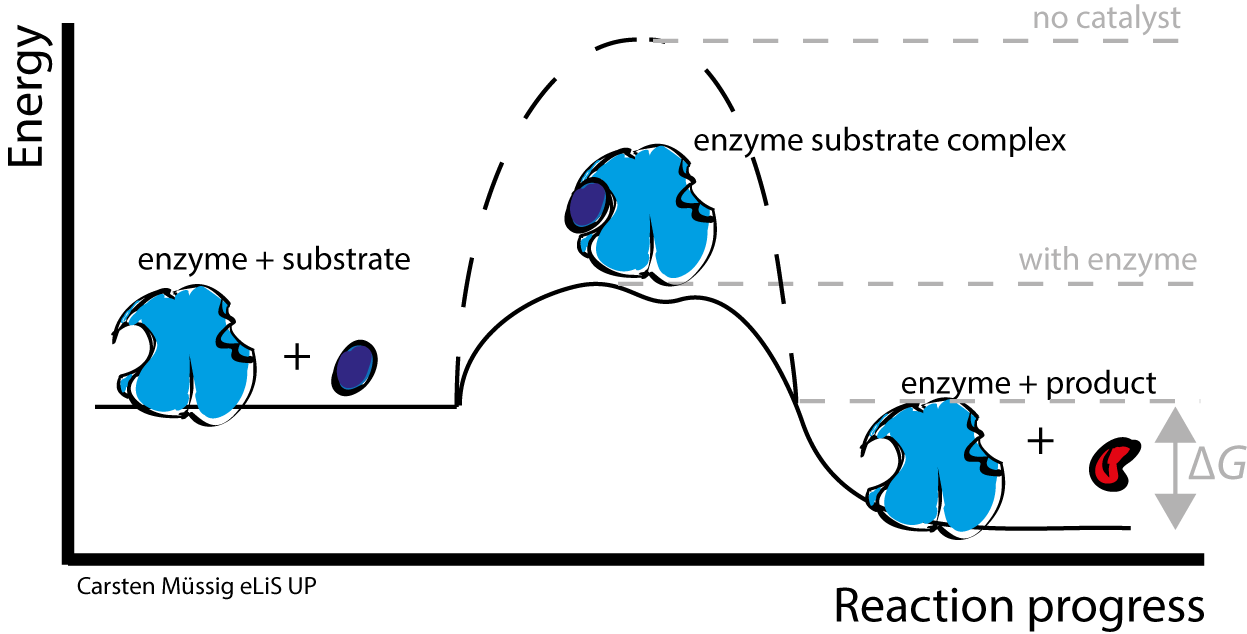
Which of the following are macromolecule groups?
Carbohydrates
Lipids
Gases
Liquid
Nucleic Acids

