
 Worksheets
Hurricanes Review
Total questions: 19
Worksheet time: 5hrs 45mins
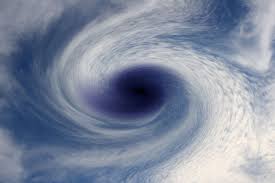
What is the calm area in the center of a hurricane called?
Wall
Eye
Arm
Hole

Where are the strongest winds and heaviest rains in a hurricane located?
In the eyewall
In the outer bands
On the leading edge
On the lagging edge
The pressure inside a hurricane is _______.
High
Low
In order for a hurricane to form, the water must be ________.
Cool
Warm
Cold
Hot
What causes damage in a hurricane?
Winds
Flooding
Storm Surge
All of the above
What is the most powerful part of a hurricane?
Eye
Eye Wall
Storm surge
Edge
How do you protect yourself in a hurricane?
Close all doors and windows
Use sand bags for barriers
Have plenty of food and water
All of the above

What do the wind speeds need to reach for a storm to be classified as a hurricane?
23 - 39 mph
40 - 73 mph
74 mph
600 mph
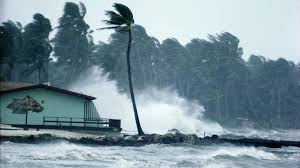
What fuels a hurricane's strength?
Wind
Sunlight
Warm Water
Cold Water

Violent cyclonic storm that develops in tropical regions.
El Nino
Hurricane
Wallaby

What is the major source of energy fueling a hurricane?
low pressure system
Heat Energy evaporating from the ocean surface
The skies in the center of a hurricane are often cloud free. This is because the air in the eye is ____.
sinking
very cold
dry
expanding
On the Saffir-Simpson scale, a category 5 storm would indicate ____.
a weak hurricane
a moderately strong hurricane
a very strong hurricane
nothing in particular, as the Saffir-Simpson scale applies to tornadoes
Tropical storms form in low or high pressure systems?
Low pressure
High pressure
What is storm surge?
A mound of ocean water driven by hurricane-force winds toward coastal areas
The build up of a hurricane before it reaches full strength
The rapid increase of air pressure associated with a strengthening hurricane
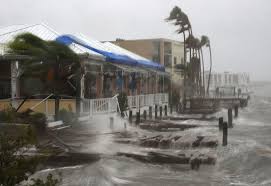
What happens as a hurricane moves further in-land?
It speeds up and gets stronger
It turns around and goes back to sea
It slows down and gets weaker
It stalls

How are hurricanes categorized?
based on their destination
based on their wind speed
based on where they form

In what area would hurricanes be most likely to form and why? Choose 2 answers.
blue
red
green
Because the water is warmest there
Because the water is coldest there
Where are hurricanes most likely to do the most damage?
Near the coast
In the forest
In a desert
On the North pole

