
NEW
Font size
 Worksheets
PShipman Carnegie PS SpS123 Georgia Review
Total questions: 32
Worksheet time: 16mins
Mass
Shared electrons
Locations on the PToE

Which of these molecules have the same number of Carbon Atoms?
Substance 1 and 4
Substance 2
Substance 1 and 3
Substance 2 and 4

In what section would you most likely find an element that is a brittle solid at room temperature and is not a good conductor?
Section 1
Section 2
Section 3
There are no elements that are brittle solids

What element has 6 Valence Electrons but only two (2) Energy shells/Orbitals?
Gold
Oxygen
Barium
Sulfur

The following two elements:
Have similar chemical properties and can be found in Group 7 of the periodic table
Do not have similar chemical properties and are not in the same group
Have similar chemical properties and can be found on opposite sides of the periodic table
Have similar chemical properties and can be found in Group 2 of the periodic table
Valence Electrons determine an element's___________________________, While Protons determine an element's____________________________.
IDENTITY; REACTIVITY
Both determine reactivity
REACTIVITY; IDENTITY
Both determine identity

A researcher began the following reaction with 52.6 grams of sugar and Sulfiric Acid in part A. The final mass of the products in part B would MOST LIKELY be:
More than 52.6 grams
Less than 52.6 grams
Exactly 52.6 grams
Cannot be determined
Which atom diagram has chemical properties most similar to carbon?


The nucleus of the atom contains 8 protons and 9 neutrons. The atom is electrically neutral. How many electrons does this atom have?
1
8
9
15
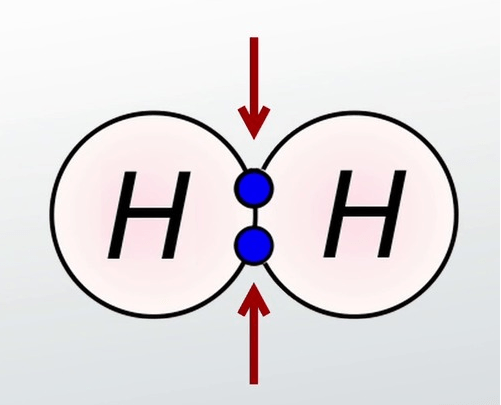
How do the boiling points of ionic and covalent compounds compare?
Boiling points for ionic compounds are lower than boiling points for covalent compounds.
Boiling points for ionic compounds are higher than boiling points for covalent compounds.
Boiling points for ionic compounds are approximately the same as boiling points for covalent compounds.
Boiling points for ionic compounds are higher than boiling points for some covalent compounds and lower for other covalent compounds.

Which of Deanna’s models correctly represents a stable calcium fluoride compound?


How should you change the image below to represent an ionic bond between sodium and fluorine?
move 7 electron from fluorine to sodium
move one electron from fluorine to sodium
move one electron from sodium to fluorine
Nothing. The image already shows an ionic bond.
Use IUPAC nomenclature rules to properly identify this compound: K2O
potassium oxide
dipotassium oxide
potassium (I) oxide
dipdipotassium monoxide
Carbon Tetrafluoride
C4F
CF
C4F4
CF4
Name this compound according to IUPAC nomenclature rules: NO
nitrogen oxide
nitrogen oxygen
nitrogen monoxide
mononitrogen monoxide
What is the correct chemical formula for dinitrogen tetroxide?
N2O4
N2O3
N3O2
N4O2
Which of the following formula and chemical name combinations is correctly shown?
N2O2; nitrogen dioxide
N2O5; dinitrogen pentoxide
Ca2P3; dicalcium diphosphide
PCl5; phosphorus tetrachloride
How many HCl molecules do you need to balance this equation?
Mg + __HCl → MgCl2 + H2
1
2
3
4

According to the Law of Conservation of Mass, how much zinc was present in the zinc carbonate?
a. 25 grams
b. 45 grams
c. 65 grams
d. 85 grams
Which of the following best illustrates the Law of Conservation of Mass?
a. H2SO4 → H2O + SO2
b. H2SO4 → 2H2O2 + SO2
c. 2H2SO4 → 2H2O + SO3
d. H2SO4 → H2O + SO3

CoCO3 → CoO + CO2

