
 Worksheets
Unit 3, Chapter 2 (7th) Bayou Bridges
Total questions: 58
Worksheet time: 44mins
What ideology suggested that Americans were destined to expand across North America?
Isolationism
Manifest Destiny
Federalism
Social Darwinism
Which groups were largely excluded from the vision of progress associated with Manifest Destiny?
European immigrants
Native Americans, African Americans, and women
Farmers and laborers
Politicians and businessmen
How did artists of the time depict westward expansion?
As a dangerous journey
As a noble endeavor
As a waste of resources
As a temporary trend
When did Mexico gain independence from Spain?
1804
1810
1821
1836
What was one of the challenges faced by the Mexican government in populating Texas?
Lack of natural resources
Difficulty attracting Mexican settlers
Hostile climate
High taxes
Who was a prominent American figure leading settlers into Texas?
Davy Crockett
Stephen Austin
Sam Houston
James Bowie
What did the belief in Manifest Destiny claim Americans were bringing to North America?
Wealth and prosperity
Freedom and democracy
Technology and innovation
Peace and stability
Which of the following best describes the U.S. expansion by the 1820s?
Limited to the East Coast
Significant, with agriculture dominating the economy
Focused on industrial development
Confined to urban areas

Why did Mexico encourage Americans to settle in Texas?
What was the primary purpose of the Pony Express?
To transport goods across the country
To provide a fast mail service using horseback riders
To establish new trade routes
To promote tourism in the western United States
How did the Pony Express improve communication in the United States?
By using telegraph lines
By employing faster ships
By using horseback riders to deliver mail quickly
By establishing a network of railroads
Why was the Pony Express service short-lived?
It was too expensive to maintain
It was replaced by the telegraph
It was not popular among the public
It faced competition from railroads
What was the main purpose of the Pacific Railway Act of 1862?
To establish a national banking system
To initiate the construction of the transcontinental railroad
To promote agricultural development
To regulate interstate commerce
Which group of laborers played a significant role in the construction of the transcontinental railroad?
Native Americans
European immigrants
Chinese immigrants
African American slaves
Where was the transcontinental railroad completed in 1869?
Omaha, Nebraska
Sacramento, California
Promontory Point, Utah
Denver, Colorado
How did the U.S. government help in the construction of the transcontinental railroad?
Use the excerpt to answer the question.
"[It is] our manifest destiny to overspread the continent allotted by Providence for the free development of our yearly multiplying millions."
—from John O’Sullivan’s Editorial on Manifest Destiny (1845)
The ideas expressed in the passage contributed most directly to which of the following?
the passage of the Homestead Act
the Supreme Court’s decision in Worcester v. Georgia
What is a refusal to follow the law or government because it goes against one’s conscience; an act of protest?
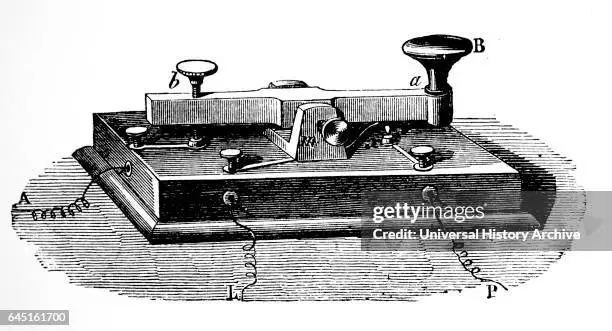
What is machine that communicates messages over long distances by sending signals through wires?
What was the Gadsden Purchase?
A cultural exchange program with Mexico
A purchase of weapons and supplies from Mexico
A treaty to end the Mexican War
A land purchase that facilitated a southern U.S. railroad
Surrounding and attacking your enemy for a long period of time is called a
siege
stand off
massacre
end game
Who led the first wave of American Settlers into Texas?
Stephen F. Austin
Davey Crockett
William Travis
Antonio Lopez de Santa Ana
Why did Texans fight for independence from Mexico?
Mexico closed the border to new US immigrants
Santa Anna became the leader of Mexico, and the Texans did not like him.
Mexico wanted to abolish slavery
All of the above
When Americans first wanted to settle in Texas, what were the conditions Mexico gave them?
Speak Spanish
Convert to Catholicism
Obey Mexican laws
All of the above
Texas was originally part of what country?
Mexico
the United States
it was never a part of another country, it was always independent
After the Battle of San Jacinto Mexico signed a treaty recognizing Texan independence. Texans elected this man president?
Sam Houston
William Travis
Stephen Austin
Jim Bowie

What year was Texas annexed to the United States?
1819
1836
1845
1861


What is Manifest Destiny?
Texas' future to reach the Pacific ocean.
Americans' belief that it was their God given right to own the land from East to West, from the Atlantic to Pacific Ocean.
An angel flying through the air from East to West.
The progress of the White man

What battle cry would rally the Texans after the defeat at the Alamo?
Freedom is so close!
Remember the Alamo!
Victory or Death!
I give up!
"American blood has been shed on American soil" was a speech used by President Polk to...
to get money from Congress to buy the Louisiana territory
to change the borders between Canada and the United States
to get congress to declare war on Mexico
to negotiate price for Florida

California, Arizona, Wyoming, Utah,and Nevada were some of the states that were formed by what land given up by Mexico in the Treaty of Guadalupe Hidalgo?
The Treaty Velasco
The Annexation of Texas
The Mexican Cession
The Joint Resolution

This president was a strong believer in expanding the nation westward (Manifest Destiny).
Henry Clay
Andrew Jackson
James K. Polk
Franklin Pierce

Mexico argued that the Texas border was the Nueces River, while the U.S. believed it was the ________ river
Rio Grande
Mississippi
Colorado
Hudson River

Why did the U.S. and Mexico go to war?
The United States recently annexed Texas
The U.S. and Mexico disagreed over their boundary
America's continued desire to achieve manifest destiny
All are reasons the U.S. went to war with Mexico
What was the significance of the Treaty of Guadalupe Hidalgo?
It ended the Mexican-American War
It initiated the construction of the Panama Canal
It established the U.S.-Canada border
It was a trade agreement with France
After gaining its independence from Spain, the Mexican government :
encouraged American settlers to move to Texas
What was the primary reason for the construction of the transcontinental railroad?
To connect the East and West coasts of the U.S.
To establish a trade route with Canada
To promote tourism in the Midwest
To transport gold from California to the East

What is territory 9 called? (Acquired in 1853)
Oregon Territory
Mexican Cession
Texas Annexation
Gadsden Purchase

Name of the treaty in which the U.S. acquired area 8 is called... (Acquired in 1848)
Treaty of Paris
Oregon Treaty
Adams-Onis Treaty
Treaty of Guadalupe-Hidalgo

What is territory 7 called? (Acquired in 1846)
Oregon Territory
Florida Territory
Red-River Basin
Mexican Cession

Which section is the Oregon Territory?
B
E
F
H
Britain and the United States signed a treaty to set the border for Oregon at the ___ parallel
48th
49th
54th
none of the above
The Oregon Trail was roughly
500 miles long
1000 miles long
1500 miles long
2000 miles long.

This trail was used for a group of people who wanted to practice their religion in peace.
The Mormon Trail
The California Trail
The Oregon Trail
The Santa Fe Trail
Families, fur trappers, and Christian missionaries traveled along this trail.
Old Spanish Trail
Oregon Trail
Mormon Trail
Santa Fe Trail
Which trail was used by a religious group to escape violence and persecution?
The Santa Fe Trail
The Oregon Trail
The Donner Trail
The Mormon Trail
How did President James K. Polk provoke war with Mexico?
He ordered U.S. troops to cross the Nueces River.
How did the U.S. government help in the construction of the transcontinental railroad?
What was the reason for the end of the Pony Express mail delivery service?
Stage coaches were faster at delivering mail than the Pony Express.
The Transcontinental Railroad began mail service.
The phone was invented and people could send messages through the phone lines.
The transcontinental telegraph lines were completed.
The Gold Rush led to statehood for....
Texas
Maine
California
The Homestead Act offered free land in hopes to encourage what?
western settlement of the U.S.
nothing
people from the west to move back east
people from the South to move to the North

This angel in the image represents
protection during a new change.
Destiny leading the way to its purpose.
power over the people.
confidence.
Extending across the country.
Manifest Destiny
transcontinental
tectonic
subterranean
What are the four factors that expanded the west
dawes act , homestead act, manifest destiny, cattle boom
transcontinental railroad, manifest destiny, reservations, homestead act
manifest destiny, homestead act, gold rush, transcontinental railroad
manifest destiny, homestead act, dawes act, gold rush

