
 Worksheets
6.8, 6.9, 6.10 Immigration, Urbanization, Middle Class
Total questions: 53
Worksheet time: 44mins
Who is most associated with political machines in New York City?
"Boss" Tweed
John Rockefeller
Jane Adams
Andrew Carnegie
What was the main source of power in big city governments during the Gilded Age?
Political Machines
Industrial Capitalists
Robber Barons
Labor Leaders
Americans who were against all immigration
America First Party
Emigrants
Nativists
Round Heads

Mark Twain coined this phrase to describe industrial America and the corruption in political America
Progressive Era
Imperial America
Era of Good Feelings
Gilded Age

Because of the rapid growth of Industrilization in the North people moved out of rural towns to?
Rural farms
Urbanzied cities
Suburb cities
El rancho
What New York politician ran a political machine in New York City beginning in 1869, during the Gilded Age, that was incredibly corrupt? For example, a projected cost of $250,000 for a courthouse turned in to $13,000,000 because of kickbacks and bribes.
Daley
Grant
Tilden
Tweed
Overcrowding and pollution were caused primarily by what?
Urbanization
Industrialization
Nativism
Assimilation
Declining wages and a rise unemployment on the west coast led to what piece of legislation?
Chinese Exclusion Act
Dawes Act
Homestead Act
Pendleton Act of 1883
How did Political Machines use Infrastructure to gain power and manipulate Immigrants?
Got them to work on those projects in exchange for votes
Got them to work on those projects in exchange for money
Kept them from getting those jobs
Old immigrants were which of the following?
arrived in the United States before the 1880s from northern Europe
arrived in the United States starting after the 1880s from southern and eastern Europe
To adjust to a new life immigrants
didn't learn to speak English and spoke their native language
moved into neighborhoods with people from different countries
moved into neighborhoods with others from the same country
wanted to go back to their home countries
The main goal of Hull House was to
provide jobs for wealthy women
pass the Tenement House Act of 1901
help poor immigrants
oppose the Chinese Exclusion Act
Anti-immigrant feeling resulted in
benevolent societies
the Chinese Exclusion Act
tenements
the Tenement House Act
Poorly built overcrowded apartment buildings were
settlement houses
skyscrapers
tenements
benevolent societies
Jane Addams and Ellen Gates Starr started the _____ in Chicago in 1889.
settlement house
school
hull house
library
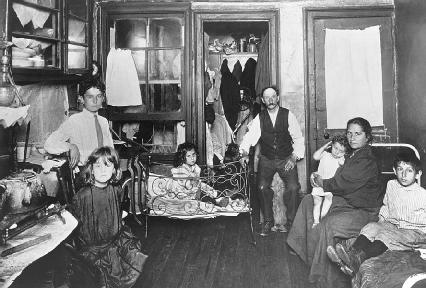
Describe life in a tenement apartment building
overcrowding
unsafe buildings
disease
all of the above

When you leave your homeland, you are _____________ from there.
emigrating
immigrating
isolating
urbanizing

The Chinese were ________________________ to help build the Transcontinental Railroad.
recruited
rejected
turned down
fired

This group of people was against immigration.
patriots
railroad barons
nativists
company owners
In New York State the Tenement House Act passed
Cut working hours to eight hours
Required new buildings to have better ventilation in bathrooms and running water
Prevented child labor
Created sanitation codes
Which time period was known as a time of business expansion, corruption, and unlimited power?
Progressive Era
Immigration Era
Gilded Age
Revolutionary Period
Where did many impoverished/immigrant families go to receive services like child care or counseling?
Cultural Neighborhoods
Settlement Houses
Hospitals
Immigrant Houses
Where did most of the "new immigrants" from the late 1800s/early 1900s come from?
Western Europe
Southern and Eastern Asia
Northern Asia
Southern and Eastern Europe
Political machines were created in cities in an effort to gain the votes of___________
immigrants
women
men
industrial workers

How did political machines get the support of immigrants?
they promised to stop illegal immigration from Latin America
They wasted money on military spending
They helped them find homes and jobs in exchange for votes
They developed a system to make becoming a citizen easier

The most famous political machine was Tammany Hall in New York lead by-
Bill the Butcher
Andrew Carnegie
William "Boss" Tweed
John D Rockefeller

What part of the country did political machines control?
Urban (city) governments
Rural (country) governments
The U.S. federal government
After 1880 many of those who moved to the US came from countries such as
Germany and Scandanavia
Britain and Ireland
Italy and Poland
Mexico and Canada
What led to the availability of consumer goods to a mass market for the first time?
Rising incomes
Technological innovations
All of the above
New merchandising techniques
Who developed the philosophy known as the Gospel of Wealth?
Marshall Field
F.W. Woolworth
John D. Rockefeller
Andrew Carnegie
What did Andrew Carnegie argue in his essay 'The Gospel of Wealth'?
The wealthy have an obligation to give money away
Wealth is a direct result of God's will
The contrast between the millionaire and the laborer measures societal progress
All of the above
Donating to charities and education is to (a)
As opened up new markets to farmers is to
(b)
I established the first settlement house in Chicago (a)
I helped found the NAACP and demanded complete equality for African Americans as granted by the 14th Amendment. (b)
I am at odds with the ideas of DuBois. I believe African Americans should focus on making their own money first. (c)
What role did the invention of the typewriter play in the expansion of the middle class?
It reduced the number of white-collar workers
It made manual labor more prevalent
It expanded clerical roles, particularly for women
It decreased the need for clerical roles
What was a significant effect of the middle class having disposable income and more free time?
Decrease in leisure time activities
Rise in leisure time activities
Decrease in the construction of amusement parks
Reduction in the popularity of spectator sports
What did Carnegie believe was the duty of the rich?
To keep their wealth to themselves
To reinvest their money into society for the benefit of the less fortunate
To increase their wealth through investments
To create more jobs for the middle class
What type of institutions did Carnegie invest in?
Private luxury resorts
Public libraries, universities, and concert halls
Banks for financial stability
Factories for more jobs
What was the new layer that developed in large corporations during the Gilded Age?
Pink-collar workers
Green-collar workers
White-collar workers
Blue-collar workers
What new skill did many women learn during the late 1800s that allowed them to earn wages in the industrial economy?
Gardening
Typing
Sewing
Cooking
What are did philanthropists like Carnegie and Rockefeller believe was the most worthy cause for their philanthropy?
Healthcare
Education
Housing
Food security
What did the Gospel of Wealth actually create the opportunity for some folks to rise into?
Middle class
Working class
Upper class
Lower class

(a) provided immigrants with jobs and housing in exchange for votes.
Match the following about Political Machines
Helped Immigrants find work and housing. Provided community services.
Pros of Political Machines
Controlled local government and corrupt
Cons of Political Machines
Gain votes in order to retain power
Purpose of Political Machines

