
NEW
Font size
 Worksheets
Net+ 1.4 Reading Activity
Total questions: 14
Worksheet time: 7mins
Which step involves verifying full system functionality and implementing preventive measures?
Step 5
Step 6
Step 7
Step 4
What should you do if multiple problems are identified during the troubleshooting process?
Approach them individually
Ignore them
Solve them all at once
Document them only.
Establishing the scope can help to identify the ______ of the problem.
source
solution
report
ticket
What is the main purpose of asking open questions in troubleshooting?
A) To get a Yes/No answer
B) To encourage detailed responses
C) To confuse the user
D) To avoid getting information
Fill in the blank: Open questions encourage the user to give you all the _______ they can.
excuses
information
problems
errors
What should you do if problems do not seem to be related?
Treat each issue as a separate case
Combine the issues
Ignore the issues
Restart the system.
When duplicating the problem, you should try to follow the same steps as the ________.
User
Technician
Manager
Developer
What might indicate existing problems when approaching multiple problems individually?
Outstanding support or maintenance tickets
New software updates
User errors
Hardware malfunctions.
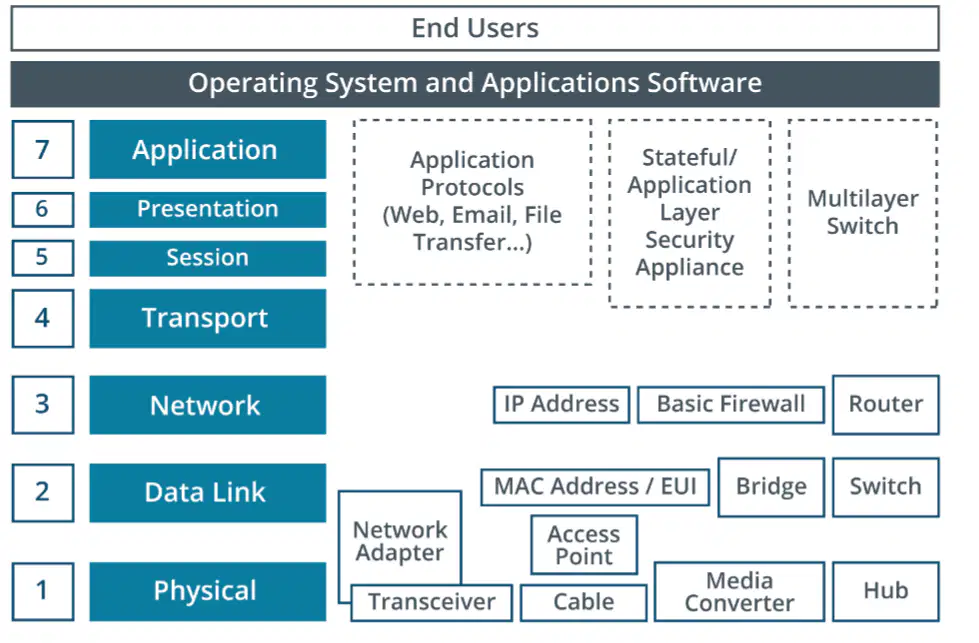
Which layer of the OSI Model deals with IP Address and Basic Firewall?
Network
Data Link
Transport
Application
Which approach is more time-consuming but necessary for difficult problems?
Ignoring the problem
Methodically proving functionality
Guessing the solution
Replacing components randomly.
Fill in the blank: In troubleshooting, if you have drilled down and the problem is not obvious, you must be prepared to go back and follow a different ____.
path
theory
cable
layer
What is the 'Divide and Conquer Approach' in troubleshooting?
Starting at the top and working down
Starting at the bottom and working up
Starting with the layer most likely to be causing the problem
Testing all layers simultaneously.
Fill in the blank: Another difficulty in troubleshooting lies in assessing whether a component itself is faulty or if it is not working because a related component is ____.
missing
broken
outdated
incompatible
What can happen if you make a series of changes without recording what you have done?
Turn a minor problem into a major one
Solve the problem quickly
Improve system performance
None of the above.

