
NEW
Font size
 Worksheets
Understanding Heat Transfer and Matter
Total questions: 23
Worksheet time: 31mins
Which of the following is NOT a type of heat transfer?
Convection
Conduction
Radiation
Insulation
In which state of matter do particles vibrate in fixed positions?
Solid
Liquid
Gas
Plasma
What happens to the particles of a substance when it is heated?
They move slower
They move faster
They stop moving
They become larger
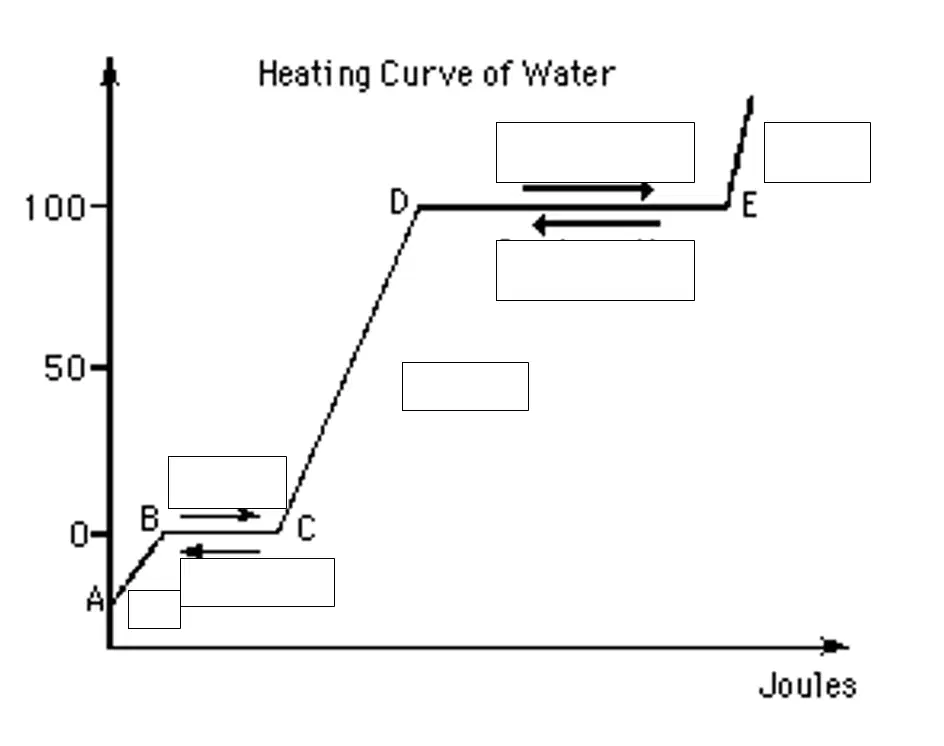
Which process describes the transition from Point D (liquid) to Point E (gas)?
Freezing
Condensation
Evaporation
Sublimation
Which of the following is an example of conduction in everyday life?
Boiling water in a pot
Feeling the warmth of the sun
Heating a room with a radiator
Ice melting in your hand
How does thermal energy travel through space?
Conduction
Convection
Radiation
Insulation
What is the main cause of convection currents in the atmosphere?
Differences in air pressure
Differences in air temperature
Differences in air density
Differences in air humidity
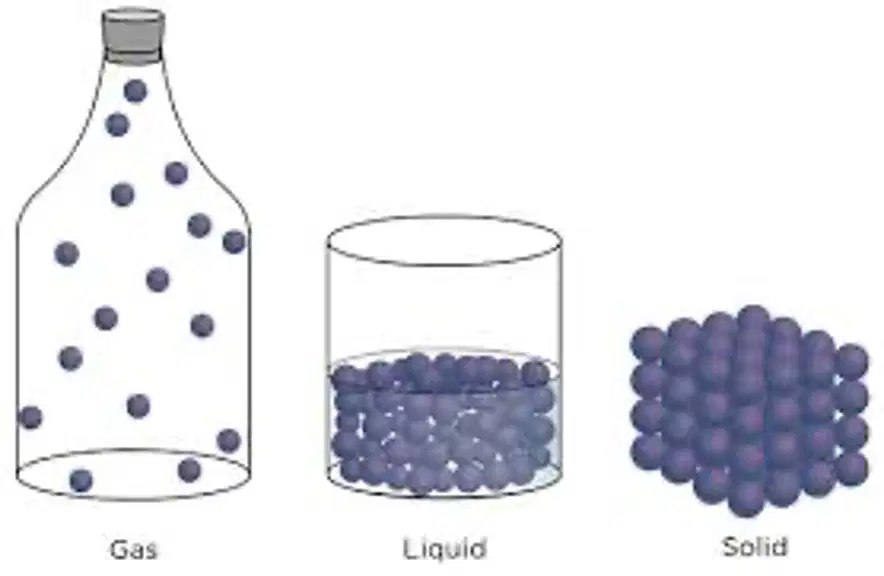
Which state of matter has a fix volume but no definite shape?
Solid
Liquid
Gas
Plasma
Which of the following is an example of radiation?
A metal spoon getting hot in a cup of tea
Warm air rising from a heater
Sunlight warming your skin
Water boiling in a pot
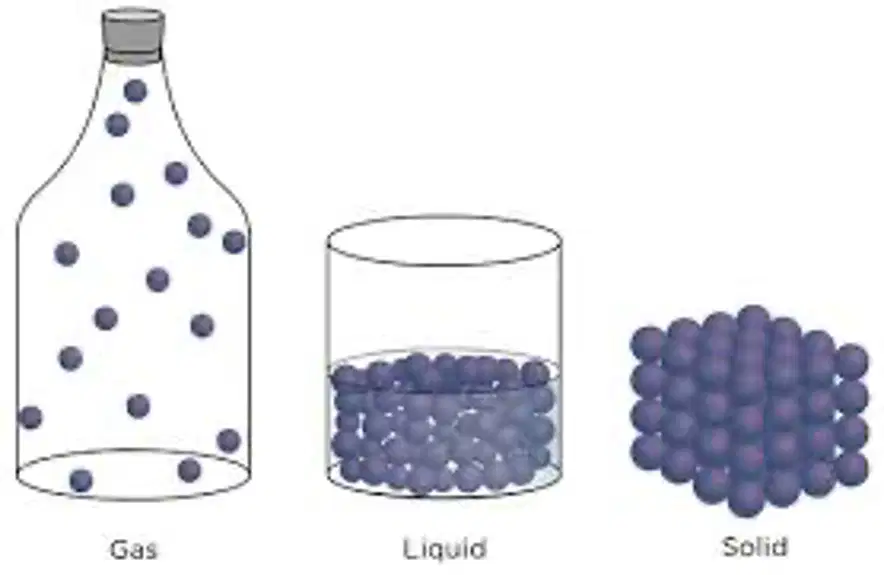
Which of the following best describes the particle movement in a gas?
Particles are tightly packed and vibrate in place
Particles are close together but can move past each other
Particles are far apart and move freely
Particles are arranged in a regular pattern
What is the primary method of heat transfer in liquids and gases?
Conduction
Convection
Radiation
Insulation
What is the primary method of heat transfer in solids?
Conduction
Convection
Radiation
Insulation
Which of the following processes involves heat transfer without the movement of the medium?
Conduction
Convection
Radiation
Evaporation
Heat transfer by convection is caused by differences in what two things:
Thickness and material
Weight and electricity
Temperature and density

Name the type of heat transfer shown in the picture.
convection
conduction
radiation
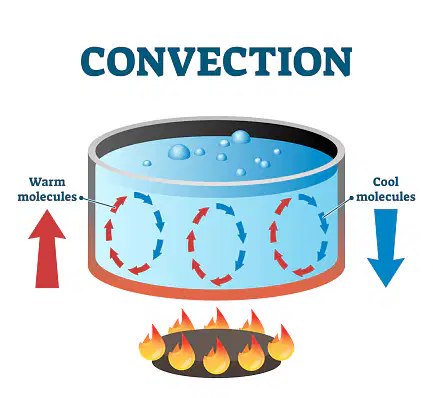
What does heat do when convection currents are moving?
Sinks
Rises
Stays in place
What happens to the density of a fluid as it is heated?
It increases
It decreases
It remains the same
It fluctuates
Which of the following is an example of convection in nature?
Sunlight warming the Earth
Wind currents in the atmosphere
Heat from a stove warming a pot
Ice melting in a drink
What is the effect of convection currents on tectonic plates?
They cause the plates to sink
They cause the plates to move
They cause the plates to expand
They cause the plates to contract
Which of the following is an example of heat transfer through conduction?
Sunlight warming the Earth
Touching a hot iron
Warm air rising from a heater
Ocean currents
What happens to the volume of a gas when it is heated at constant pressure?
It increases
It decreases
It remains the same
It fluctuates
Which of the following best describes the particle movement in a liquid?
Particles are tightly packed and vibrate in place
Particles are close together but can move past each other
Particles are far apart and move freely
Particles are arranged in a regular pattern

