
 Worksheets
Fundamentals Review
Total questions: 34
Worksheet time: 12mins

Name the note
(a)

Name the last note
(a)

Name the last note
(a)

Name the last note
(a)

Name the last note
(a)

Name the last note
(a)
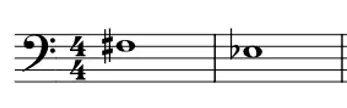
Name the last note
(a)

Name the last note
(a)
Notes or keys that sound the same but are spelled differently
Transpose
Leading Tone
Enharmonic
Changing a piece or section of music from one key to another
Transpose
Leading Tone
Enharmonic
When “Do” is equated with “C,” “Re” is “D” and so forth
Solfege
Fixed "Do"
Moveable "Do"
First note of a scale; names the key of a piece
Dominant
Tonic
Leading Tone
Singing with syllables
Solfege
Fixed "Do"
Moveable "Do"
Seventh note of a scale
Dominant
Tonic
Leading Tone
When “Do” is equated with the tonic note of a scale
Solfege
Fixed "Do"
Moveable "Do"
Fifth note of a scale
Dominant
Tonic
Leading Tone
Return to the beginning and repeat, ending at the word “Fine”
D.C. al Fine
Fine
Repeat
Sharps or flats placed in a specific order after the clef at the beginning of a line of music indicating the key of a piece
Accidentals
Key Signature
Scale
Recurring division of the pulse into a pattern of strong and weak beats.
Beat
Measure
Meter
The regularity of a pulse
Beat
Measure
Meter
Grouping of metered beats (strong and weak beats) separated by lines called bar lines
Beat
Measure
Meter
The difference between any two pitches
Leap
Enharmonic
Interval
An accidental used to raise a note a half-step
Sharp
Flat
Natural
An accidental used to cancel a previous accidental
Sharp
Flat
Natural
An accidental used to lower a note a half-step
Sharp
Flat
Natural
Write the step pattern for a major scale.
(a)
Write the order of flats for a key signature
(a)
Write the order of sharps for a key signature.
(a)

Name the key signature.
(a)

Name the key signature.
(a)

Name the key signature.
(a)

Name the key signature.
(a)

Name the key signature.
(a)

Name the key signature.
(a)

