wayground logo

Free Printable Worksheets

NEW

Font size

S
M
L
XL
Worksheets

Stage 5 Science Yearly Exam Revision

Total questions: 50

Worksheet time: 39mins

Name
Class
Date
1.

Which galaxy is shown here?

a)

spiral

b)

elliptical

c)

irregular

2.
Receptors stimulated by physical forces that cause movement of fluid or vibration within the body are:
a)
proprioreceptors
b)
chemoreceptors
c)
mechanoreceptors
d)
thermoreceptors
3.

The body's ability to maintain a stable internal environment regardless of what is happening outside is called

a)

homeostasis

b)

homeosomosis

c)

hemoanalysis

d)

hemo-osmosis

4.

Cosmic microwave background is...

a)

the huge fluctuations in temperature across the universe

b)

dangerous radiation that makes life on other planets impossible

c)

proof that the universe began with a huge explosion

d)

the remnant 'fog' from the formation of the universe

5.

Why can't the cat go up the slide?

a)

he is too little

b)

there is very little friction on the slide

c)

there is too much friction on the slide

d)

the slide is green

6.
 What is the unit that measures force?
a)
Weight
b)
Net force
c)
Newton
d)
Kilogram
7.
Friction is a force that acts in a(n) ___________ direction relative to a moving object.
a)
similar
b)
opposite
c)
parallel
d)
perpendicular
8.

The universal force of attraction between all objects is called:

a)

velocity

b)

acceleration

c)

inertia

d)

gravity

9.
Which of the following is an example of inertia?
a)
Slamming on the breaks in your car and flying forward.
b)
An apple falling off of a tree. 
c)
Running at a cross country event. 
10.
Michael rides his bike at a constant speed of 12 miles per hour. How far can he travel in 2 hours?
a)
1/2 mile
b)
6 miles
c)
24 Kilometers
d)
24 miles
11.
If a man runs at a speed of 70 m/s, and has a time of 30 s. What is the distance he ran?
a)
2100 m
b)
0.233 m
c)
2.33 m
d)
300m
12.
What equation do I use to calculate speed?
a)
S = D/T
b)
T = D/S
c)
D=TS
13.
What equation do I use to calculate distance?
a)
S = D/T
b)
T = D/S
c)
D=TS
14.
What equation do I use to calculate time?
a)
S = D/T
b)
T = D/S
c)
D=TS
15.
Deceleration is shown by line...
a)
C-D
b)
D-E
c)
E-F
d)
B-C
16.
A increasing slope line means...
a)
Constant Acceleration
b)
Deceleration
c)
Constant speed
17.
The speed of the vehicle between points A-B is...
a)
12m/s
b)
8m/s
c)
10m/s
d)
16m/s
18.
The line C-D shows...
a)
Constant acceleration
b)
Constant speed
c)
deceleration
d)
sationary
19.
How long did it take this object to travel 10 m?
a)
0 s
b)
10 s
c)
15 s
d)
20 s
20.
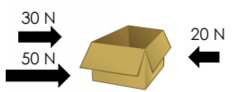
Calculate the Net Force. 
a)
60N, Left 
b)
40N, Right 
c)
0N
d)
60N, Right
21.
Which graph shows an object not moving?
a)
A
b)
B
c)
C
d)
D
22.

Which of the following genotypes is homozygous recessive?

a)

Tt

b)

tt

c)

TT

d)

tT

23.

Which of the following genotypes is homozygous dominant?

a)

A

b)

Aa

c)

AA

d)

aa

24.

A recessive allele is written as a(n)

a)

lower case letter

b)

upper case letter

c)

hashtag

d)

smiley face

25.

A dominant allele is written as a(n)

a)

lower case letter

b)

upper case letter

c)

unicorn emoji

d)

question mark

26.

What is a long coiled strand of DNA and proteins?

a)

gene

b)

RNA

c)

chromosome

d)

genome

27.
Alternative forms of a gene are called
a)
Alleles
b)
Homozygous
c)
DNA
d)
Genetics
28.

Which of the following is the correct definition for a phenotype?

a)

The physical expression of a gene. (Characteristics)

b)

A strand of DNA made up of multiple mutations.

c)

The expression of one of your parents traits.

d)

The set of genes in our DNA which is responsible for a particular trait.

29.

Which of the following is the correct definition for a genotype?

a)

The physical expression of a gene. (Characteristics)

b)

A strand of DNA made up of multiple mutations.

c)

The expression of one of your parents traits.

d)

The set of genes in our DNA which is responsible for a particular trait.

30.

Segments of DNA are called _______________________

a)

Genes

b)

Alleles

c)

Traits

d)

Chromosomes

31.
What does DNA stand for?
a)
Deoxyribonucleic acid
b)
Denitrogenous acid
c)
Deribonucleic acid
d)
Diribonucleic acid
32.
Which shows the correct complementary base pairing for DNA?
a)
C-A, T-G
b)
A-G, C-T
c)
C-G, U-A
d)
T-A, G-C
33.
Inherited trait that helps an organism survive is a(n) __________.
a)
Fossil
b)
Adaptation
c)
Ancestor
d)
Natural selection
34.
The diagram illustrates an embryonic stage of two organisms.

Which of the following can be determined by observing the embryos shown in the diagram

a)
The organisms share a common ancestry.
b)
The organisms belong to the same genus.
c)
The organisms are native to the same geographic areas.
d)
The organisms will grow into anatomically similar adults.
35.
Structures with the same parts have different functions; suggests that organisms share a common ancestry
a)
vestigial structures
b)
homologous structures
c)
adaptive radiation
d)
fossil
36.

Environmental factors can influence natural selection because they can increase or decrease _____.

a)

the number of chromosomes in an individual.

b)

the number of chromosomes in a population.

c)

the amount of genetic variation in an individual.

d)

the amount of genetic variation in a population.

37.

Adaptations usually occur because

a)

A gene mutates or changes by accident

b)

none of the above

c)

It happens through natural selection

d)

A gene changes on purpose

38.
What type of molecule does this picture show?
a)
hydrogen peroxide
b)
water
c)
carbon monoxide
d)
sugar
39.
Balance this equation:
 2Li + Cl2 -> LiCl
a)
2Li + Cl2 -> 4LiCl2
b)
2Li + Cl2 -> LiCl2
c)
2Li + Cl2 -> 2LiCl
40.

How many electrons are in an atom of strontium?

a)

125.62

b)

87.62

c)

49.62

d)

38

41.

How do we calculate the number of neutrons in an atom?

a)

(atomic number) - (atomic mass)

b)

(atomic mass) - (atomic number)

c)

(atomic mass) + (atomic number)

d)

atomic mass only

42.

If the atomic mass is not given, how do we calculate it?

a)

(protons) + (electrons)

b)

(atomic mass) - (atomic number)

c)

(protons) - (neutrons)

d)

(protons) + (neutrons)

43.

How many neutrons are in an atom of oxygen?

a)

23.999

b)

8

c)

7.999

d)

30.999

44.

The whole number above an element's symbol represents what?

a)

Atomic Number

b)

Average Atomic Mass

c)

Number of Neutrons

d)

Number of Isotopes

45.

Carbon has atomic number 6. This means it has _____ protons.

a)

2

b)

8

c)

6

d)

12

46.

Why are many large optical telescopes located on mountains?

a)

it is cheaper to build on mountains

b)

to be above part of the atmosphere

c)

because it is easier to build telescopes on mountains

d)

to be closer to city lights

47.
Radio telescopes biggest advantage is that they:
a)
Can be used during the day
b)
Can be used in any type of weather
c)
Almost all radio waves make it to the surface
d)
All of these
48.

Radio waves are _________________ waves that travel through space and can carry information.

a)

visible

b)

invisible

49.

What does a radio telescope record?

a)

radio waves

b)

lights

50.

Which type of telescope uses lenses or mirrors to gather visible light?

a)

optical telescope

b)

space telescope