
 Worksheets
Chapter 3 Chemistry
Total questions: 32
Worksheet time: 17mins
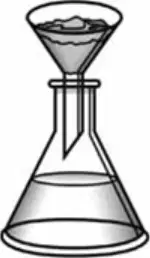
Which is the type of separation technique being demonstrated in the figure?
crystallization
distillation
filtration
chromatography
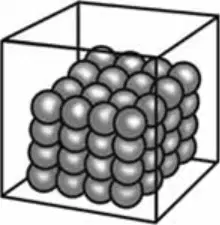
Which is the state of matter shown in this figure?
solid
liquid
gas
plasma
Which is an intensive physical property?
color
mass
length
volume
What is the change of state in which a solid becomes a liquid?
liquefaction
melting
condensation
sublimation
How many individual atoms make up one unit of aluminum chloride, AlCl₃?
1
2
3
4
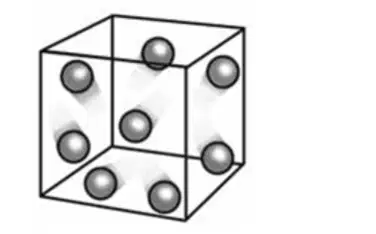
Which is the state of matter shown in this figure?
solid
liquid
gas
plasma
Which is the state of matter that has an indefinite shape and definite volume?
solid
liquid
gas
plasma
Which is an extensive physical property?
color
length
density
boiling point
A chemical composition of two or more different elements joined together in fixed proportions is known as a(n) ____.
compound
element
homogeneous mixture
heterogeneous mixture
Which is an example of a homogeneous mixture?
sand
clean air
vegetable soup
fresh-squeezed orange juice
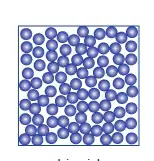
Which is the state of matter shown in this figure?
solid
liquid
gas
plasma
Which is NOT a chemical change?
a. a piece of wood is burned
b. an egg is cooked
c. a bar of iron rusts
d. ingredients for a cake are stirred together
Matter that has a uniform and unchanging composition is known as a(n) ____.
compound
element
mixture
substance
Which is the state of matter that has an indefinite shape and indefinite volume?
solid
liquid
gas
plasma
15. Elemental bromine occurs in the ____ state at room temperature.
gaseous
liquid
plasma
solid
According to the Law of Conservation of Mass, in any chemical change
the mass of reactants is greater than the mass of products
the mass of reactants is less than the mass of products
the mass of reactants is equal to the mass of products
the masses of products and reactants have no predictable relationship
Which is a compound?
sodium
sea water
carbon dioxide
brass
Which of the following formations is a physical property of copper?
A deep blue solution when in contact with ammonia.
A new substance when combined with nitric acid.
A green copper carbonate compound when in contact with moist air.
A formation of a drill gauge and wire.
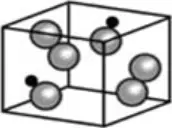
Which describes the composition of matter shown in figure C?
element
compound
mixture
phase
Which is a chemical property of copper?
has a boiling point of 2567 °C
reacts in air to form a green layer
has the symbol Cu
is a solid at room temperature
The law of conservation of mass states that during a chemical reaction, total mass is ____.
created
conserved
destroyed
utilized
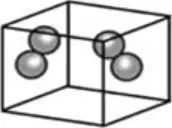
Which term describes the composition of matter shown in figure A?
element
compound
mixture
phase
Which of the following substances is an element?
Baking soda
Iron
Salt
Sugar
Which is the separation technique that relies on the different boiling points of the parts of the mixture?
filtration
distillation
chromatography
crystallization
Which is the separation technique that identifies parts of a mixture based on how fast different compounds move across a material?
filtration
distillation
chromatography
crystallization
Which is the state of matter that has a definite shape and definite volume?
solid
liquid
gas
plasma
Which of the following substances is a mixture?
Baking soda
Gasoline
Salt
Sugar
What is the change of state in which a gas becomes a liquid?
sublimation
freezing
condensation
melting
A process that involves one or more substances changing into new substances is known as a ____________________ change.
Chemical
Physical
Mechanical
Thermal
30. Cutting a sheet of paper is an example of a ____________________ change.
Physical
Chemical
Biological
Nuclear
A ____________________ property enables a substance to combine with or change into one or more substances.
Chemical
Physical
Thermal
Electrical
32. Sugar is a ____________________ form of matter with a definite shape and volume.
Solid
Liquid
Gas
Plasma

