wayground logo

Free Printable Worksheets

NEW

Font size

S
M
L
XL
Worksheets

KenGen Module 1

Total questions: 38

Worksheet time: 1hrs 23mins

Name
Class
Date
1.
What is Static Electricity?
a)
Electricity that gathers in one place
b)
Electricity that moves from one place to another
2.
What is Current Electricity?
a)
Electricity that gathers in one place
b)
Electricity that moves from one place to another
3.
What is an Electrical Circuit?
a)
Open path or loop around which an electric current flows
b)
Open path or loop around which there is static electricity
c)
Closed path or loop around which there is static electricity
d)
Closed path or loop around which an electric current flows
4.
What does V = I*R represent?
a)
Voltage = Issac * Resistance
b)
Voltage = Idontknow* Resist
c)
Voltage = Current * Resistance
d)
Voltaggio = Current * Resistance
5.
What is Static Electricity?
a)
Electricity that gathers in one place
b)
Electricity that moves from one place to another
6.
What is Current Electricity?
a)
Electricity that gathers in one place
b)
Electricity that moves from one place to another
7.
What is an Electrical Circuit?
a)
Open path or loop around which an electric current flows
b)
Open path or loop around which there is static electricity
c)
Closed path or loop around which there is static electricity
d)
Closed path or loop around which an electric current flows
8.
What does V = I*R represent?
a)
Voltage = Issac * Resistance
b)
Voltage = Idontknow* Resist
c)
Voltage = Current * Resistance
d)
Voltaggio = Current * Resistance
9.
What is Current?
a)
‘pressure’ or ‘force’ of electricity
b)
flow of electricity
c)
Defines how easily electrons can flow through a material
10.
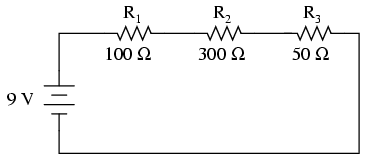
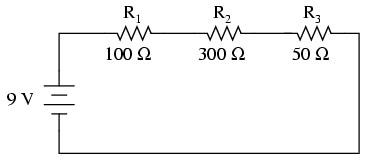
This is an example of a _______ circuit
a)
open
b)
series
c)
parallel
d)
square
11.
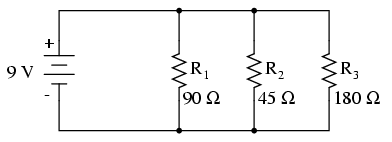
This is an example of a ______ circuit
a)
Series
b)
Parallel
c)
Open
d)
Dihexihedral
12.
The total resistance in this circuit is 
a)
100 ohms
b)
450 ohms
c)
400 ohms
d)
30 ohms
13.
The total current through this circuit is
a)
0.02 amps
b)
0.09 amps
c)
50 amps
d)
9 amps
14.
The voltage dropped across the 300 ohm resistor is 
a)
6 V
b)
9 V
c)
2 V
d)
30 V
15.
An ammeter is a device that can be used to measure
a)
Current
b)
Voltage
c)
Resistance
d)
Power
16.

The emf of the dry cell is about

a)

0 V

b)

0.5 V

c)

1 V

d)

1.5 V

17.

Secondary’s cells are

a)

lead acid cell

b)

alkaline cell

c)

both (a) and (b)

d)

none of these

18.

When two batteries are connected in parallel, it should be ensured that

a)

They have same emf

b)

They have same make

c)

They have same ampere hour capacity

d)

They have identical internal resistance
19.
This circuit has more than one loop. When one light goes out, the others stay on. 
a)
closed circuit
b)
series circuit
c)
parallel circuit
d)
open circuit
20.
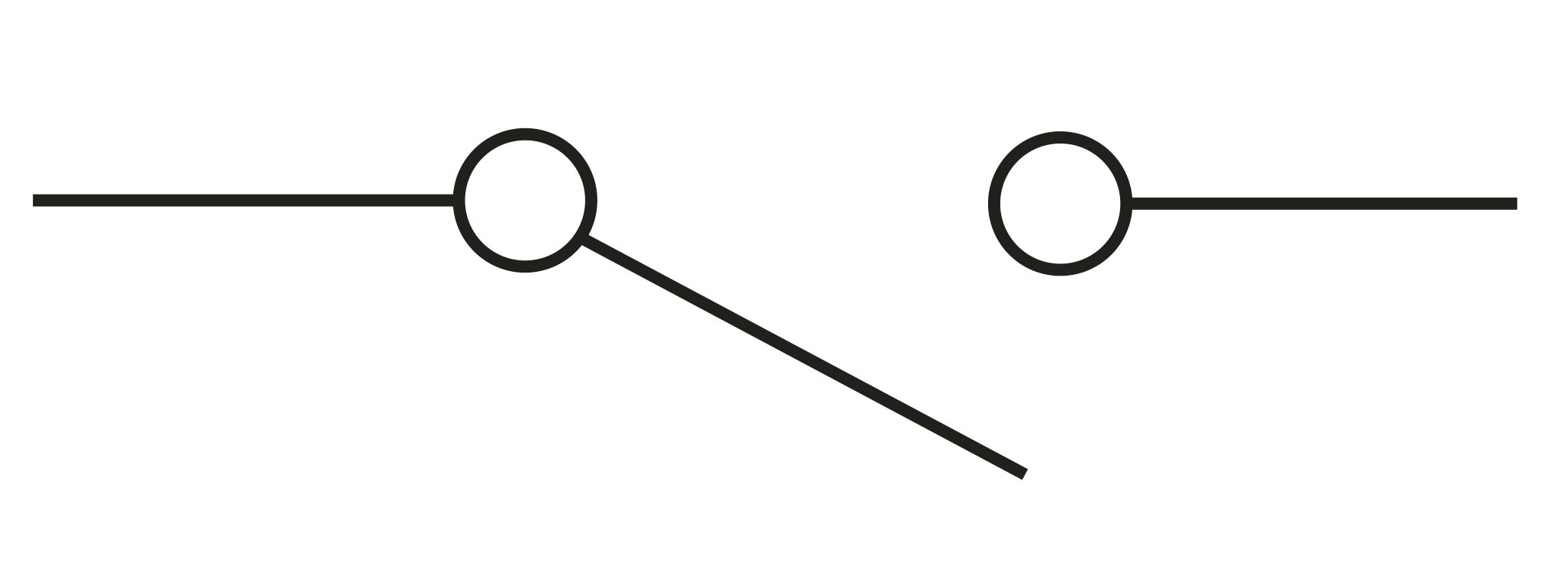
this is the symbol for a _____?
a)
switch
b)
light 
c)
battery
d)
wires
21.
A series circuit has ____ path(s) that the electric current can take. 
a)
One
b)
Two 
c)
Three 
d)
Four
22.
What type of circuit is used in your house?
a)
Light Circuits
b)
The best circuits
c)
Series Circuits
d)
Parallel Circuits
23.
What is the type of circuit that stops working when one bulb goes out?
a)
A broken circuit
b)
Parallel Circuit
c)
Series Circuit
d)
A metal circuit
24.
What is the energy source for a circuit?
a)
Light bulb
b)
Battery
c)
Wire
d)
Switch
25.
Gloves help keep your hands warm in winter because:
a)
They are conductors of heat.
b)
They are fuzzy.
c)
They are conductors of electrical energy.
d)
They are insulators.
26.
An electrical component that we use in electronics circuits to limit current though an active component .
a)
Resistor
b)
Capacitor
c)
Inductor
d)
None of the Above
27.

Which of these materials is least useful as an insulator?

a)

Cardboard

b)

Aluminum

c)

Rubber

d)

Plastic

28.

Wires carrying electricity are usually covered with plastic to keep them from starting a fire. Why does the plastic keep the electricity from starting a fire?

a)

Plastic is a good insulator.

b)

Plastic can melt when heated.

c)

Plastic is softer than wire.

d)

Plastic conducts electricity.

29.
The ability of a metal to allow heat or electricity to pass through it.
a)
conductivity
b)
insulator
c)
mass
d)
density
30.
What is the BEST example of a conductor? 
a)
A wooden block
b)
A ceramic mug
c)
A glass cup
d)
A metal bowl
31.

Which of these is the best conductor of electricity?

a)

Glass rod

b)

Cotton string

c)

Plastic tubing

d)

Copper penny

32.
Which of the following is NOT an insulator?
a)
Wool
b)
Plastic
c)
Copper
d)
Styrofoam
33.
Gloves help keep your hands warm in winter because:
a)
They are conductors of heat.
b)
They are fuzzy.
c)
They are conductors of electrical energy.
d)
They are insulators.
34.
Why are metals useful for making electrical wire?
a)
Metals do not bend.
b)
Metals hold much heat.
c)
Metals are insulators.
d)
Metals are conductors.
35.
Which one is a conductor? 
a)
wood 
b)
iron 
c)
plastic spoon 
d)
paper 
36.

Which one is an insulator?

a)

Silver

b)

Copper

c)

Nickel

d)

plastic

37.
What is Electrical Engineering?
a)
The Study and Application of electricity
b)
The Study and Application of electromagnetism
c)
The Study and Application of electronics
d)
All of the Answers Provided
38.
What is Electricity?
a)
Type of energy that can build up in one place
b)
Type of energy that can flow from one place to another.
c)
Type of energy that can build up in one place OR Type of energy that can flow from one place to another.
d)
None of the Possible Answers Shown