
 Worksheets
G07_HIS 4_QUIZIZZ_2425
Total questions: 25
Worksheet time: 12mins
SUCCESSORS OF AKBAR WERE _____________
STRONG
WEAK
SMART
THEY COULD NOT KEEP THE WORK OF AKBAR SO WERE NOT SO STRONG.
WHO WAS THE FAMOUS RULER OF SUR DYNASTY?
AKBAR
HUMAYUN
SHER SHAH
Who is considered the greatest Mughal ruler?
Babur
Akbar
Aurangzeb
Jahangir
Which sultan lost to Babur at the Battle of Panipat in 1526.
Henry VIII
Ibrahim Lodi
Suleiman the Magnificent
New Delhi
Why did Shah Jahan build Taj Mahal?
In memory of his wife
For his sons
For his people
In memory of Mumtaz
Laws of Akbar's government were ______________________.
people friendly
not people friendly
____________ language became the official language of Mughal Empire.
Urdu
Persian
English
Humayun was defeated by Sher Shah and fled away to
Kabul
India
Farghana
Persia
The Mughal Empire originated in the region of ___________________
Delhi
Deccan
Punjab
Kerala
A tax paid by non-Muslim populations to their Muslim rulers.
Tariff
poll tax
sales tax
Jizya
Shah Jahan laid the foundation of a new city called?
Lahore
Shah Jahanabad
Fatehpur
Daulatabad
What was the salary given to Zamindars?
Zabt
Iqta
Jagirs
Coins
He is known as being the emperor of India from 1658 to 1707. He was the last of the great Mughal emperors. Under him the Mughal Empire reached its greatest extent, although his policies helped lead to its dissolution.
Babar
Akbar
Shah Jahangir
Aurangzeb
The history of Akbar's rule was written by
Ishwar Das
Abul Fazl
Bhimsen
Muhammed Kazim
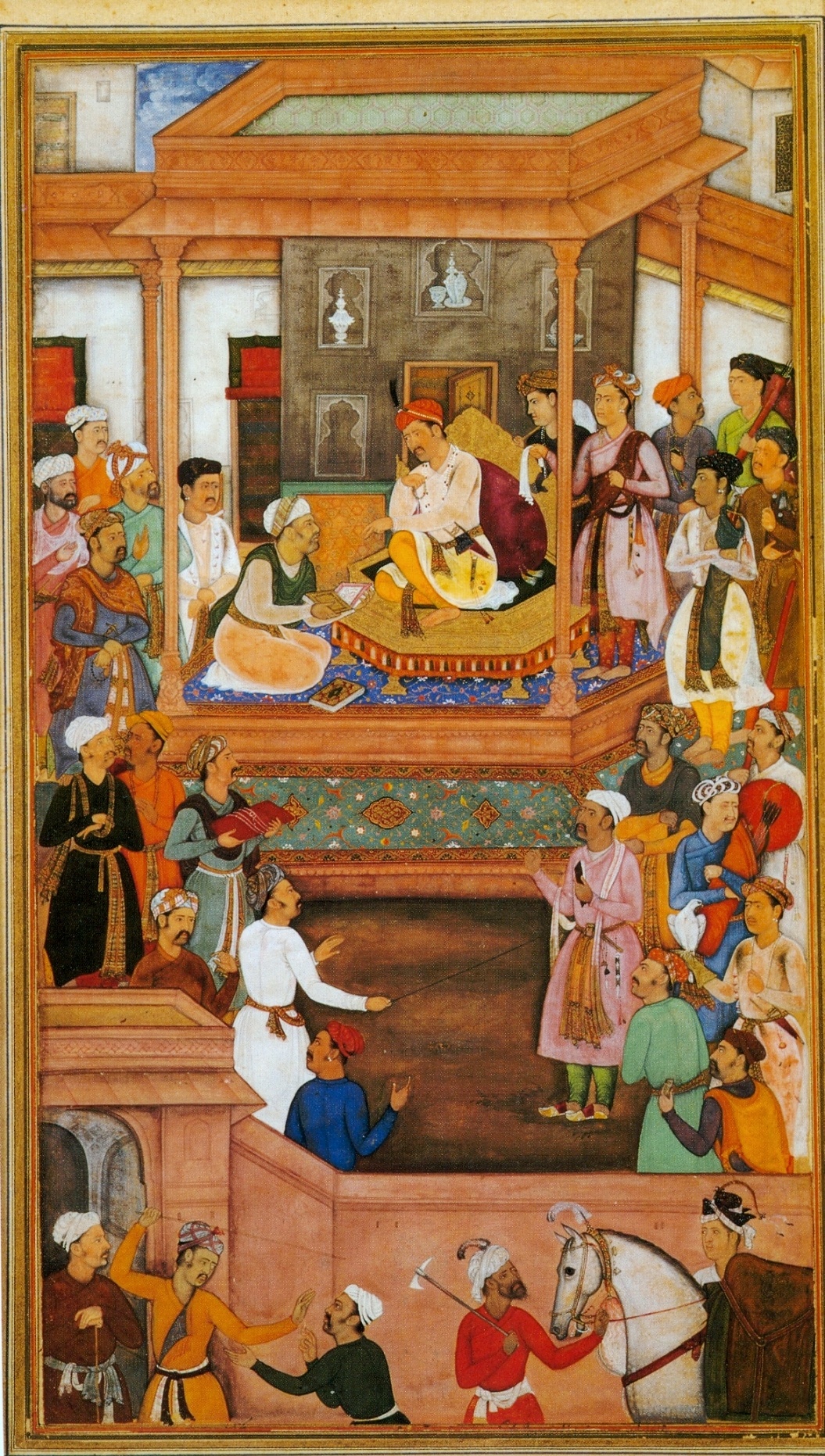
A faith established by Akbar, which combined elements of many religions including Islam, Hinduism and Zoroastrianism
Sunni
Sikhism
Divine Faith
Mughal Faith
which mughal ruler ruled for the longest
babur
akbar
sher shah suri
aurangzeb
Banda Bahadur was the last Mughal ruler of India.
False
True
___ succeeded Akbar to the Mughal Throne.
Bahadur Shah
Shah Jahan
Jahangir
Aurangzeb
___ was the name of Shivaji's mother.
Jaya Bai
Jija Bai
Jiji Bai
Durga Bai
Aurangzeb’s conflict with Mewar began with the death of Raja Jai Singh
True
False
__ looted India and took away the Peacock Throne.
Ahmed Shah Abdali
Nadir Shah
Sher Shah
Ajmal Shah
Aurangzeb authorised the chroniclers to document his rule & times.
False
True
___ had a Chain of Justice put up outside his palace.
Shivaji
Jahangir
Guru Nanak
Shah Jahan
The First Battle of Panipat fought in
1526
1525
1530

