
 Worksheets
Practice Questions-Cell Theory-Plasma Membrane
Total questions: 26
Worksheet time: 17mins

Identify cholesterol molecule
structure a
structure b
structure h
structure i
Plasma membranes are selectively permeable. This means
anything can pass in and out
the membrane regulates the passage of the material in and out of the cell
glucose cannot enter the cell
cholesterol cannot enter
Which is NOT a function of the membrane?
it forms a selective barrier
it has receptor proteins for chemical signals
it is the control center of the cell
it plays a role in cell identification
Small, nonpolar, hydrophobic molecules such as fatty acids
easily pass through the membrane's bilayer
very slowly diffuse through the bilayer
require transport proteins
enter through endocytosis
Membrane phospholipids
have hydrophobic heads that face the center of the membrane and are protected from water
have hydrophilic tails that face outward
remain fluid because they are tightly packed
have hydrophilic heads that are oriented outwards towards water
When doctors perform organ transplants, they choose a donor tissue match. Which component is being matched?
membrane phospholipids
membrane proteins
membrane carbohydrates
cholesterol
What kinds of molecules pass through a cell membrane most easily?
ionic
small and hydrophobic
large polar
large and hydrophobic

Which structure is the hydrophilic polar head of the phospholipid molecule?
F
D
C
A1

Which structure is the hydrophobic tail of the phospholipid molecule?
E
B
G
A2
prevents it from becoming too rigid
makes sure it solidifies

The majority of the plasma membrane is composed of ______.
phospholipids
proteins
carbohydrates
cholesterol

What property does the phospholipid bilayer give to a plasma membrane?
provides the barrier between the inside and outside of the cell
communicates between cells
conducts electrical impulses in nerve cells
allows cells to bind to each other

According to the fluid mosaic model, the plasma membrane is a mosaic of components—primarily, phospholipids, cholesterol, and proteins—that do not move freely, phospholipids and proteins are STATIC and FIXED in a single position
TRUE
FALSE
if we have phospholipids floating in a water solution , they will be arranged .........
with the heads of the phospholipids facing the water and the tails hidden
with the tails of the phospholipids facing the water and the heads hidden

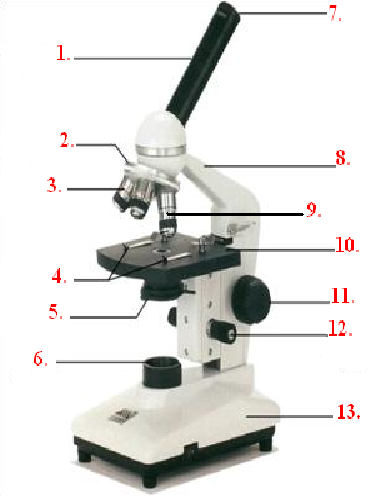
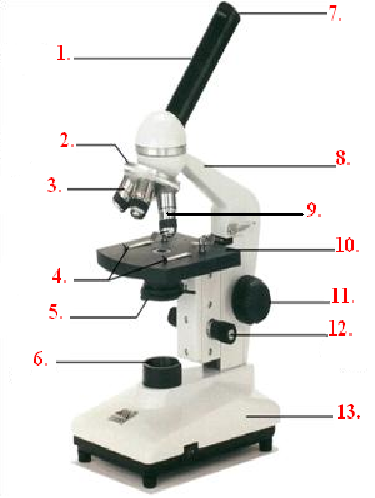

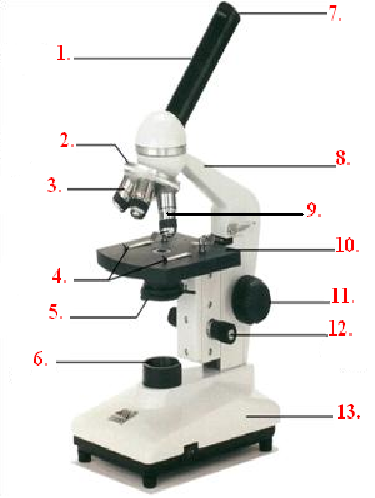

Eyepiece = 10X
Objective lens = 55X
Check all of the following that are characteristics of a prokaryotic cell? (pick 3)
examples are bacteria
examples are plant and animal cells
small, simple with NO membrane bound organelles
has a nucleus
does NOT have a nucleus
Check all of the following that are characteristics of an eukaryotic cells. (pick 3)
examples are bacteria
examples are plant and animal cells
small, simple with NO membrane bound organelles
has a nucleus
larger and more complex with membrane bound organelles
Where would you find the DNA in a prokaryotic cell?
in the nucleus
in the cytoplasm
in the cell membrane
prokaryotic cells do NOT have a DNA

Which cell in the diagram is an Eukaryotic cell?
the smaller one on the left
the larger one on the right
both are eukaryotic
neither are eukaryotic

