Worksheets
Ionic bonds and Compounds
Total questions: 77
Worksheet time: 2hrs 45mins
What is the charge of a magnesium ion after it loses two electrons?
-1
+2
-2
+1
How many valence electrons does sulfur have before it gains two electrons to form a sulfide ion?
2
4
8
6
What is the final electron configuration of a sodium ion after it loses its valence electron?
2,8
2,8,2
2,7
2,8,1
What type of bond forms between sodium and chlorine to create sodium chloride?
Hydrogen bond
Ionic bond
Covalent bond
Metallic bond
What is the overall charge of an ionic compound?
-1
Varies
0
+1
How many chloride ions are needed to balance the charge of one magnesium ion?
3
2
1
4
What is the charge on a sulfide ion?
-2
+1
+2
-1
What happens to the ions in an ionic compound when it is dissolved in water?
They form covalent bonds
They lose their charge
They become immobile
They are free to move
What is the correct formula for magnesium chloride?
Mg2Cl3
Mg2Cl
MgCl2
MgCl
What is the principle behind the formation of ionic bonds?
Movement of neutrons
Sharing of electrons
Transfer of electrons
Exchange of protons
Which element typically does not form an ionic bond with chlorine?
Sodium
Magnesium
Carbon
Potassium
In a dot and cross diagram for sodium chloride, what does a dot represent?
An electron from sodium
An electron from chlorine
A shared electron pair
A neutron
How does the electron configuration of an oxygen atom change when it forms an oxide ion?
It loses two electrons
It gains two electrons
It shares two electrons
No change
What is the electron configuration of a chloride ion?
2,8,7
2,8,8
2,8,6
2,8
Which of the following elements is most likely to form an ionic bond with fluorine?
Oxygen
Lithium
Carbon
Nitrogen
What is the correct formula for potassium oxide?
K2O
KO2
K2O2
KO
Atoms form ions because they want to have a (a) outer shell.
Ionic bonds are formed between...
Non - metals
A metal and a non-metal
Metals
How is an ionic bond formed?
Sharing of electrons
Delocalised electrons
Transfer of electrons
Select all of the statements below that are correct to describe the structure and properties of ionic compounds...
They have high melting and boiling points
They have a lattice structure
The ions are held together by intermolecular forces
They can conduct electricity when molten
They can conduct electricity when solid
Which of the below is an ionic compounds?
Ni
MgCl2
H2O
CH4
An example of an ionic compound is Sodium Chloride, which is made from Na+ and Cl- ions. Why do these ions form an ionic bond?
They have like charges
They are from the same group
They are from the same period
They have opposite charges
Lithium is in group 1 of the periodic table, which ion would it form?
Li-
Li2-
Li+
Li2+
Oxygen is in group 6 of the periodic table, which ion would it form?
O-
O+
O2-
O2+
Lead Chloride is an ionic compound, made up from Pb2+ ions and Cl- ions. Which is the correct formula for this compound?
PbCl3
PbCl
PbCl4
PbCl2
Magnesium Hydroxide is an ionic compound made up from Mg2+ and OH- ions. Which is its correct formula?
MgOH
MgOH2
Mg(OH)2
MgO
Aarav, Poppy, and Anaya are studying the structure of table salt, which is a solid ionic compound. What is the structure of these compounds?
Giant covalent structure
Regular arrangement of positive ions in a sea of delocalised electrons
Ionic lattice consisting of alternate positive and negative ions in a regular arrangement
Simple molecules with weak forces of attraction between the molecules
Oscar, Evie, and William are discussing the properties of ionic compounds. Which of the following properties can they correctly attribute to ionic compounds?
Low melting and boiling points
Does not conduct electricity when solid
Not soluble in water
Exist as simple molecules
Sophia, Anaya, and James are studying chemistry and they come across a question. They want to know why the salt they use in their kitchen, which is an ionic compound, has high melting and boiling points?
Is it because of the weak van der Waal's forces between the salt molecules?
Is it because of the strong covalent bonds throughout the layers of salt?
Is it because of the strong ionic bonding in salt that requires substantial energy to break?
Or is it because of the regular arrangement of positive ions in a sea of delocalised electrons in the salt?
Why do all bonds form?
so the number of protons equals the number of electrons
so an atom can become unstable
to fill the outermost energy level
When magnesium burns in oxygen it produces MgO. Use the ionic formula to name the compound produced.
Magnesium oxygen
Oxygen magnesium
Magnesium oxide
Oxygen magnesiumide
According to the Octet Rule, atoms of elements react with each other in order to attain ____ electrons in their outermost energy level or shell.
2
4
6
8
10
What is the best definition of valence electrons?
The outermost electron NOT involved in chemical reactions
The innermost electrons involved in chemical reactions
The outermost electrons involved in chemical reactions.
The innermost electrons NOT involved in chemical reactions
Which of the following could NOT form an ionic compound? Check all that apply.
Li+ and Cl-
F- and O2-
Ba2+ and Ag+
Mg2+ and S2-
Lithium is in group 1 of the periodic table, which ion would it form?
Li-
Li2-
Li+
Li2+
What is the process of ionic bonding?
Sharing of electrons
Transfer of electrons
Loss of protons
Gain of neutrons
What is the charge of a nonmetal atom after gaining electrons?
Neutral
Negative
Variable
Positive
How can the number of electrons in an ion be calculated?
By multiplying the atomic number and mass number
By using the charge of the ion
By subtracting the atomic number from the mass number
By adding the atomic number and mass number
Which group of elements forms negative ions with the electronic structure of a noble gas?
Group 5 and 6
Group 1 and 2
Group 3 and 4
Group 6 and 7
What does the ending -ide indicate in the names of compounds?
Contains oxygen
Contains a halide ion
Contains at least 3 elements
Contains a nonmetal negative ion
Which ion is involved in the formation of sodium oxide?
OH- ion
O²- ion
Cl- ion
NO3- ion
What holds together the ions in an ionic compound?
Hydrogen bonds
Ionic bonds
Covalent bonds
Metallic bonds
What is the structure of an ionic compound?
Single ion structure
Random arrangement of ions
Linear arrangement of ions
Regular arrangement of ions
What is the charge of Na+ ion?
+1
+2
-1
0
What is the force that acts in all directions in the lattice of an ionic compound?
Dipole-dipole forces
Covalent bonding
Ionic bonding
Van der Waals forces
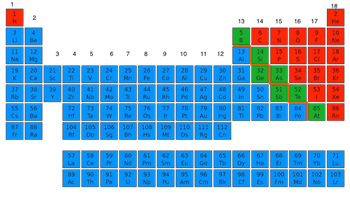
What usually forms the negative ion?
nonmetals
metal
none

Nitrogen, N, will form which of the following ions?
N
N-3
N-5
N+5
Beryllium, Be, will ____ valence electrons when forming an ionic bond.
lose 4
gain 4
lose 2
gain 2
Ionic bonds happen because of the ____ of valence electrons.
sharing
transfer
keeping
covering
Boron, B, will ____ valence electrons when forming an ionic bond.
lose three
gain three
lose 5
gain 5
Sulfur, S, will ____ valence electrons when forming an ionic bond.
gain 1
lose 1
gain 2
lose 2
What will be the charge of a bromine ion?
+7
-7
-1
+1
Which element below would have a 3+ charge as an ion?
nitrogen (N)
boron (B)
silicon (Si)
argon (Ar)