
 Worksheets
ES LT 2 reviewer
Total questions: 30
Worksheet time: 29mins
TRUE or FALSE:
The following is an endogenous process:
Metallic minerals are rusting when exposed to air.
TRUE
FALSE
TRUE or FALSE:
Metamorphism refers to changes in form due to changes in heat, temperature, and chemicals introduced to the rock
TRUE
FALSE
TRUE or FALSE:
Minerals that have fracture will break into regular and smooth planes
TRUE
FALSE
TRUE or FALSE:
Sediments result from pieces of pre-existing rock that have weathered and eroded
TRUE
FALSE
TRUE or FALSE:
If Mineral X scratches Mineral Y, and Mineral Y scratches Mineral X, then that means they have an equal hardness on the Mohs Scale
TRUE
FALSE
The following is an exogenous process:
In a convergent plate boundary, a mountain is formed.
TRUE
FALSE
TRUE or FALSE:
Apatite has a hardness of 4
TRUE
FALSE
Weathering : breakdown = (a) : transport
Dull : Luster = Globular : (a)
Talc : 1 = (a) : 7
Streak : powdered = (a) : unpowdered
Scriber : (a) = Magnet : Magnetism
SiO4 : Silicates = (a) : Hydroxides
A rock resulting from volcanic activity
Igneous
Sedimentary
Metamorphic
Materials that are naturally occurring, inorganic, homogeneous solid, had a definite chemical composition and an ordered internal structure
(a)
Silicon-oxygen tetrahedron structure of Feldspar
Lone tetrahedron
Sheet tetrahedron
Single chain tetrahedron
3D Network of tetrahedra
Divergent plate boundaries where mid-oceanic ridges lie, and new crust is created is an _________ process
Endogenous
Exogenous
After erosion, the mobile agents run out of energy and undergo deposition, wherein sediments stop moving, accumulate, and undergo ______.
Metamorphism
Lithification
Cooling
Melting
The anion that indicates a mineral falls under the Phosphate group
(a)
This is the endogenous process that destroys crust along convergent plate boundaries by lowering rocks back into the mantle
Subduction
Rifting
Volcanic eruption
Mountain building

What is this mineral?
(a)

The picture depicts an ____ process
exogenous
endogenous

The rock resulting from the deposition and lithification of the pictured material:
Igneous
Metamorphic
Sedimentary
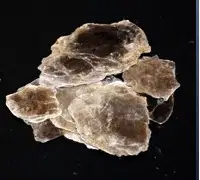
The crystal form in the picture:
Prismatic
Cubic
Globular
Platy

This silicate subgroup of minerals has the following silicon tetrahedron structure:
(a)

The hardness of the following mineral:
(Clue: It's on the Mohs scale, and you saw it in the lab hehe)
(a)
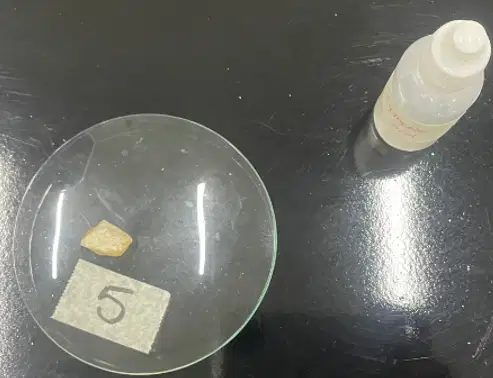
The chemical process that results in effervescence (bubbles) upon the reaction of the two materials in the picture:
(a)
Draw your favorite mineral :)

Tell me a joke about minerals :D
How prepared are you for ES LT 2??

